
The persistent challenge of managing head and neck squamous cell carcinomas has long been defined by the aggressive nature of human papillomavirus-negative tumors, which frequently resist conventional treatment and lead to high recurrence rates. These specific malignancies, often located in the

The clinical success of cyclin-dependent kinase inhibitors has fundamentally transformed the standard of care for millions of patients diagnosed with advanced malignancies, yet recent data suggests that the medical community has only begun to tap into their full therapeutic potential. For years,

The medical community is currently witnessing a paradigm shift as medications originally designed for glucose control reveal a profound capacity to alter the survival trajectory of women battling breast cancer. While the pharmaceutical world has focused heavily on the aesthetic and weight-loss
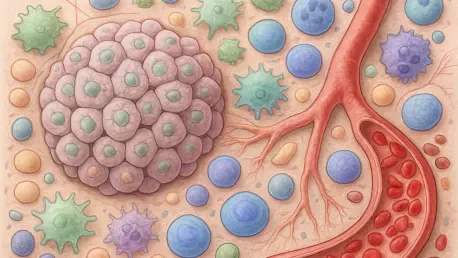
The biological success of ovarian cancer within the human body depends less on its internal genetic code than on the protective biochemical soup found in the abdominal cavity. For decades, the primary focus of oncology remained fixed on the "seed"—the individual cancer cell—while largely ignoring
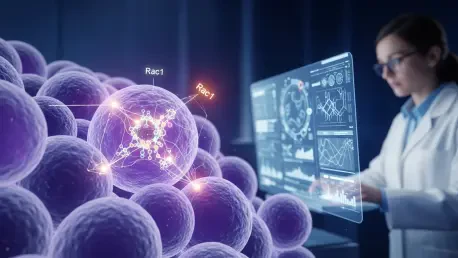
For thousands of patients diagnosed with estrogen receptor-positive (ER+) breast cancer, the initial victory of a successful tumor removal often gives way to a long, anxious period of medical surveillance. Despite completing intensive treatment regimens including surgery, radiation, and five to ten

The transition of magnetic resonance imaging from a qualitative art form into a rigorous quantitative science represents one of the most significant shifts in medical diagnostics within the current decade. For many years, clinicians relied on visual interpretations of contrast and shadow, but the