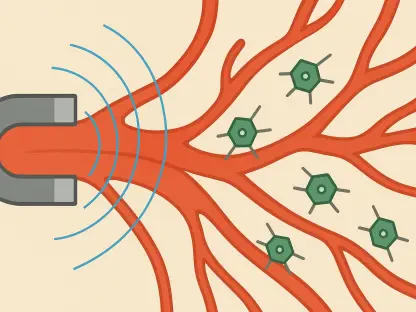
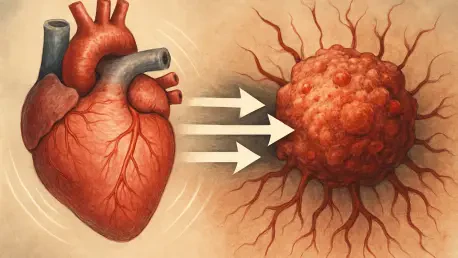
While cancer aggressively invades almost every organ within the human anatomy, the human heart possesses a unique and formidable resistance that has baffled the scientific community for decades. Despite its constant exposure to the entire blood supply and its high metabolic activity, primary
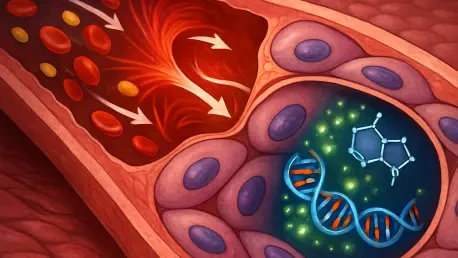
At the very sites where arteries branch and curve, the blood’s mechanical turbulence quietly erodes endothelial defenses while seeding DNA injury that stokes plaque formation yet, paradoxically, also triggers a built-in metabolic countermeasure. New research led by Baylor College of Medicine and
Nineteen protein subunits arranged in a near-perfect circle gripped a frayed DNA end, and that spare geometry—simple, symmetric, and relentless—reshaped how a critical cancer target might be stopped. The ring belonged to Mgm101, a yeast mitochondrial homolog of human RAD52, and under a convergence

Colorectal cancer remains a top killer, yet traditional screening pathways leave many behind. Clinic-based outreach depends on staffed phone banks, open appointment slots, and patients’ ability to take time off, travel, and navigate insurance rules. In safety-net settings, those frictions stack.

Oxygen can sharpen the sword or feed the fire in glioblastoma therapy, and hyperbaric dosing, timing, and biology together decide which edge cuts and whether treatment harms or helps. This research summary examines how hyperbaric oxygen therapy (HBOT) might both strengthen and undermine standard
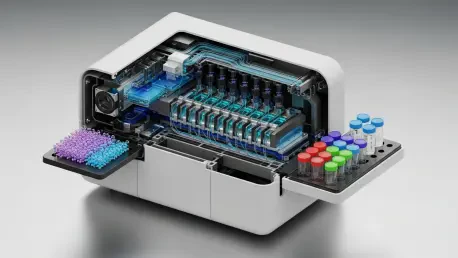
Hospitals needed faster answers while disease often hid in the subtle give, drag, and spring of living cells as they squeezed through microchannels and flowed past sensors that could now read mechanics at scale. That tension between urgency and nuance defined the promise of a new microfluidic