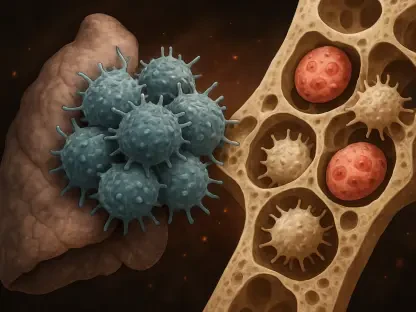

The brain tumor microenvironment is notoriously immunologically cold, utilizing inhibitory cytokines like TGF-beta to actively suppress the host immune system, which explains why glioblastoma multiforme remains the most aggressive and lethal primary brain malignancy in adults. Current epidemiological data from the Global Cancer Observatory indicates that more than 321,000 new cases of central nervous system cancers are diagnosed annually, resulting in approximately 250,000 deaths. Projections for the coming two decades suggest a nearly 40 percent increase in incidence, largely attributed to an aging global population and superior diagnostic imaging. Despite the deployment of modern neuro-oncological tools, the standard multimodal approach—comprising surgical resection, radiotherapy, and temozolomide chemotherapy—only offers a marginal survival advantage. The disease’s infiltrative nature allows malignant cells to evade even the most precise surgical techniques, lingering in the healthy parenchyma and causing inevitable recurrence. This clinical landscape necessitates a radical shift toward innovative technologies that can penetrate the biological fortifications of the brain while simultaneously retraining the immune system to recognize and eliminate these elusive threats.
Physiological and Immunological Obstacles
The neurovascular unit, commonly known as the blood-brain barrier, acts as a highly selective gatekeeper that maintains the delicate homeostatic environment of the central nervous system. While this barrier is essential for protecting the brain from toxins and pathogens, it presents a significant hurdle for oncology by excluding approximately 98 percent of small-molecule drugs and nearly 100 percent of large-molecule biologics. Even when a growing tumor disrupts this barrier to create a “leaky” blood-brain-tumor barrier, the effect is often inconsistent and localized to the tumor core. Invasive cancer cells at the peripheral margins typically remain shielded by an intact, healthy blood-brain barrier, creating “sanctuary sites” where the disease can continue to proliferate undisturbed by circulating chemotherapeutic agents. This physical fortification ensures that even high-dose systemic treatments often fail to reach therapeutic concentrations within the brain, leading to therapeutic failure and the rapid development of drug resistance.
Beyond the physical limitations of the blood-brain barrier, the brain tumor microenvironment orchestrates a complex network of immunosuppressive signals that effectively hide the cancer from the host’s defensive cells. Malignant cells utilize a variety of tactics to deactivate the immune response, including the recruitment of regulatory T cells and myeloid-derived suppressor cells which act as “traitor” cells within the brain. These suppressive cells work in tandem with tumor-associated macrophages to neutralize cytotoxic T lymphocytes that would otherwise destroy the malignancy. Furthermore, the secretion of interleukin-10 and other inhibitory factors creates a biochemical shield that prevents the activation of dendritic cells, the primary messengers of the immune system. This combination of a physical “fortress” and an “immunological desert” explains why brain tumors have historically been resistant to the types of immunotherapy that have revolutionized the treatment of melanoma and lung cancer in recent years.
Evolution of Immunotherapeutic Interventions
In an effort to overcome these barriers, clinical researchers have tested several generations of immunotherapies, including immune checkpoint inhibitors designed to “release the brakes” on the immune system. Landmark trials such as CheckMate-143 and CheckMate-548 evaluated the safety and efficacy of targeting pathways like PD-1 and CTLA-4 in glioblastoma patients. While these studies confirmed that the drugs could be administered safely, they failed to demonstrate a significant improvement in overall survival for the broader patient population. This disappointing result is largely attributed to the lack of pre-treatment patient stratification and the overwhelming local suppression that prevents T cells from remaining active once they reach the tumor. Nevertheless, these trials provided critical insights into the necessity of combining checkpoint blockade with other methods that can more effectively “prime” the immune system before the inhibitors are administered.
Alternative strategies such as oncolytic virotherapy and personalized vaccines have shown more significant promise in recent clinical developments. Virotherapy involves using genetically modified viruses, such as the poliovirus-rhinovirus chimera, to selectively infect and destroy cancer cells, a process that releases tumor antigens and effectively turns a “cold” tumor “hot” by attracting immune attention. Similarly, the development of cancer vaccines like DCVax-L has marked a foundational shift in how we approach the disease. By utilizing a patient’s own tumor lysates to train dendritic cells, this approach creates a personalized defense mechanism that can recognize the unique molecular signature of an individual’s cancer. The successful Phase III trial results for these vaccines have signaled that if the immune system is properly educated, it can mount a formidable defense, provided the therapeutic agents can reach their targets efficiently.
Nanotechnology for Targeted Drug Delivery
The integration of nanotechnology provides the physical means to overcome the transport hurdles that have historically crippled brain cancer treatment by utilizing carriers engineered at the nanoscale. Lipid nanoparticles and liposomes have emerged as the frontrunners for delivering sensitive genetic material, such as messenger RNA and small interfering RNA, directly to the central nervous system. These carriers are highly biocompatible and can be designed to protect delicate nucleic acids from enzymatic degradation as they circulate through the bloodstream. Research into lipid chemistry has led to the development of specialized formulations that integrate cholesterol and other lipids to facilitate transport across the endothelial boundaries of the brain. Furthermore, the repurposing of exosomes—naturally occurring biological vesicles—allows for the delivery of immune-stimulating molecules like CpG oligodeoxynucleotides while effectively bypassing the immune clearance mechanisms of the body.
Polymeric and inorganic nanomaterials offer additional advantages, primarily through their ability to provide sustained and controlled release of therapeutic payloads. Materials like poly(lactic-co-glycolic acid) are widely used to create nanoparticles that can maintain therapeutic levels of cytokines, such as interleukin-12, within the tumor environment without causing the dangerous systemic inflammatory spikes associated with free-drug administration. Innovations in “biomimetic” design have further enhanced these platforms by coating synthetic particles with the actual membranes of dendritic cells or neutrophils. This “camouflage” allows the nanoparticles to circulate for longer periods and specifically target the inflammatory signals emitted by the tumor. By combining the stability of synthetic polymers with the biological intelligence of natural cell membranes, researchers are creating a new class of delivery vehicles that are both highly efficient and significantly less toxic than traditional therapies.
Advanced Surface Functionalization and Remodeling
The true power of modern nanotechnology lies in “active targeting,” where the surface of a nanocarrier is decorated with specific ligands that bind to receptors on the blood-brain barrier. By hijacking endogenous transport pathways, such as those involving transferrin or low-density lipoprotein receptors, these “smart” carriers can cross into the brain via transcytosis. This method ensures that the therapeutic payload is concentrated precisely where it is needed most, minimizing exposure to healthy tissues and reducing the risk of systemic side effects. This level of precision is essential for treating high-grade gliomas, where the goal is to maximize the dose at the infiltrative margins of the tumor while sparing the vital neurological centers of the brain. The ability to functionalize these surfaces with multiple different ligands simultaneously allows for a “multi-hit” strategy that can address the heterogeneity of cancer cells.
Beyond serving as delivery vehicles, these advanced nanoparticles are being designed to actively remodel the suppressive tumor microenvironment from within. “Smart” nanoparticles can now be engineered to respond to local environmental triggers, such as the specific acidic pH levels or unique enzyme concentrations found inside a glioblastoma. Once they detect these triggers, the particles release agents that can reprogram tumor-supportive macrophages back into tumor-killing phenotypes, effectively “flipping the switch” on the cancer’s internal defense machinery. This process transforms a suppressive, “cold” environment into an active, “hot” zone where the body’s own immune cells can once again recognize and attack the malignancy. By combining delivery with local environmental modification, nanotechnology provides a dual-action approach that addresses both the physical and biological reasons for previous treatment failures.
Artificial Intelligence and Genomic Precision
While nanotechnology addresses the physical delivery of treatment, artificial intelligence is solving the immense complexity of cancer genetics through advanced computational analysis. The sheer volume of data generated by modern genomic sequencing and proteomic profiling is far beyond the processing capacity of human researchers. AI algorithms, specifically deep learning and random forest architectures, are now utilized to scan a patient’s tumor genome to identify “neoantigens”—the unique mutations that the immune system is most likely to recognize as foreign. This capability allows for the creation of truly personalized vaccines that are tailored to the specific genetic makeup of an individual’s cancer, rather than relying on a one-size-fits-all approach. This precision is vital for glioblastoma, a disease characterized by extreme genetic diversity even within a single tumor.
Artificial intelligence also facilitates “immunophenoscoring,” a predictive process that helps clinicians determine which patients are most likely to respond to specific therapies before they are even administered. By analyzing epigenetic signatures and DNA methylation patterns, machine learning models can identify biomarkers that correlate with a positive response to checkpoint inhibitors or specific nanomedicines. This allows for a more rational approach to patient stratification in clinical trials, ensuring that the right patient receives the right treatment at the optimal time. This shift from empirical medicine to predictive, data-driven oncology is expected to drastically improve survival rates by avoiding the use of ineffective treatments and focusing resources on the interventions most likely to succeed. The integration of these computational tools ensures that the entire therapeutic process is as efficient and targeted as possible.
Computational Optimization of Nanocarriers
The development of new nanoparticles was historically a slow and expensive process of empirical trial and error, but artificial intelligence has transformed it into a predictive science. Machine learning models are now capable of analyzing how thousands of different variables—such as particle size, surface charge, and lipid ratios—impact a drug’s ability to cross the blood-brain barrier and reach the tumor. By modeling these complex, non-linear relationships, AI can suggest the optimal formulation for a nanocarrier before a single pipette is touched in a laboratory setting. This digital simulation capability allows researchers to explore a much wider range of chemical designs than would be possible through traditional experimentation. As a result, the time required to develop a functional delivery vehicle has been cut significantly, allowing new treatments to move from the concept phase to pre-clinical testing with unprecedented speed.
This synergy between computational modeling and nanotechnology ensures that the physical delivery vehicles are optimized for maximum efficiency and minimum toxicity. AI-driven platforms can predict how a nanoparticle will interact with the human immune system, identifying potential issues with clearance or inflammation early in the design process. This predictive power is particularly useful for designing biomimetic carriers, where the interaction between synthetic materials and natural cell membranes is notoriously difficult to manage. By providing a unified technological vision where AI identifies the molecular targets and optimizes the delivery vehicle, researchers are creating a seamless pipeline for next-generation cancer therapy. This integrated approach addresses the fundamental reasons why previous treatments have reached a plateau, offering a viable path toward overcoming the dual fortress of the brain.
Navigating the Path to Clinical Implementation
Despite the immense promise of AI-enhanced nano-immunotherapy, several significant hurdles remain before these technologies can be fully integrated into routine clinical practice. One of the primary challenges involves the manufacturing and scalability of complex, multifunctional nanoparticles. Moving from small-scale laboratory production to large-scale, Good Manufacturing Practice standards requires sophisticated engineering to ensure consistent batch-to-batch quality and stability. Furthermore, the regulatory landscape is still evolving to accommodate these “combination products” that merge drugs, delivery devices, and AI-driven diagnostic algorithms. The approval pathway for such multifaceted therapies is often longer and more expensive than for traditional small-molecule drugs, requiring close collaboration between technology developers, oncologists, and regulatory bodies to establish clear safety and efficacy benchmarks.
Ethical considerations and data privacy also represent critical areas of focus as these technologies move toward the bedside. The use of artificial intelligence requires access to massive datasets of sensitive patient genetic information, necessitating robust security measures to protect individual privacy while maintaining the transparency of the algorithms. Moreover, as therapies become more personalized, traditional Phase III clinical trial designs—which require large groups of similar patients—must evolve to accommodate individual genetic profiles. The synthesis of nanotechnology and artificial intelligence represented a turning point in the struggle against glioblastoma, providing the tools to breach the blood-brain barrier and remodel the immune environment. Stakeholders successfully prioritized interdisciplinary collaboration and established the rigorous safety protocols needed to bring these innovations to the patients who needed them most. Future progress was built upon this foundation of integrated technology and precision medicine.