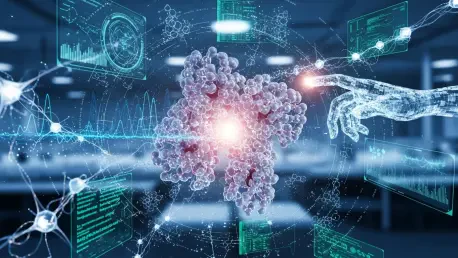

The pharmaceutical industry stands at a peculiar crossroads where artificial intelligence can dream up millions of promising new drug candidates in hours, yet the actual biological validation of these molecules still relies on antiquated systems that often take months to yield actionable results. This disconnect creates a massive bottleneck in the drug development pipeline, where the speed of computational design far outpaces the capacity of traditional laboratory testing to confirm safety and efficacy. To address this imbalance, researchers are increasingly looking toward organoids—three-dimensional, self-organized cellular structures that mimic the architecture and function of human organs—as a more reliable bridge between the digital and biological worlds. However, the true potential of these models is currently hindered by their existence as artisanal, small-scale laboratory experiments rather than standardized, industrial-grade tools. Transitioning these complex biological systems into a high-throughput, automated environment is no longer just a luxury; it is a necessity for any organization aiming to capitalize on the rapid advancements in generative AI and machine learning. By industrializing the production and analysis of organoids, the industry can finally move toward a model of drug discovery that is as precise, scalable, and predictable as the silicon-based algorithms that drive it.
The Strategic Role: Advanced Biological Models
Enhancing Accuracy: 3D Tissue Architecture
Traditional drug development has long been plagued by a high attrition rate, where approximately nine out of ten drugs that enter clinical trials ultimately fail due to lack of efficacy or unforeseen toxicity issues. This massive failure rate stems largely from the reliance on two-dimensional cell cultures and animal models, neither of which perfectly replicates the intricate nuances of human physiology. Two-dimensional cultures, while convenient and scalable, force cells to grow on flat plastic surfaces that distort their shape and disrupt the complex signaling networks that occur in a three-dimensional environment. On the other hand, animal models offer a living system but are often poor predictors of human drug response because of fundamental differences in genetics, metabolism, and protein expression. Organoids represent a transformative middle ground by providing self-organized, three-dimensional structures that mimic the architecture and functional characteristics of human organs. These miniature biological models allow researchers to observe how drugs interact with human tissue in a way that was previously impossible without direct human testing. By capturing the spatial organization and multicellular interactions of a real organ, organoids provide a much more accurate representation of how a disease progresses and how a therapeutic intervention might alter its course.
The practical utility of these 3D models is most pronounced in specialized therapeutic areas such as hepatology and oncology, where the predictive power of a model can save billions of dollars in failed trials. Liver organoids, for example, have become indispensable for the early detection of drug-induced liver injury, a leading cause of drug withdrawals and clinical trial terminations. By testing new compounds on these human-derived tissues, companies can identify toxic side effects long before the first human dose is ever administered. In the realm of oncology, patient-derived tumor organoids are revolutionizing personalized medicine by acting as “avatars” for individual patients. These models allow doctors to test a variety of chemotherapy agents and targeted therapies on a patient’s own cancer cells outside of their body, identifying the most effective treatment with minimal trial and error. Furthermore, intestinal organoids are now being used to study gastrointestinal barrier integrity and nutrient absorption, providing a level of detail that traditional methods simply cannot match. As these models continue to evolve in complexity and reliability, they are setting a new standard for biological accuracy, ensuring that only the most promising and safe candidates move forward in the development process.
Aligning With Modern Regulatory Frameworks
The momentum behind the adoption of organoids is further accelerated by a landmark shift in the regulatory landscape, most notably the implementation of the FDA Modernization Act 2.0. This legislation has officially ended the century-old requirement for animal testing in every drug application, explicitly allowing for the use of New Approach Methodologies such as organoids, organs-on-chips, and sophisticated computer modeling. This change represents a significant pivot in how safety and efficacy are validated, providing a clear legal pathway for pharmaceutical companies to integrate human-relevant biological data into their regulatory submissions. By removing the mandatory animal testing hurdle, regulators have opened the door for a more ethical and scientifically sound approach to drug discovery that prioritizes data derived from human biology. This shift not only reduces the ethical concerns associated with animal research but also addresses the scientific limitations of interspecies translation, which has historically led to the failure of many promising compounds. The legal recognition of these technologies has prompted a surge in investment, as companies now have the regulatory certainty needed to overhaul their research infrastructure.
Adopting this “fail fast, fail cheap” philosophy is essential for managing the skyrocketing costs associated with bringing a new drug to market, which currently averages several billion dollars. By integrating industrialized organoid platforms into the earliest stages of the research and development pipeline, developers can quickly weed out non-viable candidates before they reach the expensive clinical phase. This early-stage filtering ensures that financial and human resources are concentrated on the leads with the highest probability of success, maximizing the return on investment for research initiatives. Moreover, the ability to generate high-fidelity human data early in the process allows for more informed decision-making regarding dose selection and patient stratification. This strategic alignment with modern regulatory standards is not just about compliance; it is about building a more efficient and responsive discovery engine that can meet the urgent healthcare needs of the population. As more companies demonstrate the validity of organoid-based data in their filings, these models will likely become the primary benchmark for safety and efficacy, eventually superseding traditional animal models in many aspects of pharmaceutical research and development.
The Industrial Scalability: Overcoming the Barrier
Standardized Manufacturing: Shifting From Artisanal Craft
Despite their immense potential, the widespread application of organoids has been historically limited by a lack of scalability and the “artisanal” nature of their production. For years, organoids were grown in small batches by highly specialized biologists who relied on bespoke protocols and manual interventions, a process that was both time-consuming and prone to significant variability. This hand-crafted approach meant that the quality and characteristics of the organoids could vary significantly from one laboratory to another, or even from one batch to the next within the same facility. For organoids to be viable for high-throughput screening and AI-driven discovery, they must undergo the same transition that the biologics industry experienced decades ago: a shift from small-scale laboratory production to standardized, industrial manufacturing. This requires the development of repeatable, controlled processes that are governed by strict quality standards and rigorous oversight. The goal is to move away from the idea of organoids as a delicate experimental curiosity and toward a reality where they are treated as reliable, high-performance biological tools that can be produced by the thousands with perfect consistency.
Achieving this level of industrialization involves the implementation of Quality by Design principles, where every variable in the manufacturing process is carefully monitored and optimized. This includes the standardization of raw materials, such as the extracellular matrix scaffolds and growth factor cocktails that are essential for organoid development. By sourcing these components from certified suppliers and establishing rigid specifications for their use, manufacturers can eliminate one of the primary sources of batch-to-batch variation. Furthermore, the use of large-scale bioreactors and controlled environmental chambers allows for the growth of massive quantities of organoids under identical conditions, ensuring that every unit meets the same structural and functional criteria. This industrial approach also facilitates the creation of comprehensive biobanks, where diverse sets of organoids representing different genotypes and disease states can be stored and accessed on demand. By treating the production of organoids with the same precision and rigor as the manufacturing of high-tech semiconductors or biological therapeutics, the industry is creating a stable foundation for the next generation of data-driven medicine. This evolution is critical for ensuring that the biological side of the discovery equation can finally keep pace with the rapid advancements in digital modeling.
Automation and AI: Enhancing Quality Control
Automation serves as the primary engine for achieving the precision and consistency required for industrial-scale drug discovery. By utilizing advanced robotics, automated liquid-handling systems, and microfluidic technologies, researchers can eliminate the human error and operator-dependent variability that often compromise biological research. These systems can perform repetitive tasks, such as media changes and compound dosing, with a level of accuracy and speed that is simply impossible for human technicians to achieve. This is particularly vital during the early stages of organoid formation, a sensitive period where even minor fluctuations in temperature or nutrient concentration can lead to significant deviations in development. Automation ensures that every organoid in a 384-well plate or a massive bioreactor is treated exactly the same way, resulting in a highly uniform population of biological models. This level of control is essential for generating the reproducible datasets that are required for large-scale screening campaigns, where the goal is to identify subtle differences in drug response across thousands of different compounds.
Beyond physical automation, the integration of AI-enabled imaging is revolutionizing the quality control and analysis of organoid cultures. Traditionally, assessing the health and maturity of an organoid required a human researcher to spend hours looking through a microscope, a subjective process that was prone to bias and oversight. Today, high-content imaging systems equipped with computer vision algorithms can monitor organoids in real-time, automatically identifying and tracking key morphological features such as size, shape, and internal organization. These AI systems can detect the earliest signs of stress or improper development, allowing for the automatic exclusion of sub-par samples from a screening run. This non-destructive, real-time monitoring provides a continuous stream of data throughout the organoid’s lifecycle, offering insights into how these complex tissues develop and respond to environmental stimuli. The combination of robotic precision and AI-driven analysis creates a robust feedback loop that constantly improves the quality of the biological models. By offloading the burden of manual oversight to intelligent machines, researchers can focus on higher-level data interpretation and strategic decision-making, ultimately accelerating the journey from a promising chemical compound to a validated therapeutic lead.
Streamlining the Discovery Pipeline
Solving Temporal Inefficiencies: The Role of Preservation
One of the most significant logistical challenges in using organoids for drug discovery is the substantial amount of time required for them to mature into functional tissues. Depending on the organ type and the desired level of complexity, this maturation process can take anywhere from several weeks to several months, creating a significant delay in the research timeline. This temporal bottleneck is fundamentally at odds with the fast-paced nature of modern drug discovery, where the ability to quickly test an AI-generated hypothesis can be a major competitive advantage. To solve this problem, the industry is working to decouple the production of organoids from their actual use in experiments, allowing for a more flexible and responsive research environment. This is being achieved through the refinement of advanced preservation techniques, such as vitrification and controlled-rate freezing, which allow organoids to be stored at cryogenic temperatures without losing their structural integrity or functional capabilities. By creating a ready-to-use inventory of pre-matured organoids, research teams can initiate screening projects almost immediately, rather than waiting months for their biological models to grow.
The ability to “bank” organoids at scale transforms them from a time-intensive experimental resource into a standardized laboratory reagent that can be ordered and deployed as needed. This approach also facilitates the sharing of consistent biological models across different global research sites, ensuring that a team in Europe and a team in North America are testing their compounds on identical biological systems. Furthermore, advanced cryopreservation allows for the long-term storage of rare or patient-specific models, preserving valuable biological diversity for future research. This logistical shift is essential for synchronizing the biological testing phase with the rapid design cycles of artificial intelligence. When an AI platform identifies a novel set of molecules, researchers should be able to pull the appropriate organoid models from a biobank and begin validation within days. This efficiency not only speeds up the discovery process but also reduces the overhead costs associated with maintaining large, continuous cultures of living tissue. As preservation technologies become more sophisticated, the industry is moving toward a future where the availability of high-quality human tissue is no longer a limiting factor in the pursuit of new medicines.
Supplying the Data Engine: Fueling Artificial Intelligence
The ultimate value of industrializing organoid platforms lies in their ability to serve as a high-fidelity data engine for artificial intelligence and machine learning. As these digital tools become the central nervous system of drug discovery, their success depends entirely on the volume and quality of the data they consume. Industrial-scale organoid platforms provide the consistent, human-relevant datasets that AI needs to make accurate predictions about how a new drug will behave in a complex living system. Unlike traditional data sources, which are often noisy and derived from non-human models, industrialized organoid data offers a direct window into human cellular responses, capturing the nuances of gene expression, protein production, and metabolic activity. This allows researchers to train AI models that can predict not only whether a drug will work, but also how it might interact with specific patient populations or how it might be metabolized by the liver. The integration of biology and computation creates a powerful synergy where biological insights inform algorithmic improvements, which in turn lead to better-designed biological experiments.
In this industrialized context, the true utility of an organoid model is defined more by its predictability and reproducibility than by its absolute biological complexity. While researchers strive for models that are as close to real organs as possible, a model that is 80% accurate but 100% reproducible across ten thousand samples is far more valuable to an AI trainer than a perfectly accurate model that can only be grown once. By treating biology with the precision of an engineering discipline, the industry is creating the structured, high-dimensional datasets required for “deep learning” in drug discovery. This approach allows for the identification of complex patterns and correlations that would be invisible to human researchers, leading to the discovery of novel drug targets and more effective therapeutic strategies. As the industry continues to refine these industrialized biological systems, the boundary between the wet-lab and the dry-lab will continue to blur, resulting in a more cohesive and data-rich approach to medicine. This evolution is not just about making drug discovery faster; it is about making it smarter, ensuring that the next generation of treatments is built on a foundation of solid, human-relevant evidence.
The pharmaceutical landscape underwent a profound transformation as the industrialization of organoid technology moved from a theoretical objective to a core operational reality. Leaders in the sector recognized that the true power of artificial intelligence was only accessible when paired with biological models that were as scalable and consistent as the code itself. They prioritized the development of automated manufacturing pipelines and invested heavily in AI-driven quality control, which drastically reduced the variability that had previously hindered the use of 3D tissues. Researchers successfully integrated these standardized models into the earliest stages of discovery, allowing for the rapid elimination of toxic or ineffective compounds before they incurred the high costs of clinical trials. The industry also mastered advanced preservation techniques, effectively decoupling the production of organoids from their immediate use and creating a responsive infrastructure for on-demand biological validation. These strategic moves collectively shifted the focus of drug development from a high-risk gamble toward a more predictable engineering discipline rooted in human-specific data. Moving forward, stakeholders should focus on establishing universal standards for organoid quality and data interoperability to ensure that these advancements are accessible across the entire global research community. Organizations must also prioritize the cross-training of biologists and data scientists to foster a workforce that can navigate the increasingly integrated world of digital and biological discovery. By maintaining this commitment to industrial precision and human relevance, the industry ensured that the promise of AI-driven drug discovery was translated into tangible benefits for patients worldwide.