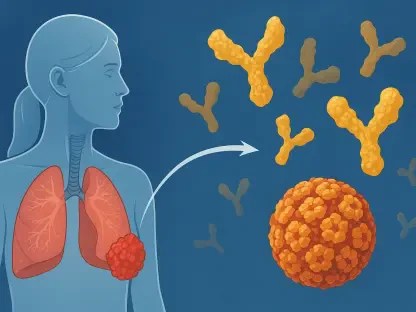

The biotech landscape faced a significant reality check this morning as Verge Genomics announced a comprehensive rebranding to Verge Labs following the disappointing results of its primary artificial intelligence-developed therapeutic candidate. This pivot reflects a broader industry trend where

The transition to paperless healthcare systems within the National Health Service has introduced a paradoxical reality where digital efficiency often collides with unforeseen clinical risks that threaten patient safety. While the Electronic Prescription Service (EPS) streamlined the movement of

The recent unveiling of the Evo 2 foundation model has redefined the boundaries of genomic research by providing a sophisticated computational framework capable of decoding the intricate layers of genetic information. This advanced system is not merely a refinement of existing technologies but a

The convergence of generative artificial intelligence and a massive wave of global investment capital is currently rewriting the operational DNA of the life sciences and healthcare sectors with unprecedented speed. This transition is not merely about incremental software updates or faster computer

For decades, the promise of precision medicine felt like a distant horizon, a sophisticated vision where genetic blueprints would dictate clinical decisions, yet today that vision is rapidly materializing into a standard of care across major health systems. This transition marks a fundamental pivot

The unprecedented demographic shift occurring across the globe has fundamentally altered the biological landscape of the human experience, extending the average lifespan to lengths that were once the stuff of science fiction. While the triumph of modern medicine in pushing back the boundaries of