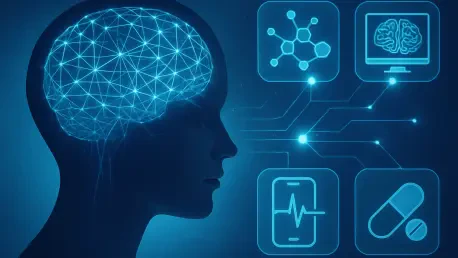

Developing therapeutic interventions for the central nervous system has long been regarded as one of the most arduous challenges in the pharmaceutical industry due to the physiological complexity of the human brain. Traditionally, central nervous system drugs have faced a higher attrition rate compared to other therapeutic areas, often failing in late-stage clinical trials because of unforeseen side effects or a lack of efficacy in human subjects. However, the integration of advanced artificial intelligence frameworks has begun to fundamentally alter this landscape. By utilizing machine learning algorithms to map the intricate neural networks and chemical interactions within the brain, researchers are now able to identify novel drug targets with a degree of precision that was previously unattainable. These computational tools analyze vast datasets from genomic and clinical sources to uncover hidden patterns that suggest how a specific molecule might behave.
Rationalizing Drug Discovery
Molecular Design Architecture
The application of generative AI models has specifically accelerated the identification of lead compounds that can successfully cross the blood-brain barrier, which is a major hurdle for neuro-medications. In the current environment of 2026, pharmaceutical companies are increasingly utilizing deep learning architectures to simulate how millions of candidate molecules interact with the semi-permeable membrane that protects the brain. This predictive capability allows scientists to discard ineffective compounds early in the research phase, thereby saving years of laboratory work and millions of dollars in investment. For example, organizations like InSilico Medicine have demonstrated that AI-designed molecules can reach clinical trial stages in a fraction of the time required by traditional methods. These models do not merely replicate known chemical structures; they propose novel molecular architectures optimized for stability and specific binding affinity within the neural environment.
High-Fidelity Simulations
High-fidelity simulations are being used to model the long-term impact of chronic medication on the central nervous system’s neuroplasticity. Advanced computational platforms can now forecast how a drug might influence synaptogenesis or neuroinflammation over several years, providing a vital safety net for patients with conditions like Alzheimer’s or multiple sclerosis. This proactive approach to pharmacology ensures that potential neurotoxic effects are identified long before a dose is administered to a human participant. Furthermore, these simulations incorporate diverse genetic profiles to predict how variations in human biology might affect drug metabolism and response. This level of granular detail allows for the development of digital twins, which are virtual representations of a patient’s neurological state used to test various treatment scenarios. As these technologies mature, the reliance on traditional animal models is decreasing significantly.
Personalized Neurology
Digital Monitoring
Precision neurology has further evolved through the use of digital biomarkers and continuous monitoring tools that track a patient’s cognitive and motor functions in real time. Rather than relying on sporadic clinical visits, clinicians are now deploying wearable sensors and AI-driven speech analysis to detect subtle changes in neural health. For instance, subtle variations in gait or the frequency of specific vocal tremors can serve as early warning signs for Parkinson’s disease, appearing years before traditional symptoms become visible. These data streams are processed by centralized AI hubs that alert medical providers to deviations from a patient’s baseline, allowing for immediate adjustments to treatment protocols. This continuous loop of data and feedback creates a highly personalized healthcare experience that adapts to the unique needs of the individual. This transition toward real-time diagnostics has enabled the recruitment of more homogeneous cohorts.
Strategic Integration
The successful transformation of neurological care required a concerted effort to unify siloed datasets and adopt transparent ethical guidelines for AI implementation in medicine. Stakeholders across the industry realized that the primary challenge was not the lack of data, but the lack of interoperability between different research institutions and healthcare providers. To move forward, it became essential for regulatory bodies to establish standardized frameworks for validating AI-generated evidence in clinical submissions. Looking ahead, the focus shifted toward ensuring that these advanced neuro-technologies were accessible to diverse populations to prevent a technological divide. Future research prioritized the integration of multi-omic data with social determinants of health to provide a truly holistic view of neurological wellness. By maintaining a commitment to data privacy, the medical community ensured that the promise of AI reached the patients who needed it most.