
The biological complexity of cancer requires a precision that traditional treatments often lack, creating a desperate need for solutions that can adapt to the unique genetic profile of every individual patient. While generic chemotherapy and radiation have long been the standard of care, the emergence of personalized mRNA vaccines represents a paradigm shift in how the medical community approaches oncological challenges. These vaccines function by teaching the immune system to recognize and attack specific proteins, known as neoantigens, that are present only on tumor cells. The primary hurdle has been the sheer volume of data involved in identifying these unique markers among thousands of mutations. Recent advancements in neural networks have finally provided the tools necessary to sift through this genetic noise with speed and accuracy, transforming a process that once took months into something achieved in just a few days. This speed is critical because cancer is a dynamic disease that evolves rapidly. By leveraging high-throughput sequencing and sophisticated predictive modeling, researchers are now able to design highly targeted interventions that were previously considered impossible to develop at scale.
Computational Precision: Mapping Unique Tumor Markers
Deep learning architectures are now being deployed to handle the massive datasets generated by next-generation sequencing of both healthy and cancerous tissues from a single patient. These algorithms are trained to perform differential analysis, pinpointing the exact mutations that are likely to elicit the strongest immune response while ignoring those that are benign or common to healthy cells. By utilizing transformer-based models, clinicians can now predict which neoantigens will be successfully presented on the surface of a cell by the Major Histocompatibility Complex. This predictive power is essential because only a small fraction of mutations will trigger the T-cell activity required to destroy the cancer. The ability of artificial intelligence to simulate these interactions in a virtual environment has significantly reduced the rate of failure in clinical trials. Moreover, these systems are continuously learning from every new patient case, refining the selection process with every successful treatment. This iterative improvement ensures that the precision of vaccine design increases over time.
The integration of structural biology with generative AI has allowed for the modeling of protein binding affinities with a degree of accuracy that was previously unattainable in a clinical setting. Rather than relying on laboratory experiments, researchers use these models to determine the optimal mRNA sequence that will produce the most stable antigen once injected. This structural prediction is vital for ensuring that the resulting protein maintains the shape necessary for the immune system to recognize it as an invader. Furthermore, AI systems are now capable of predicting the potential for off-target effects, thereby minimizing the risk of autoimmune reactions. By analyzing structural similarities between tumor neoantigens and common human proteins, these tools provide an additional layer of safety. This capability has effectively lowered the barrier to entry for personalized medicine, allowing for the rapid design of multi-epitope vaccines that target several different mutations simultaneously. Such a multi-pronged approach is particularly effective against heterogeneous tumors where different parts contain varying genetics.
Systemic Integration: Lessons from the Implementation of AI Therapies
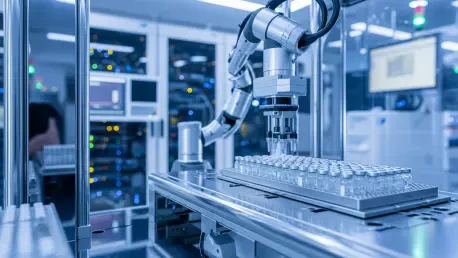
The shift from design to physical production represents another area where technological integration has streamlined the path to patient care. Once the AI-driven design phase is complete, the mRNA sequence must be synthesized and encapsulated within lipid nanoparticles to ensure safe delivery and uptake by the cells. Automated manufacturing platforms, guided by real-time monitoring software, have replaced many of the manual steps that previously slowed down the production of bespoke biological products. These systems use sensors to track the chemical purity and concentration of the vaccine at every stage, adjusting parameters on the fly to maintain the highest quality standards. This level of automation is crucial for scaling the technology, as it allows specialized facilities to produce hundreds of unique vaccine batches for different patients at the same time. The reduction in human intervention not only speeds up the timeline but also lowers the risk of contamination or procedural errors that could compromise the efficacy of the treatment for a patient.
The successful implementation of these personalized treatments demonstrated that the primary requirement for long-term success was a robust data-sharing infrastructure across global health networks. Stakeholders recognized that for AI to reach its full potential, it was necessary to establish standardized protocols for genomic data collection and storage that prioritized security. Pharmaceutical companies and academic institutions took decisive steps to collaborate on open-source datasets that provided a more diverse range of genetic information, ensuring that algorithms were trained on data reflecting the global population. This collaborative effort helped to mitigate bias in neoantigen prediction, leading to more equitable health outcomes across demographic groups. Policy makers also played a crucial role by creating flexible regulatory frameworks that accounted for the unique nature of individualized therapies. These actions successfully ensured that the infrastructure was prepared for the rapid expansion of medicine and supported the continuous training of staff.