
The ongoing escalation of antimicrobial resistance has effectively pushed modern medicine toward a precipice where common infections could once again become untreatable without a fundamental shift in drug discovery. This looming crisis is particularly evident in the treatment of Neisseria gonorrhoeae, a pathogen that has systematically dismantled nearly every antibiotic class used against it. As the second most reported sexually transmitted infection, its ability to cause infertility and systemic organ damage remains a significant public health burden. Recent breakthroughs, however, suggest that the integration of deep learning into the pharmaceutical pipeline provides a necessary tactical advantage in this biological arms race.
The Evolution of AI-Driven Antimicrobial Research
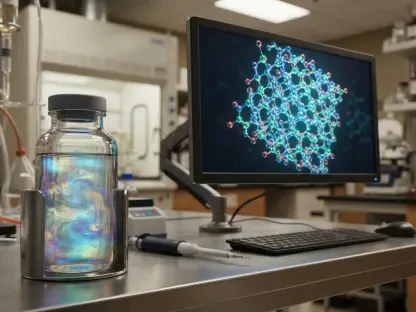
The transition from traditional laboratory methods to neural network-based molecular screening represents a pivot from serendipity to intentionality. For decades, drug discovery relied on the slow-paced “trial-and-error” screening of soil samples or known chemical derivatives, a process that has yielded diminishing returns. Artificial intelligence has fundamentally altered this landscape by applying deep learning algorithms to predict the bioactivity of molecules before they are ever synthesized in a physical lab.
This technology utilizes deep neural networks to interpret the complex relationships between chemical structures and their inhibitory effects on specific pathogens. In the context of the antimicrobial resistance crisis, this capability allows researchers to bypass the structural limitations of existing antibiotics. By training models on massive datasets, scientists can now identify entirely new chemical scaffolds that have no evolutionary precedent, effectively outmaneuvering the adaptive mechanisms of resistant bacteria.
Essential Components of the Discovery Pipeline
Phase 1: High-Throughput Dataset Foundation and Model Training
The efficacy of any deep learning model is inherently tied to the quality of its foundational training data. In modern discovery pipelines, researchers begin by physically testing tens of thousands of small molecules against a target pathogen to generate a binary classification of “inhibitor” versus “non-inhibitor.” This initial dataset provides the “ground truth” that the AI uses to identify the specific chemical motifs, such as the arrangement of atoms or the presence of specific functional groups, that contribute to bacterial neutralization.
This phase is not merely about data collection; it is about teaching the machine to understand the language of molecular biology. By processing over 38,000 distinct molecules, the model learns to recognize subtle structural nuances that a human chemist might overlook. This rigorous training ensures that the subsequent virtual screening is grounded in empirical reality, reducing the likelihood of false positives when the system scales to larger libraries.
Phase 2: Virtual Screening of Ultra-Large Chemical Libraries
Once the model is refined, it is deployed to screen “dark” chemical space—libraries containing millions of compounds that exist only in digital databases or as “make-on-demand” possibilities. This computational brute force allows for the evaluation of 6 million compounds in a fraction of the time it would take to screen even a small subset in a traditional laboratory. The AI assigns a probability score to each molecule, highlighting those with the highest potential for antimicrobial activity.
The true value of virtual screening lies in its ability to explore chemical diversity. Traditional screening often gravitates toward “low-hanging fruit” or variations of existing drug classes. In contrast, the deep learning model can identify molecules with entirely distinct geometries. This capability is essential for finding candidates that target novel biological pathways, such as the alanine racemase enzyme, which remain largely unexploited by current clinical treatments.
Phase 3: Refinement Through Multi-Stage Filtering and Toxicity Modeling
Identifying a molecule that kills bacteria is only the first hurdle; the compound must also be safe for human cells. The discovery pipeline incorporates multi-stage filtering that utilizes secondary models to predict toxicity and solubility. These algorithms evaluate whether a potential antibiotic will interact with human epithelial cells or interfere with essential metabolic processes, thereby excluding candidates that might cause adverse systemic reactions.
By integrating growth inhibitory assays and toxicity modeling early in the process, the pipeline significantly narrows the field of candidates to a handful of standout molecules. This proactive exclusion of toxic or unstable compounds streamlines the development process, ensuring that only the most viable leads proceed to the expensive and time-consuming stages of animal and human testing. This systemic refinement is what differentiates modern AI discovery from historical broad-spectrum screening.
Contemporary Trends in Algorithmic Drug Development
The current landscape of drug development is characterized by a move toward “ultra-large, make-on-demand” libraries, where digital catalogs of billions of molecules can be synthesized once their potential is validated. This trend is supported by an increasing synergy between synthetic chemistry and bioengineering, where AI models are used not only to find the drug but also to design the chemical steps required to build it. This integration shortens the distance between a digital “hit” and a tangible therapeutic agent.
Furthermore, there is a growing emphasis on “narrow-spectrum” antibiotics that selectively target a specific pathogen while leaving the beneficial human microbiome intact. This precision approach, facilitated by the specificity of deep learning models, represents a departure from the “scorched-earth” strategy of traditional broad-spectrum drugs. By targeting unique bacterial enzymes like alanine racemase, the industry is moving toward therapies that are both more effective and less likely to drive widespread resistance in unrelated bacterial populations.
Real-World Applications and Pathogen Targeting
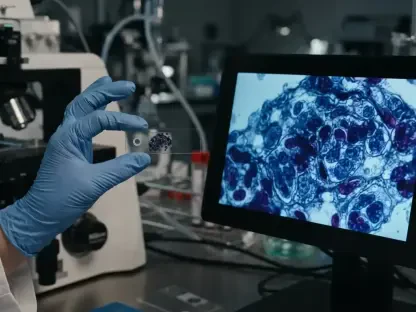
The most prominent success of this technology has been the discovery of compounds A1 and MP20, which have shown remarkable efficacy against N. gonorrhoeae. The compound A1, in particular, was found to target alanine racemase, an enzyme critical for the synthesis of the bacterial cell wall. This discovery was validated not just in petri dishes, but through sophisticated “Organ-on-a-Chip” technology that simulates the physiological environment of the human vagina. This allows researchers to observe how the drug interacts with human tissue and competing bacteria in a controlled, human-relevant setting.
The use of mouse models further confirmed the translational potential of these AI-discovered leads. In these studies, the deep learning-derived compounds significantly reduced bacterial loads over a 24-hour period, demonstrating that the potency observed in digital simulations translates into biological systems. These successes highlight the power of combining computational speed with advanced bio-simulators to provide a comprehensive picture of a drug’s potential long before it reaches human trials.
Technical Hurdles and Market Obstacles
Despite the speed of discovery, the transition from an AI “hit” to a clinical “lead” remains a significant challenge. A hit compound identified by a neural network often requires “hit-to-lead” optimization, where medicinal chemists must manually adjust the molecule to improve its half-life, metabolic stability, and bioavailability. This stage remains a bottleneck, as the nuances of how a drug moves through a complex living organism are still difficult for AI to predict with perfect accuracy.
Moreover, the regulatory landscape has yet to fully adapt to the speed of AI-driven pipelines. While the science can produce candidates in weeks, the traditional phases of clinical trials and FDA approval still take years. Additionally, there is the ongoing threat of bacterial evolution; even the most novel AI-derived compounds are not immune to eventual resistance. Maintaining a persistent edge requires a continuous cycle of discovery that stays several steps ahead of the pathogens’ adaptive responses.
The Future of Precision Antimicrobial Therapy
Looking ahead, the scalability of AI discovery pipelines suggests they will soon be applied to a wider variety of infectious diseases, including respiratory infections and systemic sepsis. Future developments will likely involve even more sophisticated predictive models that can account for the dynamic interactions within a host’s immune system. This move toward precision antimicrobial therapy will allow doctors to prescribe drugs tailored to the specific genetic profile of a patient’s infection, maximizing efficacy while minimizing side effects.
Long-term, the integration of AI into the pharmaceutical industry will likely shift the economics of drug discovery. By reducing the failure rate in early development, the cost of bringing new antibiotics to market could decrease, encouraging investment in a sector that has been historically neglected due to low profitability. This paradigm shift holds the potential to permanently rebalance the arms race against bacteria, ensuring that medicine remains several generations ahead of the pathogens it seeks to control.
Summary of the AI Discovery Paradigm
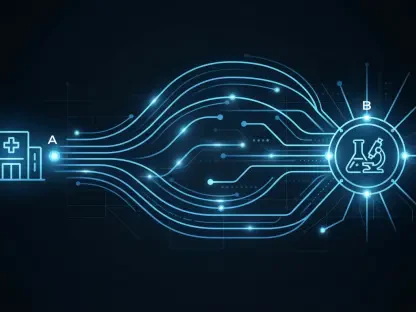
The transition from silicon-based discovery to living-system validation represented a major milestone in 2026 pharmacology. The research demonstrated that deep learning could effectively identify novel chemical structures, such as A1 and MP20, which targeted specific bacterial enzymes with high precision. This methodology bypassed the limitations of traditional trial-and-error laboratory work, allowing for the rapid screening of millions of compounds and the identification of durable leads against resistant pathogens.
The study established a scalable framework that integrated artificial intelligence with advanced bioengineering tools like the Vagina-on-a-Chip. These advancements shifted the focus from broad-spectrum treatments to targeted, precision therapies that protected the human microbiome. Ultimately, the successful deployment of these AI-driven pipelines provided a robust defense against the threat of antibiotic resistance, redefining the global pharmaceutical industry’s approach to infectious disease and securing the future of modern healthcare.