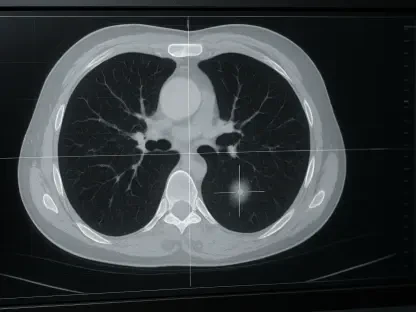

The clinical management of advanced bone cancer has historically relied on the visual interpretation of complex radiological scans, a process that frequently introduces human variability and potential delays in treatment adjustment. As oncologists navigate the increasing volume of high-resolution imaging data generated by modern PET and MRI systems, the necessity for more precise and objective tools has become strikingly evident. Artificial intelligence is now addressing these challenges by providing a sophisticated layer of computational analysis that can discern subtle physiological changes long before they are apparent to the human eye. This technological shift is moving the field away from subjective observation toward a model of quantitative precision, where every voxel of data is scrutinized for signs of progression or response. By integrating machine learning algorithms directly into the diagnostic workflow, healthcare providers are better equipped to handle the intricacies of primary bone tumors and secondary metastatic lesions that compromise skeletal integrity.
Enhancing Diagnostic Precision Through Radiomics
Automated Lesion Detection and Segmentation
One of the primary ways artificial intelligence is transforming monitoring is through the automated detection and segmentation of suspicious bone lesions across the entire skeleton. Standard manual methods for identifying new metastases are often labor-intensive and prone to oversight, especially when dealing with dozens of small, scattered lesions in patients with advanced disease. AI-driven software now employs deep learning architectures to scan three-dimensional imaging volumes, isolating abnormal densities with a degree of consistency that human radiologists find difficult to maintain over long shifts. These algorithms are trained on vast datasets of confirmed bone pathologies, allowing them to differentiate between benign remodeling and active malignant growth with high sensitivity. Building on this automated foundation, the technology provides a comprehensive skeletal map, ensuring that no single site of potential concern is missed during routine follow-up examinations. This level of thoroughness is crucial for staging the disease accurately and for identifying the most aggressive sites that may require immediate intervention.
Quantitative Assessment of Tumor Mineralization
Beyond merely finding lesions, artificial intelligence excels at measuring the minute changes in bone mineralization and density that occur as a direct result of therapeutic interventions. In bone cancer, a positive response to treatment often manifests as the re-calcification of a previously lytic lesion, a process that can be difficult to quantify using traditional scoring systems. AI systems can now calculate the precise bone mineral density within a specific region of interest, tracking these values over multiple time points to provide a clear trajectory of healing or decline. This quantitative approach eliminates the ambiguity associated with qualitative descriptions, offering instead a definitive percentage change in tumor volume or density. Moreover, these tools can automatically compare current scans with previous ones, highlighting areas where the bone is successfully hardening or where new erosions are beginning to form. This dynamic tracking capability allows for a more nuanced understanding of how the cancer interacts with the skeletal environment, providing clinicians with the objective evidence needed to maintain or pivot a treatment strategy.
Predictive Modeling and Longitudinal Tracking
Identification of Early Treatment Resistance
The ability to predict which patients will respond to specific systemic therapies represents a significant leap forward in the longitudinal monitoring of advanced bone malignancies. Artificial intelligence models are increasingly capable of identifying radiomic signatures—patterns within the imaging data that are invisible to the eye—that correlate with early signs of drug resistance. By analyzing the internal texture and vascularity of a tumor, these predictive algorithms can alert the clinical team to a lack of response weeks or even months before the tumor physically grows larger. This early warning system is vital because it prevents patients from remaining on ineffective, toxic treatments and allows for a more rapid transition to alternative therapies or clinical trials. Furthermore, AI can integrate imaging data with other clinical markers, such as circulating tumor DNA levels, to create a multi-dimensional view of the patient’s status. This holistic monitoring approach ensures that the management plan is always aligned with the biological reality of the disease, rather than lagging behind it.
Strategic Implementation for Improved Patient Outcomes
The successful integration of artificial intelligence into oncology workflows demonstrated that computational tools could significantly reduce the time spent on manual scan reviews while increasing diagnostic accuracy. Medical centers that adopted these automated monitoring systems observed a marked improvement in the consistency of reporting, which in turn facilitated better coordination between surgical and medical teams. Radiologists utilized these advanced platforms to prioritize urgent cases where AI had flagged significant progression, ensuring that critical decisions were made without administrative delay. This proactive stance allowed for the implementation of palliative measures more effectively, as skeletal-related events were predicted and mitigated before fractures occurred. Ultimately, the adoption of these technologies fostered a more responsive healthcare environment where the data from every scan was fully leveraged to benefit the patient. By shifting the burden of data processing to machine learning models, the clinical focus returned to personalized patient interaction and the refinement of complex care pathways. The transition to AI-supported monitoring proved to be a fundamental evolution in the long-term management of bone cancer patients.