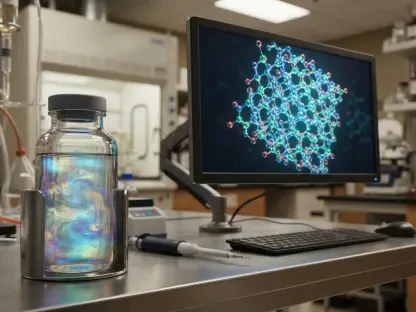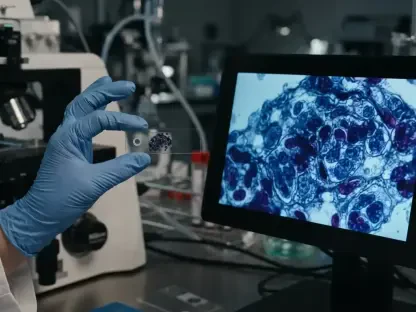

Dr. Colleen Clancy is pioneering the use of Optical Digital Twins to bridge the gap between complex biological data and individualized medical interventions. This mission stands at the heart of the Center for Precision Medicine and Data Sciences at UC Davis Health, where the convergence of advanced

A molecule may show exceptional potency against a biological target in a test tube yet fail completely if it cannot cross the lipid-rich cell membrane. This fundamental reality of pharmacokinetics has established the Madin-Darby Canine Kidney assay as a cornerstone of early-stage pharmaceutical

Securing CE-MDR clearance has allowed SkyLabs to establish robust distribution networks in the United Kingdom and throughout mainland Europe's healthcare systems. This strategic milestone marks a significant step for the South Korean technology pioneer as it prepares for its transition to the
Pre-market evaluation is no longer a one-time approval but the start of a continuous monitoring process to prevent performance drift in GenAI-enabled medical equipment. Hospitals across the United States are witnessing a silent revolution where the stethoscope is being augmented by vast neural

Standard quantum optimization methods typically require one qubit for every variable, a demand that quickly exceeds the capacity of current hardware. In the high-stakes world of pharmaceutical research, molecular docking serves as a critical tool for identifying how new drug candidates interact

A major challenge in pharmaceutical development is the high failure rate of programs that stall because a target protein’s structure cannot be mapped. For many years, the pharmaceutical industry relied heavily on physical laboratory experiments that were both time-consuming and prone to human