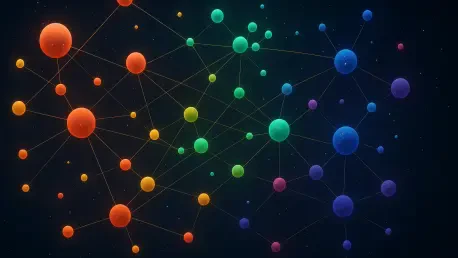

Decoding the intricate architectural history of proteins that has unfolded over billions of years requires a tool capable of bridging the chasm between raw genetic sequences and their complex physical manifestations. The emergence of the Contrastive Learning Sequence-Structure (CLSS) model represents a defining moment for computational biology in 2026, offering a unified lens to view the protein universe. Developed by a cross-continental collaboration including the Earth-Life Science Institute and prominent Israeli research universities, this AI-driven framework addresses a fundamental fragmentation in biological data. By moving beyond traditional classification systems, the model provides a streamlined method to trace how life has recycled and refined its molecular machinery since the dawn of time.
The CLSS model functions as a digital cartographer for the “protein universe,” an expansive domain comprising the millions of unique proteins that drive existence. Historically, researchers have been forced to navigate this space using two separate maps: one based on amino acid sequences and another on three-dimensional folds. The disconnect between these maps often obscured evolutionary links, as proteins with divergent sequences can sometimes mirror each other’s structures through convergent evolution. CLSS resolves this by creating a singular, cohesive coordinate system where sequence and structure are no longer distinct data points but rather two sides of the same biological coin.
Evolution and Core Principles: CLSS
The development of CLSS was driven by the realization that our understanding of early life is limited by the tools we use to categorize it. For decades, the biological community relied on hierarchical systems that essentially treated proteins like animals in a zoo, grouped by visible traits or genetic lineage. However, these systems struggled to account for the deep-time evolution that occurred before complex organisms existed. The core principle of CLSS is rooted in the “shared embedding” concept, which aims to translate various biological languages into a single numerical dialect that an artificial intelligence can interpret and organize.
This shift in perspective is significant because it allows for a more holistic view of the technological landscape in biotechnology. Rather than viewing a protein as a static entity, CLSS treats it as a dynamic piece of evolutionary history. By focusing on the relationship between form and function, the model has emerged as a essential tool for researchers trying to navigate the massive influx of genomic data generated over the last few years. It serves as a bridge between the foundational principles of biochemistry and the predictive power of modern neural networks.
Technical Architecture: Primary Features
Contrastive Learning: Data Integration
The engine behind CLSS is contrastive learning, a machine learning strategy that trains the model to recognize similarities and differences within complex datasets without explicit human labeling. During its development, the AI was presented with pairs consisting of a protein’s sequence and its physical structure. The model was tasked with generating “embeddings”—high-dimensional vectors that act as biological postcodes. The unique implementation of CLSS forces the sequence embedding and the structure embedding of the same protein to occupy the same geographic space on the digital map.
This approach is fundamentally different from competing models, which often prioritize one data type over the other. By creating a shared space, CLSS ensures that the structural context informs the sequence analysis and vice versa. This synchronization results in a more robust representation of a protein’s identity. When a researcher inputs a newly discovered sequence, the model can instantly pinpoint its structural relatives, even if the amino acid similarity is low. This capability is a significant leap forward in our ability to predict protein behavior in real-time.
Fragment-Based Analysis: Molecular Fossils
A standout feature of the CLSS architecture is its ability to process and place short protein fragments within the global map. Most traditional AI models require full-length, intact protein sequences to provide accurate predictions, making them less effective at analyzing the “Lego bricks” of evolution. CLSS, however, was designed to recognize that evolution is a process of recycling. It can identify small, ancient segments of proteins—often referred to as molecular fossils—that have been preserved across vastly different families of life for billions of years.
The significance of this fragment-based approach cannot be overstated in the context of evolutionary biology. By identifying these conserved snippets, CLSS allows scientists to reconstruct the ancestral “prototypes” of modern proteins. This provides a unique window into the prebiotic and early biotic eras, showing how the first functional molecules might have been assembled. In practical terms, this means the model can identify functional domains in poorly understood proteins by comparing their fragments to the well-mapped regions of the protein universe.
Innovations in Protein Mapping and AI Training
One of the most compelling innovations introduced by the CLSS framework is its capacity for emergent knowledge. When the research team compared the AI-generated maps to established, human-curated databases like CATH and ECOD, they found a startling degree of alignment. The AI had essentially “discovered” the rules of biological classification on its own, without being told which proteins belonged to which family. This validation proves that the model is capturing genuine biological truths rather than just identifying statistical noise in the data.
Furthermore, the training process has moved toward a more autonomous understanding of “biological grammar.” By analyzing how sequences fold into structures across diverse species, the model has learned the constraints that physics imposes on biology. This has led to the discovery of functional clusters that were previously invisible. For example, the model identified that proteins requiring specific chemical cofactors tend to group together in the embedding space, revealing deep-seated relationships between a protein’s chemical environment and its evolutionary trajectory.
Real-World Applications: Use Cases
In the pharmaceutical sector, CLSS is already influencing how biotherapeutic drugs are developed. By providing a clearer map of the protein universe, the model allows researchers to identify potential drug targets that were previously overlooked because their sequences appeared unique. If the CLSS map shows that a target protein shares a structural “neighborhood” with a known functional family, developers can make more informed guesses about its behavior and how to inhibit or activate it. This reduces the trial-and-error phase that often bottlenecks drug discovery.
Another notable implementation is in the field of synthetic biology and enzyme engineering. Industrial scientists are using the model to design new proteins that can catalyze specific chemical reactions, such as breaking down plastics or synthesizing biofuels. By understanding the structural fragments that have successfully performed similar tasks in nature, engineers can “borrow” these evolutionary solutions to create highly efficient, custom-built enzymes. The model acts as a search engine for functional diversity, allowing for the rapid identification of the best biological components for a given task.
Technical Hurdles: Market Obstacles
Despite its impressive capabilities, CLSS faces significant technical hurdles, primarily concerning the imbalance of available data. While we have millions of protein sequences, we only have the precise 3D structures for a small fraction of them. This “structure gap” means the model must often rely on predicted structures from other AI tools, which can introduce errors into the map. Improving the quality of structural data through advanced imaging techniques is a primary focus for the community as we move through 2026.
Market adoption also faces obstacles related to the sheer computational intensity required to run these models. Processing the entire known protein universe requires massive server infrastructure, which can be cost-prohibitive for smaller research labs or startups. Furthermore, there is a regulatory challenge in the biotherapeutic space, as current frameworks are still catching up with AI-designed molecules. Ensuring that these digital predictions translate safely and effectively into physical biological systems remains a critical hurdle for widespread commercialization.
Future Trajectory: Industry Impact
Looking ahead, the trajectory of CLSS and similar models is set to redefine the boundaries of synthetic biology. We are moving toward a period where the “design-build-test” cycle of biology will be conducted almost entirely in a digital environment before a single drop of liquid is touched in a lab. The ability of CLSS to map the evolutionary past suggests that it could also be used to predict the evolutionary future, helping us anticipate how proteins might mutate in response to environmental shifts or medical treatments.
The long-term impact on society could be profound, particularly in our ability to address global challenges like antibiotic resistance and climate change. By understanding the fundamental grammar of proteins, we can develop more resilient crops and more effective vaccines at a fraction of the current cost and time. The integration of CLSS into the broader “Bio-AI” ecosystem will likely lead to a shift where biological research is viewed less as an observational science and more as an engineering discipline, with the protein universe serving as our primary resource.
Assessment: Final Summary
The introduction of the CLSS model successfully provided a unified framework for understanding the vast complexity of protein evolution. By integrating sequence and structure through contrastive learning, the research team demonstrated that AI could independently uncover the deep-seated organizational rules of life. The model’s ability to analyze fragments proved especially useful for identifying ancient molecular patterns, which expanded our knowledge of early biological history. These advancements established a new standard for accuracy and utility in computational biochemistry, effectively outperforming older, single-mode classification systems.
To maximize the potential of this technology, the industry must now focus on expanding the structural databases that feed these models and reducing the computational costs of high-dimensional mapping. Collaborative efforts to standardize “biological embeddings” across different platforms will be necessary to ensure that these maps are accessible to the wider scientific community. As researchers began applying these tools to real-world problems in 2026, the transition from theoretical mapping to practical molecular engineering became the clear next step for the field. Ultimately, the work done with CLSS laid the groundwork for a more predictive and precise era of biotechnology.