
The pharmaceutical industry has shifted toward multi-parameter optimization, testing every new molecular version for solubility and stability alongside its primary biological activity. This fundamental change marks the transition from simple screening to a highly disciplined engineering phase where

By analyzing nearly two thousand hypotheses on amino acid interactions, the Eve system has proven that autonomous machines can independently navigate the complexities of molecular biology. This advancement at Chalmers University of Technology signals a transformative shift where robotics and

Research from the MitoCarta Tree of Life project has revealed that mitochondria likely emerged late in the eukaryotic timeline after cells had already developed internal structures. This monumental finding comes from an extensive collaboration involving institutions like the Broad Institute of MIT

Addressing the risk of sarcopenia in patients using GLP-1 therapies has become a primary objective for researchers developing next-generation metabolic interventions. As the global pharmaceutical industry experiences a seismic shift toward metabolic health, the focus has broadened from achieving
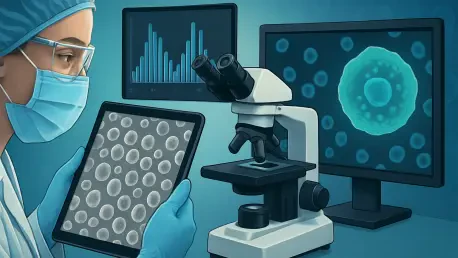
Digital Holographic Microscopy generates quantitative images by measuring how light slows down as it passes through the dense internal structures of a cell. This sophisticated approach to visualization has become a cornerstone of laboratory precision in 2026, marking a definitive departure from the

The success of MDG-Net suggests that radical simplicity and the removal of problematic structural elements can outperform increasingly complex AI designs. Retinal imaging serves as a critical biological window, offering a non-invasive view of a patient’s vascular health that can reveal signs of