
U.S. Senator Jerry Moran has advocated for the project, noting that investments in such research are vital for maintaining national scientific leadership and improving patient outcomes. This sentiment underscores a major initiative at the University of Kansas, where a team led by Foundation Distinguished Professor Steve Soper is pioneering a new era in medical diagnostics. Supported by a 2026 National Science Foundation grant totaling $4 million, the research centers on creating a sophisticated diagnostic platform capable of identifying diseases by examining proteins at their most fundamental level. Rather than observing broad symptoms, this technology focuses on the sequence of individual amino acids, offering unprecedented sensitivity in detecting health anomalies. The initiative represents a critical intersection between engineering and clinical medicine, aiming to deliver a paradigm shift that allows physicians to intervene long before clinical symptoms emerge. By decoding the building blocks of life, the project addresses the limitations of modern healthcare protocols and seeks to establish a highly accessible tool for early intervention.
Engineering Innovations: Scaling Nanotechnology for Medicine
Material Selection: The Precision of Injection Molding
The primary hardware for this breakthrough is a compact plastic chip, roughly the size of a standard credit card, which contains intricate nanofluidic structures. These channels are engineered to be 100,000 times thinner than a human hair, facilitating the precise movement of biological samples at a molecular level. To ensure that this technology can reach the general population without the prohibitive costs typically associated with high-end medical equipment, the research team has utilized injection molding. This is the same cost-effective manufacturing process used to produce mass-market items like DVDs and CDs, allowing for the rapid production of these diagnostic tools. By moving away from the expensive and slow fabrication methods usually required for nanotechnology, the project ensures that high-resolution diagnostics are no longer confined to elite research hospitals. This transition from laboratory prototypes to mass-produced clinical devices represents a significant milestone in biomedical engineering and accessibility.
Utilizing thermoplastic materials allows the researchers to maintain structural integrity while keeping production expenses low. The ability to stamp out thousands of these chips in a single day means that local clinics and rural healthcare providers could eventually stock them as easily as they do basic blood tests. This scalability is essential for the democratization of healthcare, as it removes the financial and geographical barriers that often prevent patients from receiving advanced screenings. Furthermore, the use of plastic rather than silicon or glass makes the chips more durable and easier to transport across various clinical environments. The simplicity of the outer shell belies the complexity of the internal architecture, where fluid dynamics and surface chemistry are optimized to handle delicate protein samples. This engineering approach balances high-level scientific requirements with the practical needs of the global health market, ensuring that the technology is as robust as it is innovative.
Functional Mechanisms: Decoding Proteins and Amino Acids
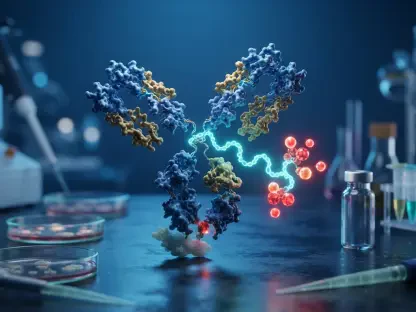
The functional mechanism of the nanochip is a marvel of miniaturization and biochemistry, designed to extract maximum information from a single drop of fluid. When a protein sample is introduced into the device, integrated enzymes immediately begin the process of breaking the protein down into its constituent amino acids. This degradation is highly controlled, ensuring that each part of the protein chain is processed in a specific sequence. As these individual amino acids flow through the nanofluidic channels, they interact with sensors that generate distinct electrical signals. These signals are not random noise but are specific identifiers of the amino acid’s type and its original position within the protein structure. This level of granularity allows the researchers to map the exact composition of a protein, revealing subtle variations or mutations that might indicate the presence of a developing disease long before it becomes symptomatic.
The precision of this mapping is what sets the KU project apart from traditional diagnostic methods that often look for the presence or absence of whole proteins. By scrutinizing the protein at the amino acid level, the chip can identify post-translational modifications and other structural changes that are frequently missed by conventional assays. This high-resolution data provides a much clearer picture of a patient’s biological state, allowing for a more nuanced understanding of how diseases progress. The electrical detection method also eliminates the need for complex fluorescent labeling or expensive imaging equipment, further simplifying the diagnostic workflow. As the amino acids pass through the sensor, the real-time data generation provides a continuous stream of information that can be analyzed instantly. This mechanical and chemical process creates a reliable pipeline for translating biological samples into digital data, forming the foundation for modern personalized medicine.
Clinical Integration: From Data to Patient Diagnostics
Computational Power: The Role of Artificial Intelligence
Because the volume of data produced by the nanochip is immense and highly complex, the team employs machine learning and artificial intelligence to serve as a digital translator. These AI models are specifically trained to recognize the unique electrical signatures of various amino acids, enabling the immediate identification of complex protein structures. This computational layer is essential because the nuances in the electrical signals can be too subtle for manual interpretation. By automating the analysis process, the technology removes the need for specialized laboratory personnel to spend hours decoding a single sample. Instead, the AI provides a nearly instantaneous readout of the protein’s sequence, highlighting any irregularities that could suggest a health risk. This convergence of hardware and software creates a streamlined system that bridges the gap between raw biological data and actionable medical insights for clinicians.
The integration of artificial intelligence also allows the diagnostic platform to become more accurate over time as it processes more samples. Machine learning algorithms can identify patterns across large populations, potentially discovering new biomarkers for diseases that were previously poorly understood. This capability is particularly important in a clinical setting where speed and accuracy are paramount for patient care. The AI serves as a powerful tool for democratization, as it allows even small clinics with limited specialized staff to access high-end diagnostic capabilities. Furthermore, the digital nature of the results means that data can be easily shared between specialists for collaborative consultations. By shifting the burden of interpretation from humans to sophisticated algorithms, the project ensures that the diagnostic process is both scalable and objective. This automated approach is a critical component of the platform’s potential to revolutionize routine health screenings.
Targeted Screening: Alzheimer’s and Pancreatic Cancer
The practical applications of this technology are particularly promising for diseases where early detection is the primary factor in determining patient outcomes, such as Alzheimer’s. In this context, the chip is designed to monitor amyloid beta proteins, which are known to undergo structural changes in the earliest stages of the disease. By identifying these changes at the amino acid level, doctors can gain a clearer understanding of a patient’s cognitive health long before traditional memory tests show any decline. This early insight allows for the implementation of preventative measures and the testing of new therapies during the window when they are most likely to be effective. The sensitivity of the nanochip means it can detect these molecular shifts years before a patient would typically receive a diagnosis, transforming Alzheimer’s from a reactive to a proactive medical challenge.
Similarly, the platform targets cancer biomarkers such as CA19-9, which is a well-known indicator for pancreatic cancer. Because pancreatic cancer is often asymptomatic in its early stages, it is frequently diagnosed too late for effective surgical or chemical intervention. The KU nanotechnology offers a screening method that could catch such indicators in their infancy, far earlier than current imaging or standard blood tests allow. Beyond these two specific examples, the platform is intended to be versatile, capable of being adapted to discover and monitor biomarkers for a wide range of conditions, from cardiovascular disease to rare genetic disorders. By providing a comprehensive toolkit for molecular screening, the chip empowers clinicians to catch life-threatening illnesses at their inception. This shift toward early-stage detection represents a major advancement in oncology and neurology, offering hope for significantly improved survival rates.
Regional Progress: Research Synergy and Economic Growth
Collaborative Frameworks: The Impact of the EPSCoR Grant
The success of this project is deeply rooted in its collaborative nature, facilitated by the National Science Foundation’s EPSCoR program. This framework is specifically designed to stimulate research in states like Kansas and Louisiana, which have historically received a lower share of federal funding. By uniting the expertise of researchers across state lines, the project leverages a diverse array of scientific disciplines, including mechanical engineering, medicinal chemistry, and biostatistics. Professor Steve Soper serves as the central link in this network, drawing on his extensive experience at both the University of Kansas and Louisiana State University. This multidisciplinary approach is necessary to tackle the multi-faceted challenges of the project, which range from the fluid dynamics of nanoscale transport to the complex enzymology required for protein breakdown. The synergy between these different fields is what made the initial funding and subsequent discoveries possible.
Furthermore, this collaboration extends to the training of the next generation of scientists, as the grant supports undergraduate and graduate students who are gaining hands-on experience with state-of-the-art nanotechnology. Postdoctoral researchers are also playing a key role, contributing to the development of the AI models and the refinement of the chip’s manufacturing process. To inspire future interest in STEM, the team conducts extensive community outreach, including roadshows and participation in the annual KU Engineering Expo. These efforts ensure that the benefits of the federal investment extend beyond the laboratory and into the community, fostering a culture of scientific curiosity and preparing a skilled workforce for the future. By building a robust research infrastructure in the region, the project helps to solidify the Midwest as a growing hub for biomedical innovation. This collaborative model demonstrates how targeted federal support can catalyze significant scientific and educational advancements across state borders.
Commercial Pathways: Future Implementation and Workforce Readiness
The research team established a roadmap for the full-scale commercialization and clinical deployment of the diagnostic platform. They successfully coordinated with local industrial partners to finalize the design of mass-production facilities within the Kansas bioscience corridor. Scientists and educators also collaborated to implement specialized training protocols that prepared a new generation of lab technicians and biostatisticians for the technical workforce. By securing intellectual property rights for the sensor’s unique nanofluidic architecture, the institution ensured that the technology remained a cornerstone of regional economic development. These efforts focused on creating a sustainable pipeline from the laboratory to the patient’s bedside, prioritizing the immediate transition of the chip into active pilot programs at major medical centers. The initiative ultimately provided a clear blueprint for how academic breakthroughs could be converted into tangible public health solutions that addressed some of the most challenging diseases in modern history.
Moving forward, the project emphasized the importance of integrating this technology into existing diagnostic frameworks to ensure a seamless adoption by healthcare systems. Researchers analyzed the results of initial clinical trials to refine the AI algorithms, ensuring they met the rigorous standards required for federal regulatory approval. Local economic leaders recognized the potential for the new manufacturing hub to attract additional investment in the biotechnology sector, further diversifying the regional economy. The focus shifted toward developing a global distribution network, which aimed to provide these low-cost diagnostic tools to underserved populations worldwide. This commitment to accessibility highlighted the project’s broader mission of improving health equity through technological innovation. By maintaining a focus on both scientific excellence and practical application, the team laid the groundwork for a future where early disease detection is a standard part of routine medical care for every individual, regardless of their location.