
A strategic collaboration between Orbis Medicines and Novo Nordisk is currently focused on finding oral solutions for metabolic and cardiovascular diseases. This partnership signifies a broader shift in the biotechnology landscape, where the historical reliance on painful injections for chronic conditions is finally being challenged by sophisticated molecular engineering. Orbis Medicines, which emerged from the École Polytechnique Fédérale de Lausanne, has spent the years from 2021 to 2026 refining a platform that targets the “undruggable” space between small molecules and large biologics. By focusing on macrocyclic compounds, the company aims to provide the potency of an antibody with the convenience of a daily pill. This transition is not merely a matter of patient comfort; it represents a fundamental change in how pharmaceutical researchers approach protein-protein interactions. The integration of high-throughput physical experiments with generative AI has created a scalable engine for drug discovery that promises to redefine therapeutic standards across markets.
Addressing the Pharmacological Gap
Solving the Oral Delivery Challenge
The fundamental hurdle in drug development has always been the rigid choice between bioavailability and target specificity. Small-molecule drugs are the industry workhorse because they are generally stable enough to survive the harsh acidic environment of the stomach and small enough to pass through the intestinal wall into the bloodstream. However, their physical size limits their ability to interact with the large, flat surfaces of many disease-associated proteins. On the other end of the spectrum, large-scale biologics like monoclonal antibodies offer incredible precision and the ability to block complex protein interfaces, yet they are essentially fragile proteins themselves. If swallowed, they are digested just like food, rendering them useless before they can ever reach their target. This dichotomy has left millions of patients dependent on frequent injections or intravenous infusions, creating a significant barrier to treatment adherence and overall quality of life in care scenarios.
Macrocyclic compounds have emerged as the definitive answer to this long-standing pharmaceutical trade-off by offering a unique structural middle ground. These circularized molecules are larger than typical small molecules, providing the necessary surface area and complexity to engage “undruggable” targets, yet they remain significantly smaller than biologics. By carefully managing their molecular weight and chemical architecture, researchers can ensure these compounds remain stable against proteolytic enzymes while maintaining the lipophilicity required to cross biological membranes. This allows a macrocycle to mimic the high-affinity binding of a complex protein while retaining the essential characteristics of a pill. As the industry moves further into 2026, the focus has shifted toward refining these structures to maximize their oral bioavailability without sacrificing the potency required to treat aggressive inflammatory or metabolic conditions. This technological leap effectively bridges the gap, offering a third modality that combines the strengths of both traditional approaches.
Scaling Discovery with Lab-in-the-Loop
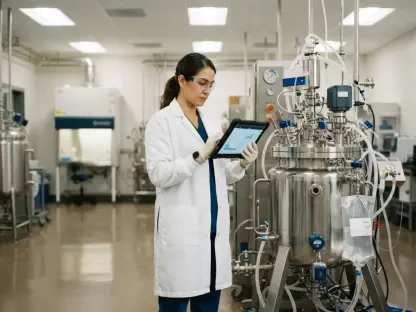
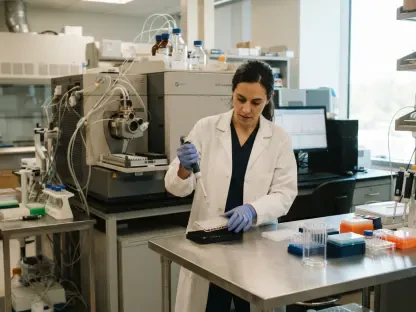
To identify viable drug candidates within this complex chemical space, Orbis Medicines employs a proprietary methodology known as “Lab-in-the-Loop,” which integrates massive physical experimentation with digital intelligence. The process begins with the screening of DNA-encoded libraries that contain nearly 100 billion unique macrocyclic compounds. Each molecule in this vast library is tagged with a specific DNA “barcode” that allows researchers to identify which structures bind most effectively to a target protein with unprecedented speed. This high-throughput screening generates a mountain of data regarding molecular affinity and selectivity that would take years to process using traditional medicinal chemistry. By utilizing this expansive digital and physical infrastructure, the company can bypass the slow, iterative trial-and-error phases that have historically plagued the drug discovery process. This ensures that only the most promising chemical scaffolds are advanced to the next stage of development, significantly reducing the time and cost associated with early research.
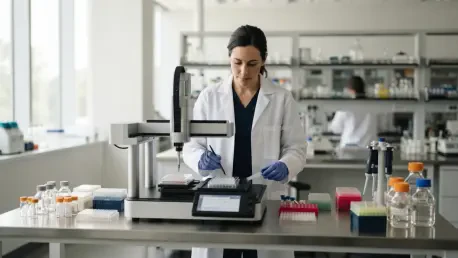
The true power of this system lies in the seamless transition between generative AI modeling and automated high-throughput synthesis. Once the initial “hits” are identified from the DNA-encoded libraries, AI models analyze the structural data to predict which specific modifications will enhance both therapeutic efficacy and oral absorption. Unlike conventional methods where chemists manually synthesize variations, this platform can produce and test up to 100,000 cyclic macromolecular compounds within just a few weeks. The biological feedback from these synthesized molecules—such as their metabolic stability and membrane permeability—is immediately fed back into the AI to refine its predictive accuracy. This creates a self-improving cycle where every experiment informs the next, allowing the system to hone in on a lead candidate with surgical precision. This level of automation and computational insight represents a significant departure from the manual bottlenecks of the past, establishing a new benchmark for how quickly a novel therapeutic can be moved from concept to clinical trial.
Engineering and Commercial Strategy
Optimizing Molecular Versatility and Bioavailability
Achieving oral bioavailability for macrocycles requires a focus on the “sweet spot” of molecular engineering, typically targeting a weight between 500 and 1,000 Daltons. Within this specific range, the molecule is large enough to maintain high specificity for complex targets but small enough to penetrate the intestinal wall and enter systemic circulation. Orbis achieves this balance by utilizing a diverse array of unnatural amino acids and varying the modes of cyclization to explore a chemical design space that includes up to 10³⁰ possible combinations. This level of versatility allows for the creation of rigid molecular structures that are pre-organized for binding, which reduces the energy penalty typically associated with a drug attaching to its target. By locking these molecules into their active conformations, researchers can improve both their affinity and their ability to resist degradation by digestive enzymes. This precise control over molecular geometry is essential for ensuring that the drug remains effective once it has transitioned from the laboratory to the human digestive system.
Another significant advantage of this macrocyclic platform is the reliance on pure chemical synthesis rather than biological production methods. Traditional biologics, such as monoclonal antibodies, must be grown in complex living cell cultures, a process that is notoriously difficult to control and susceptible to minor environmental variations. In contrast, macrocycles are produced through well-defined chemical reactions, which ensures a high degree of purity and consistency across different manufacturing batches. This chemical approach also facilitates significantly easier scalability and lower production costs, as it does not require the expensive bioreactors and stringent purification steps associated with cell-based manufacturing. Furthermore, the absence of biological contaminants simplifies the regulatory approval process and ensures a more predictable safety profile for the final product. As the pharmaceutical industry looks toward more sustainable and cost-effective ways to deliver advanced therapies, the ability to chemically synthesize complex drugs offers a clear path toward democratizing access to medical treatments.
Strategic Partnerships and Therapeutic Focus
The therapeutic strategy of Orbis Medicines is centered on high-impact disease areas where there is a clear and urgent demand for oral alternatives to existing injectable treatments. In the fields of immunology and inflammation, the company is developing an internal pipeline that targets proteins already validated by successful, albeit invasive, biological therapies. By focusing on these proven pathways, the company reduces the clinical risk associated with target identification, while the macrocyclic format provides a superior delivery method for patients. This dual approach allows Orbis to demonstrate the efficacy of its platform in markets with established patient populations who are eager for less burdensome treatment options. Whether addressing chronic autoimmune disorders or systemic inflammatory conditions, the goal remains consistent: to provide a drug that is as powerful as a biologic but as easy to administer as a standard vitamin. This focus ensures that the resulting therapies are not just scientifically innovative but also commercially viable in a competitive healthcare landscape.
Ultimately, the partnership between major pharmaceutical entities and innovation-driven biotech firms shifted the industry toward the mass adoption of oral macrocycles as the preferred treatment modality. Clinical data throughout 2026 confirmed that these compounds provided a viable alternative to traditional biologics, significantly improving patient compliance across therapeutic areas. Companies that invested early in AI-driven synthesis and high-throughput screening successfully secured a dominant market position by offering more patient-centric solutions. The transition from injectable regimens to oral delivery was driven by a combination of technological maturity and a clear market preference for non-invasive care. By moving beyond the limitations of standard pills and the burdens of injections, the medical community established a new era of healthcare that prioritized both therapeutic power and ease of use. This evolution proved that the strategic application of AI and automated chemistry could overcome the most persistent obstacles in modern medicine.