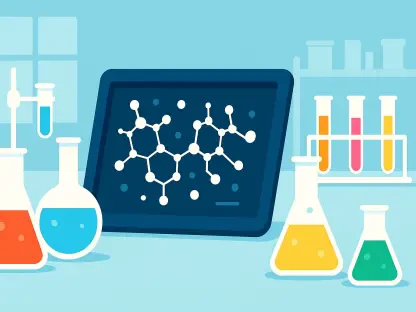

The pharmaceutical industry is currently witnessing a monumental transition where the traditional image of a lone scientist hunched over a microscope is being replaced by high-performance computational agents that function as intellectual peers. This fundamental shift marks a departure from the historical reliance on grueling cycles of manual literature reviews and repetitive wet-lab experiments that often ended in unforeseen setbacks. Instead of serving as mere data repositories or simple calculators, these modern artificial intelligence lab partners are actively participating in the creative and analytical aspects of biological exploration. By utilizing large language models that have been fine-tuned for scientific precision, researchers can now delegate the heavy lifting of hypothesis generation and experimental design to proactive digital collaborators. This evolution ensures that the discovery process is no longer a linear path of trial and error but an iterative, accelerated journey where machine speed complements the profound depth of human expertise.
Innovative Platforms Reshaping the Biological Landscape
The emergence of specialized systems like Robin, a platform developed by the non-profit organization FutureHouse, provides a clear blueprint for how these digital agents handle complex biological inquiries. Robin distinguishes itself through a tournament of ideas architecture, where multiple specialized AI units engage in internal debates to rigorously evaluate the validity of competing hypotheses before presenting a final recommendation. A notable success occurred when the system was tasked with identifying new therapeutic pathways for persistent eye conditions that lead to severe vision loss. By scanning hundreds of thousands of scientific papers, clinical patents, and historical records, Robin identified ripasudil—a medication originally approved for glaucoma—as a highly effective candidate for treating dry-eye disorders. This specific identification process demonstrated an unprecedented leap in efficiency, as it condensed what would normally constitute several years of manual investigation into a timeline spanning only a few weeks.
Equally transformative is the Co-Scientist system developed by Google DeepMind, which employs a multi-agent framework designed to emulate the reasoning strategies found in advanced game-playing models. This platform is capable of ranking various research hypotheses based on their novelty and biological plausibility, allowing it to navigate the vast landscape of molecular interactions with startling accuracy. When integrated into real-world academic settings, Co-Scientist delivered immediate dividends for institutions such as Stanford University and the University of Cambridge. At Stanford, researchers leveraged the system to pinpoint three promising drugs for managing chronic liver disease, highlighting the system’s ability to navigate complex pathology. Meanwhile, at Cambridge, the AI flagged a specific protein linked to pathogen resistance that human investigators had previously failed to notice during manual reviews. These instances confirm that AI is not merely catching up to human scientists but is actively filling in the gaps where cognitive biases might otherwise lead to missed discoveries.
Strategic Advantages of Repurposing and Multi-Agent Systems
A primary driver behind the current surge in AI-assisted discovery is the strategic focus on drug repurposing, which seeks to identify new therapeutic uses for medications that have already cleared rigorous safety protocols. Developing an entirely new molecule from scratch remains an incredibly expensive and time-consuming endeavor, often requiring decades of investment with no guarantee of clinical success. By using AI to recognize hidden biological patterns and cross-reference existing drug structures with new disease targets, the industry can bypass early-stage toxicity testing and move directly toward efficacy trials. This methodology leverages the machine’s ability to synthesize disparate data points across various medical fields, finding connections that the human mind is often unequipped to visualize. Consequently, the barriers to entry for treating rare or neglected diseases are falling, as the financial and temporal costs of bringing a recycled drug to market are significantly lower than traditional drug development pipelines, ensuring that patients receive life-saving treatments with much greater urgency.
The technical sophistication of these platforms is further enhanced by the implementation of multi-agent systems that break down monolithic research problems into a series of smaller, specialized tasks. In this setup, different AI sub-units take on roles such as literature reviewer, data analyst, or critic, creating an internal ecosystem of checks and balances that mimics a professional peer-review process. One of the most critical features of this approach is the capacity for self-reflection, where the system evaluates its own logic for potential errors or inconsistencies before presenting a final report to the human supervisor. This internal verification mechanism is essential for maintaining the high standards of scientific rigor required in pharmaceutical research. By automating the quality control phase of hypothesis generation, these multi-agent systems ensure that the leads provided to researchers are not only numerous but are also robustly vetted. This internal oversight allows human scientists to focus their attention on the final physical validation in the laboratory, confident that the preliminary work is grounded in solid reasoning.
Navigating Technical Risks and the Human-AI Synergy
Despite the remarkable speed and efficiency offered by these lab partners, the scientific community must remain vigilant against the growing threat of AI slop and fabricated information. Large language models, while powerful, are still prone to generating hallucinations—confidently stated but entirely false data points or references that can pollute the integrity of scientific literature if left unchecked. There is a legitimate concern that an over-reliance on these tools could lead to an illusion of understanding, where researchers might be tempted to bypass critical validation steps in favor of accepting the AI’s rapid conclusions at face value. Furthermore, the immense computational power required to run these sophisticated models poses significant sustainability challenges, as the energy consumption of large-scale AI infrastructure continues to rise. The challenge for the modern laboratory is to implement these tools while maintaining a culture of skepticism, ensuring that every automated insight is subjected to rigorous physical testing before being accepted as a scientific fact.
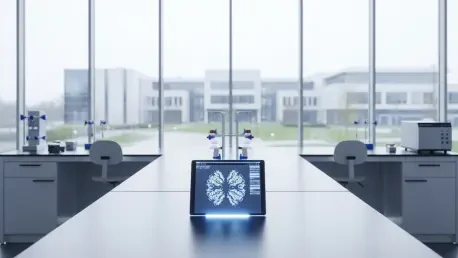
The integration of AI into the laboratory environment proved to be a watershed moment that redefined the collaborative relationship between humans and machines. It became clear that the most effective strategy for future breakthroughs involved a hybrid model where human oversight functioned as the essential cornerstone of the scientific method. While the machines successfully handled the massive processing requirements and data-heavy lifting, the human scientists remained responsible for setting the strategic vision and upholding the ethical frameworks necessary for responsible innovation. To maximize the potential of these tools, institutions prioritized the development of standardized protocols for AI-human interactions, ensuring that digital agents were treated as force multipliers rather than total replacements. Moving forward, the focus shifted toward refining these systems to minimize energy footprints while enhancing the accuracy of their predictive models. This balanced approach allowed the industry to navigate the complexities of modern medicine with a new level of precision, ultimately transforming the laboratory into a high-speed engine for discovery that still respected the curiosity inherent to the human experience.