
The persistent threat of tuberculosis remains a formidable challenge for global health initiatives, claiming over a million lives annually despite being a condition that medical professionals have been able to cure for seventy-five years. While pharmaceutical interventions are widely available and relatively inexpensive, the primary bottleneck in eradicating the disease is the absence of rapid and accessible diagnostic tools in the regions that need them most. In many high-burden countries, the standard molecular tests rely on sophisticated laboratory equipment that requires consistent electricity and climate control, luxuries that are rarely found in remote or impoverished rural clinics. Consequently, a significant portion of the population remains undiagnosed, which facilitates the continued transmission of the bacteria within crowded communities. From 2026 to 2030, the focus of international health organizations has shifted toward decentralizing these diagnostic capabilities to ensure that every patient, regardless of their location, can receive an accurate and timely result.
1. Historical Limitations: The Inadequacy of Standard Laboratory Protocols
For more than a century, the primary method for identifying tuberculosis has involved smear microscopy, a manual process that requires patients to provide deep-lung phlegm samples for analysis. Once the specimen is collected, a laboratory technician must apply a specialized coloring agent to the slide to highlight the presence of the bacilli under a microscope. This labor-intensive technique is not only slow but also suffers from a significant lack of sensitivity, particularly when dealing with early-stage infections where the bacterial load may be low. Furthermore, the reliance on specialized equipment and trained personnel means that samples often must be transported to centralized facilities, creating long delays that frequently result in patients returning to their homes before receiving their results. This gap in the care continuum represents a major failure in current containment strategies that rely on immediate intervention to stop the spread of the pathogen within vulnerable families.
Beyond the technical limitations of microscopy, traditional testing protocols face severe practical obstacles when dealing with vulnerable patient populations, such as children and individuals who are HIV-positive. These patients often struggle to produce the high-quality phlegm samples required for accurate testing, which frequently leads to false negatives or missed diagnoses altogether. Centralized testing models also impose a heavy financial and temporal burden on healthcare systems, as the maintenance of molecular platforms can cost upwards of twenty thousand dollars per unit. In contrast, the current landscape necessitates a more flexible approach that can bypass the need for a stable power grid or advanced laboratory infrastructure. By addressing these systemic weaknesses, researchers are attempting to move diagnostic power away from the city centers and directly into the hands of community health workers who operate on the front lines of the epidemic in the most remote and underserved regions of the world.
2. Technological Innovation: The Mechanics and Design of the MiniDock MTB
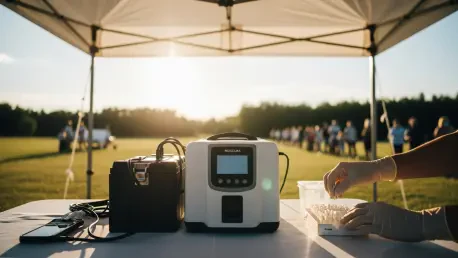
The introduction of the MiniDock MTB represents a significant leap forward in point-of-care technology, offering a battery-operated and highly portable solution for rapid pathogen detection. Unlike its bulky predecessors, this device is specifically engineered to function in resource-limited environments, delivering definitive results in less than thirty minutes without the need for a laboratory. One of the most transformative features of this system is its compatibility with non-invasive tongue swabs, which provides a much-needed alternative to traditional sputum collection. This advancement is particularly crucial for testing small children and severely ill patients who find it physically impossible to produce deep-lung phlegm on command. By simplifying the sample collection process, the MiniDock MTB effectively removes one of the most persistent physical barriers to universal tuberculosis screening in high-burden regions across the globe today.
Operating the MiniDock MTB is a streamlined process designed to be performed by healthcare providers with minimal technical training in rugged field conditions. The sequence begins with the technician picking up a sample, either through a gentle tongue swab or by gathering a traditional phlegm specimen from the patient. This material is then transferred into a specialized preparation tube, where a combination of thermal energy and microscopic beads is used to deconstruct the sample and release the bacterial genetic material. Finally, the processed material is inserted into the portable diagnostic unit, which utilizes advanced molecular techniques to identify the specific DNA markers of the tuberculosis bacteria. This rapid turnaround allows for immediate clinical decision-making, ensuring that infected individuals can begin their treatment during the very same visit, thereby significantly reducing the likelihood of further transmission within the local community.
3. Performance Validation: Assessing Accuracy and Economic Viability
Extensive field testing conducted in real-world clinical settings across seven different countries, including India, Nigeria, and South Africa, has validated the effectiveness of this portable diagnostic platform. The results demonstrated an impressive accuracy rate of over eighty-five percent when using phlegm samples and nearly eighty percent when utilizing the less invasive tongue swab method. Beyond its diagnostic precision, the system was praised for its user-friendly interface and low economic barrier to entry. Each MiniDock unit costs under one hundred eighty dollars, which is a fraction of the twenty thousand dollars required for standard laboratory molecular platforms. Individual tests were calculated to cost less than four dollars each, allowing for broad deployment in low-income regions. This affordability, combined with the ability to provide same-day results, ensures that medical interventions can begin immediately.
The successful deployment of this diagnostic tool established a new standard for managing infectious diseases in remote environments, proving that high-level molecular science could be simplified for field use. Future iterations of the technology focused on integrating modules for detecting drug resistance, ensuring that patients not only received a diagnosis but also the correct medication profile immediately. This shift necessitated a broader investment in local supply chains to maintain the availability of testing consumables and replacement batteries for the portable units. As global health strategies moved toward total decentralization, the integration of digital data tracking within these devices allowed for real-time mapping of disease hotspots. By prioritizing the accessibility of diagnostic power, the international community finally addressed the structural inequalities that allowed the epidemic to persist for so many generations.