

Baseline next-generation sequencing reveals that over 76 percent of lung cancer patients harbor additional genomic alterations that can shorten treatment durability. This statistic underscores the persistent challenge of managing advanced malignancies outside the sterile confines of traditional
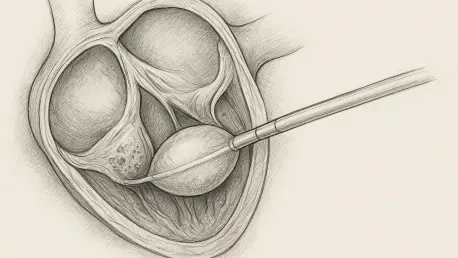
The biomechanics of rheumatic stenosis involve a fusion of the valve commissures that must be forcibly separated without damaging the surrounding soft tissue. This pathological condition typically arises as a late-stage complication of rheumatic fever, an inflammatory response triggered by

Modern hydrogel designs mimic the natural environment of living tissue by maintaining a moisture content of roughly 90 percent to prevent cell death and scarring. This fundamental shift in wound management comes at a time when traditional methods are increasingly viewed as insufficient for the

Systemic administration of high-dose antibiotics often causes severe collateral damage to the gut microbiome and vital organs like the kidneys before reaching the lungs. This fundamental limitation of traditional pharmacology has reached a critical tipping point as global healthcare systems

The new regulatory framework seeks to streamline the commercial pathway for software developers by providing clear clinical benchmarks before national scaling begins. This initiative, a collaborative effort between the Medicines and Healthcare products Regulatory Agency and Manchester University

For Tim Andrews, a 66-year-old patient with Type O blood, the experiment served as a vital bridge to a human transplant after two years of exhaustive waiting. This milestone, achieved through the collaboration of researchers and surgeons at Massachusetts General Hospital, signals a pivotal shift in