
The development of B-SYNC is an evolution of the 2021 E-SYNC model, moving from a rare mutant protein trigger to a more universal brain protein to help a broader range of patients. In the current landscape of pediatric medicine, few diagnoses carry as much weight as diffuse midline glioma, an aggressive cancer that effectively colonizes the brainstem and renders traditional surgical intervention impossible. For decades, the inability to separate malignant cells from vital neural fibers has meant that treatments were either too timid to work or too toxic for the patient to endure. Researchers at the University of California, San Francisco have recently shattered this impasse by introducing a programmable class of immune cells that function like biological software. By engineering CAR-T cells to remain inactive until they detect specific geographic cues within the central nervous system, this team has created a method to neutralize tumors while sparing the rest of the body from the systemic inflammation that often accompanies standard immunotherapy.
Precision Engineering Through the B-SYNC Platform
The Mechanics of synNotch: Spatial Gating
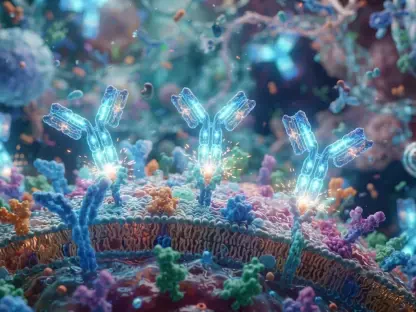
The primary hurdle in treating brain tumors with immunotherapy has always been the risk of off-target toxicity, where the immune system attacks healthy tissues that share markers with the cancer. To solve this, the research team implemented a synthetic biology tool known as the synNotch circuit, which acts as a sophisticated molecular gatekeeper for the immune response. Unlike standard CAR-T cells that are manufactured to be permanently active, these B-SYNC cells are programmed to remain in a dormant state while they circulate through the blood and peripheral organs. This dormancy is controlled by a specific sensor that looks for brevican, a protein that exists throughout the healthy brain but is essentially non-existent in the rest of the body. By requiring this environmental handshake before any offensive action is taken, the researchers ensured that the potent killing machinery of the T-cell is only unlocked when the cell is physically located within the central nervous system.
Once the synNotch circuit successfully identifies the presence of brevican in the brain tissue, it initiates a complex internal process within the T-cell to begin the production of the Chimeric Antigen Receptor, or CAR. This receptor is then expressed on the cell surface, transforming the once-dormant voyager into a precision-guided hunter. This secondary stage of activation is programmed to recognize two specific tumor-associated antigens: EphA2 and IL13Rα2. By targeting a dual set of markers rather than a single protein, the therapy becomes significantly more difficult for the tumor cells to evade through mutations or downregulation. This spatial gating strategy creates a localized immune furnace that concentrates the full power of the immune system directly on the tumor site while the rest of the patient’s body remains entirely unaffected by the treatment. This level of control represents a fundamental redesign of cellular therapy, moving toward a deep understanding of cellular context.
Evolution from E-SYNC: Universal Targeting
The current B-SYNC architecture is the result of iterative improvements on the E-SYNC platform, which was first introduced several years ago to address glioblastoma. The initial iteration relied on a rare mutant protein known as EGFRvIII to serve as the primary trigger for the synNotch circuit. While this approach proved successful in controlled laboratory settings, researchers quickly identified a significant limitation: EGFRvIII is only present in approximately 20 percent of patients suffering from these types of brain tumors. Furthermore, even in patients who possessed the marker, the tumor cells could often stop producing the protein as a survival mechanism, a process known as antigen escape. Recognizing these challenges, the team sought a more universal and stable environmental marker. By shifting the primary trigger to brevican, they transitioned to a marker that is a consistent feature of the brain’s internal environment, ensuring the therapy remains effective across a wide range of patients.
Using a stable environmental protein like brevican as a trigger offers a strategic advantage in the fight against aggressive cancers like diffuse midline glioma. Because the brain tissue itself produces brevican, the tumor cannot simply evolve away from the marker to hide from the immune system. This creates a permanent activation zone within the brain, ensuring that the B-SYNC cells will always be ready to produce their anti-tumor receptors regardless of how the cancer cells attempt to modify their own surface proteins. This innovation addresses one of the most persistent failures of first-generation CAR-T therapies, which often saw initial success followed by rapid relapse as the cancer found ways to become invisible to the immune cells. By making the therapy dependent on the location rather than just the tumor’s identity, the researchers have built a more resilient system. This approach ensures that the therapeutic window remains open for the duration of the treatment, providing a robust defense.
Preclinical Success and Human Clinical Trials
Validation in Mouse Models: Delivery and Efficacy
To validate the efficacy and safety of the B-SYNC platform, the research team conducted extensive preclinical trials using mouse models that were implanted with human-derived diffuse midline glioma cells. One of the most critical aspects of these tests was evaluating how the engineered cells behaved when introduced through different delivery routes, specifically intravenous injection and direct delivery into the brain’s ventricles. In the trials involving intravenous delivery, the researchers observed that the B-SYNC cells were capable of successfully crossing the blood-brain barrier, a feat that is often difficult for large therapeutic molecules. Most importantly, the study confirmed that the cells found circulating in the blood and the spleen remained in their dormant state, with no expression of the toxic CAR receptor detected. This provided definitive proof that the spatial gating mechanism worked as intended, protecting peripheral organs from the accidental immune activation that has plagued past trials.
The results from the intracerebroventricular injection trials were even more profound, showing a level of tumor clearance that was previously unseen in such aggressive models of childhood brain cancer. When the B-SYNC cells were delivered directly into the brain, they were able to achieve a total shutdown of the tumors across multiple different human models of the disease. When compared directly to conventional CAR-T cells that did not have the synNotch gating circuit, the B-SYNC cells performed with superior precision and potency. The non-gated cells often failed to control the tumor growth or caused such significant inflammation and systemic toxicity that the models could not survive the treatment process. This stark difference in outcomes highlights the necessity of the programmable nature of these new cells. By managing the metabolic resources of the immune cells and delaying their activation until they reached the specific target zone, the researchers were able to maximize the destructive force.
Roadmap for Human Trials: Actionable Next Steps
Building on the overwhelming success of the preclinical data, the medical community is now preparing for the transition to human clinical trials, which are tentatively scheduled to begin at UCSF Health in April 2027. This Phase 1 trial will focus on evaluating the safety and preliminary efficacy of the B-SYNC platform in pediatric patients who have been diagnosed with diffuse midline glioma. The trial will utilize an autologous therapy approach, which involves a highly personalized manufacturing process. Each participant will have their own T-cells extracted from their blood, which are then sent to a specialized laboratory to be genetically engineered with the synNotch and CAR circuits. This ensures that the immune cells are perfectly compatible with the patient’s body, reducing the risk of rejection and maximizing the potential for the cells to survive and function within the complex environment of the human brain. This personalized medicine model is the gold standard.
The development of the B-SYNC platform established a new paradigm in the field of cellular engineering, demonstrating that spatial awareness was just as critical as therapeutic potency. By proving that immune cells could be programmed to recognize their location before acting, the research team provided a solution to the long-standing problem of systemic toxicity in brain cancer treatments. The findings from this study suggested that the next generation of immunotherapy would likely focus on these smart circuits to treat a variety of solid tumors in other sensitive organs. For the medical community, the actionable next step involved expanding these protocols to target other forms of high-grade pediatric brain tumors that currently lack effective treatment options. This research moved the industry closer to a future where even the most aggressive cancers were no longer considered death sentences. The transition from laboratory success to clinical application required a coordinated effort across many disciplines.