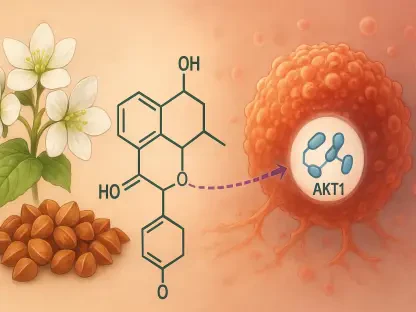

The nomination of ISM9546 marks a significant milestone for generative artificial intelligence, demonstrating its capacity to solve multi-parameter optimization challenges in complex autoimmune research. For decades, the pharmaceutical industry has grappled with the high failure rates of traditional drug discovery, where identifying a viable lead often takes years of labor-intensive laboratory work and significant financial investment. Insilico Medicine has fundamentally altered this landscape by successfully nominating ISM9546 as a key preclinical candidate within its rapidly expanding pipeline. This specific achievement highlights the maturity of the Pharma.AI platform, which integrates generative chemistry with advanced biological modeling to streamline the path from initial target identification to preclinical validation. By focusing on conditions like Inflammatory Bowel Disease and Rheumatoid Arthritis, the company is addressing a critical need for more effective treatments in the autoimmune sector. This development represents a paradigm shift where digital intelligence bridges the gap.
Breaking the Barrier of Undruggable Protein Targets
The scientific community has historically viewed the VAV1 protein as an “undruggable” target, primarily because it lacks the deep, pocket-like structures that typical small-molecule drugs require for binding. As a central regulator of immune cell signaling, VAV1 remains a high-priority target for treating chronic inflammation, yet its smooth surface made it nearly impossible for researchers to develop traditional inhibitors. Instead of attempting to fit a square peg into a round hole, the research team employed molecular glue degraders, a sophisticated therapeutic modality that facilitates the natural breakdown of the target protein. By redirecting the cellular machinery to identify and destroy VAV1, ISM9546 offers a far more effective way to manage the hyperactive immune responses that define autoimmune diseases. This approach underscores the transition from simple molecular inhibition to complex proteolysis-targeting strategies, providing a new blueprint for tackling other previously inaccessible proteins across the genome.
The discovery of this compound relied heavily on Chemistry42, a core component of the generative AI suite that utilizes more than 40 distinct generative models to design molecules from scratch. Rather than screening existing libraries, the platform engaged in de novo fragment growing, effectively building the candidate molecule atom by atom to ensure a precise fit within the VAV1 environment. This systematic process allowed the AI to navigate a vast chemical space and identify structural configurations that human researchers might have overlooked in conventional trials. Through iterative Design–Make–Test–Analyze cycles, the system refined the compound’s potency to sub-nanomolar levels while balancing multiple biological requirements simultaneously. This level of computational precision not only accelerates the timeline of drug development but also ensures that the resulting candidates possess the specific chemical properties needed to achieve high efficacy without compromising the structural integrity of the molecule or its specific function.
Balancing Therapeutic Efficacy and Neurological Safety
A paramount concern in treating chronic autoimmune conditions is the potential for systemic toxicity, particularly the risk of drugs crossing the blood-brain barrier and causing unintended neurological side effects. To mitigate this risk, the generative algorithms prioritized the concept of “peripheral restriction” throughout the design phase of ISM9546. By meticulously adjusting the molecular weight, lipophilicity, and charge of the candidate, the AI ensured that the drug remains focused on the peripheral immune system rather than infiltrating the central nervous system. This intentional design choice is verified by preclinical tissue distribution studies, which confirmed that the molecule maintains extremely low brain exposure while achieving high concentrations in targeted inflammatory tissues. Such localized action is critical for long-term treatments, as it allows patients to manage their conditions with a significantly reduced risk of cognitive or motor disruptions. This precision engineering reflects a broader trend toward designing safer medicines.
Beyond its safety profile, ISM9546 has demonstrated remarkable selectivity and efficiency in various animal models, particularly those simulating acute colitis. Experimental data indicates that the drug can reduce tissue injury and the infiltration of inflammatory cells by approximately 60 percent, effectively outperforming established reference degraders used in the industry today. The proteomics profiling of the candidate showed a remarkably clean degradation profile, suggesting that the drug selectively targets VAV1 without causing the inadvertent depletion of other essential proteins. This high level of specificity is accompanied by a balanced half-life, which allows for sustained engagement with the target while still permitting the immune system to recover if an acute infection occurs. By providing a clear window of therapeutic activity without long-lasting immunosuppression, this candidate offers a more nuanced approach to immune modulation. These robust preclinical results provide a strong foundation for the transition into human clinical trials soon.
Industrial Growth and the Integration of AI Ecosystems
The rapid progression of ISM9546 is part of a larger, highly efficient operational strategy that has seen the nomination of 11 preclinical candidates in the first ten months of 2026 alone. This unprecedented output is a direct result of the company’s ability to leverage foundational AI models across the entire drug discovery pipeline, from early-stage target discovery to final candidate selection. This technical success is mirrored by substantial financial growth, evidenced by a significant increase in total revenue and the company’s first profitable half-year in early 2026. Global pharmaceutical leaders have recognized this potential, resulting in multi-billion dollar collaborations that provide the resources necessary to scale these digital discovery efforts further. The market’s confidence in AI-driven pipelines is growing as more candidates move into advanced clinical stages, including the first AI-designed drug currently undergoing Phase III trials. This stability allows for continued investment in the next generation of therapeutic solutions.
Building on its therapeutic successes, the company is also focusing on the development of the MMAI Gym, an environment dedicated to training and evaluating the performance of diverse foundation models in chemistry and biology. By releasing comprehensive benchmark datasets and state-of-the-art expert models, the organization is helping to establish industry-wide standards for scientific reasoning and predictive accuracy. These tools are designed to facilitate more sophisticated interactions between generative AI and experimental reality, allowing for even more complex multi-objective optimization tasks in the future. The integration of these digital ecosystems ensures that the lessons learned from the development of ISM9546 are captured and used to improve subsequent drug design projects. This virtuous cycle of data and discovery is creating a more predictable and scalable model for biotechnology, where each new candidate benefits from the collective intelligence gathered during previous successes in the current field.
Strategic Outlook for Longevity and Chronic Disease Management
The development of ISM9546 represented a strategic pivot toward addressing the underlying biological drivers of age-related decline, specifically chronic inflammation and immune dysfunction. Scientists increasingly recognized that managing the “hallmarks of aging” was essential for extending healthy human longevity, and targeting key signaling proteins like VAV1 was a critical step in this mission. By refining the ways in which the immune system was regulated, researchers potentially prevented the cascading damage that led to chronic degenerative conditions. This focus on long-term health rather than just acute symptom relief drove a new era of preventative and restorative medicine. The success of this AI-designed candidate suggested that the same technologies used to find new drugs were also utilized to explore the fundamental mechanisms of aging itself. This dual-purpose utility made generative AI an indispensable tool for the next generation of healthcare providers who sought to move beyond reactive care.
Stakeholders in the pharmaceutical and technology sectors prioritized the adoption of standardized AI evaluation frameworks to ensure the safety and efficacy of subsequent drug candidates. As the industry moved through 2026, it became essential to foster deeper integration between computational designers and clinical researchers to bridge the remaining gaps in drug validation. Organizations continued to invest in high-quality biological datasets that further refined the accuracy of generative models, particularly for complex modalities like molecular glues. The nomination of candidates like ISM9546 served as an indicator that AI successfully managed the intricacies of human biology, but the challenge shifted toward optimizing the global supply chain. Efforts eventually focused on decentralized clinical trials to confirm that AI-designed drugs performed as predicted in diverse patient populations. This evolution necessitated a commitment to transparency to ensure that technological advancements translated into improvements in health.