
Public panic during the Irkutsk incident was exacerbated by the circulation of sensationalist literature that often conflates legitimate scientific research with offensive biological warfare. The death of a seasoned researcher at the Irkutsk Anti-Plague Research Institute in October 2026 has become a flashpoint for international anxiety regarding the safety protocols of high-containment laboratories. While the facility has a long-standing reputation for studying endemic diseases in Siberia, the suspected exposure to Yersinia pestis—the causative agent of the plague—raises uncomfortable questions about the sufficiency of current biosafety measures. This medical tragedy quickly evolved from a localized workplace accident into a significant diplomatic crisis, illustrating the profound friction between national sovereignty and the collective need for global health transparency. As the international community grapples with the potential for a pneumonic plague outbreak, which is far more lethal and transmissible than the bubonic variety, the incident serves as a critical case study. It exposes systemic vulnerabilities in how nations report biological threats and the difficulties of monitoring pathogens that possess high pandemic potential in an increasingly polarized geopolitical environment.
Structural Failures: Global Health Governance
Transparency and International Regulations: The Notification Gap
The timeline of events following the initial laboratory breach at the Irkutsk facility highlights a concerning breakdown in the established protocols of the International Health Regulations. Under these legally binding agreements, member states are required to notify the World Health Organization of any potential public health emergency of international concern within twenty-four hours of assessment. However, in this instance, the first indications of a crisis did not come from official government channels but through leaked reports and social media activity originating from the Irkutsk region. These unofficial accounts suggested that a shattered test tube had led to the accidental inhalation of aerosolized bacteria, a scenario that points directly toward pneumonic plague. By the time the Russian health regulator, Rospotrebnadzor, provided a formal statement, several days had passed, allowing a dangerous information vacuum to be filled by speculation and fear. This delay not only hindered the possibility of a coordinated international response but also underscored the persistent challenge of ensuring that national authorities prioritize global safety over domestic optics or political sensitivity.
Transparency and International Regulations: Limitations of Global Oversight
Even when formal communication was eventually established between Moscow and the World Health Organization, the resulting exchange revealed the inherent limitations of current global health governance. While Russian officials maintained that the researcher’s death was due to an undetermined etiology and that no high-threat pathogens were detected in subsequent tests, international observers remained skeptical. The World Health Organization noted in its follow-up briefings that a laboratory-acquired infection could not be definitively ruled out based on the limited data provided. This discrepancy underscores a fundamental weakness in the international system: the World Health Organization possesses the mandate to monitor and investigate global health threats, yet it lacks the enforcement power to compel sovereign states to grant unfiltered access to sensitive biological research sites or primary diagnostic data. Without a mechanism to verify national claims independently, the global community is left to rely on the self-reporting of states that may have a vested interest in downplaying the severity of internal laboratory failures or public health risks.
The Proliferation of High-Containment Labs: Managing Statistical Risks
Since the beginning of 2026, the world has seen a continued and rapid expansion in the number of Biosafety Level 3 and Level 4 laboratories, driven by a heightened post-pandemic awareness of infectious disease threats. This global boom in high-containment infrastructure has outpaced the development of international oversight standards, creating a landscape where the sheer volume of high-risk research increases the mathematical probability of a catastrophic accident. The Irkutsk Anti-Plague Research Institute is part of a vast network of facilities designed to handle the most dangerous pathogens known to science, but as these institutions proliferate, so do the opportunities for human error. Biosecurity experts have long warned that the “human element” remains the most significant and unpredictable vulnerability in any biosafety system. Whether through a simple protocol breach, equipment failure, or a momentary lapse in judgment, the potential for a lab-acquired infection exists in every high-containment setting, regardless of the facility’s technological sophistication or historical prestige.
The Proliferation of High-Containment Labs: Distinguishing Natural and Artificial Threats
A complicating factor in the Irkutsk incident is the endemic nature of the plague within certain regions of Russia and Central Asia, which makes distinguishing between a natural outbreak and a laboratory-acquired infection exceptionally difficult. When a researcher working with Yersinia pestis falls ill in a region where the bacteria is already present in the environment, local authorities can plausibly argue that the infection occurred outside the laboratory. This ambiguity serves as a shield against international scrutiny and complicates the task of epidemiological forensics. In the Irkutsk case, the deployment of extensive disinfection protocols and the medical observation of over two hundred close contacts suggested a level of concern that contradicted official claims of a routine medical event. This situation highlights the urgent need for more sophisticated environmental monitoring and genetic sequencing capabilities that can quickly identify the specific strain of a pathogen. Only by determining whether a virus or bacterium matches the specific variants being studied in a nearby lab can investigators move beyond circumstantial evidence to establish the true origin of a potential outbreak.
Geopolitics and the Future of Biosecurity
Historical Mistrust and Verification Deficits: The Legacy of Suspicion
The international reaction to the Irkutsk scare cannot be viewed in isolation from the long history of geopolitical tension and the legacy of cold-war era biological research programs. Deep-seated mistrust between major powers often leads to a situation where localized laboratory accidents are immediately interpreted through a lens of military suspicion rather than public health concern. Reports from international security agencies have frequently alleged that certain nations maintain offensive biological capabilities under the guise of defensive or civilian research, making every incident at a state-run institute a potential subject of intense scrutiny. In the Irkutsk scenario, this historical baggage caused many Western analysts to question whether the research being conducted was truly focused on public health or if it crossed the line into prohibited dual-use territory. The difficulty lies in the fact that the same techniques used to develop vaccines and treatments can also be used to enhance the virulence or survivability of a pathogen, creating a “dual-use dilemma” that is nearly impossible to resolve without total transparency and international cooperation.
Historical Mistrust and Verification Deficits: The Weakness of International Treaties
The lack of a formal verification mechanism within the Biological Weapons Convention remains a primary driver of the current biosecurity deficit. Unlike treaties governing nuclear or chemical weapons, which include provisions for “anywhere, anytime” inspections by international bodies, the Biological Weapons Convention relies largely on voluntary compliance and “Confidence-Building Measures.” These measures involve the periodic sharing of information regarding biological research facilities and activities, but they are not legally binding and lack the rigor necessary to deter or detect illicit behavior. When the Irkutsk incident occurred, the international community had no legal avenue to request an independent audit of the laboratory’s safety logs or a physical inspection of the site where the accident allegedly took place. This structural flaw ensures that whenever a high-risk laboratory incident occurs, the resulting discourse is dominated by political accusations and denials rather than objective scientific findings, further eroding the trust necessary to manage global biological risks in a collaborative manner.
Integration of Emerging Technologies: The Impact of Artificial Intelligence
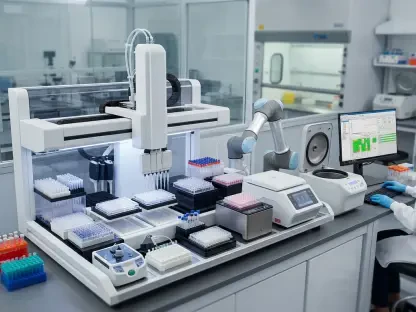
As we move through 2026, the landscape of biological risk is being fundamentally transformed by the rapid integration of artificial intelligence and automated laboratory systems into life sciences research. These technologies have the potential to revolutionize drug discovery and vaccine development, but they also introduce novel biosecurity challenges that traditional oversight frameworks are not equipped to handle. AI-driven models can now predict how to modify pathogens to evade existing medical countermeasures or increase their environmental stability, making the creation of enhanced biological agents more accessible than ever before. In high-containment settings like the Irkutsk Institute, the use of automated systems for handling samples can reduce human exposure, yet it also creates new risks related to cybersecurity and the potential for digital sabotage. The convergence of biology and digital technology means that biosecurity is no longer just a matter of physical locks and air filters; it now requires a sophisticated understanding of how data and algorithms can be weaponized in the biological domain.
Integration of Emerging Technologies: Shifting to Risk-Based Oversight
The traditional approach to biosecurity, which focuses on a fixed list of regulated pathogens, is becoming increasingly obsolete in an era where synthetic biology allows for the de novo synthesis of viruses and the modification of bacteria. To address the 21st-century threats exemplified by the 2026 plague scare, global governance must shift toward a proactive, risk-based framework that monitors the entire lifecycle of biological research. This includes the implementation of international guidelines for the responsible use of the life sciences, ensuring that “dual-use” research of concern is subjected to rigorous ethical and safety reviews before it begins. Oversight must extend beyond government-run institutes to include the burgeoning private biotechnology sector, where innovation often outpaces regulation. By focusing on the potential impact of research rather than just the names of the organisms involved, the international community can create a more flexible and resilient biosecurity regime. Such a system would prioritize the detection of high-risk activities and the establishment of universal safety standards that apply to all laboratories handling agents with pandemic potential.
Modernizing the Global Bio-Defense Strategy: Future Recommendations
The events surrounding the Irkutsk plague scare demonstrated that the current international architecture for managing biological risks was inadequate for the complexities of the mid-2020s. To prevent future incidents from escalating into global panics, the international community realized that it needed to move beyond voluntary transparency toward a system of verifiable accountability. One of the most critical steps identified by experts was the establishment of a permanent, technically proficient investigative body within the United Nations or the World Health Organization that could be deployed rapidly to the site of any suspected laboratory accident. This body would require the legal authority to collect biological samples and review safety protocols independently of national government interference. Furthermore, the development of a global “bio-surveillance” network, utilizing real-time genetic sequencing and AI-powered data analysis, was proposed to detect unusual disease clusters before they could spread across borders. These measures were not merely intended to assign blame but to provide the scientific clarity necessary to protect public health in an interconnected world.
The resolution of the 2026 crisis ultimately hinged on a renewed commitment to international cooperation that transcended traditional geopolitical rivalries. Nations began to recognize that a biological disaster in one part of the world was a direct threat to the security of all, leading to the creation of standardized biosafety training programs and the sharing of best practices for laboratory management. Strengthening the Biological Weapons Convention through a formal protocol for verification became a top priority for global leaders, who understood that the “trust but verify” model was the only way to mitigate the risks of high-consequence research. Additionally, public health communication strategies were overhauled to combat the spread of misinformation and sensationalism during biological events, ensuring that accurate scientific data reached the public in a timely manner. By learning from the failures of the Irkutsk incident, the global community took significant strides toward building a more robust and transparent biosecurity regime that was capable of meeting the challenges of an increasingly complex biological landscape.