
The development of experimental treatments for muscular dystrophy is moving toward human trials in 2028 following encouraging results in preclinical mouse models. This milestone represents a significant leap in the application of Anthropic’s Claude AI within the pharmaceutical sector, specifically through the strategic acquisition of Mithril Medicine. By integrating advanced language models directly into the drug development pipeline, the traditional barriers between computational theory and biological reality are being systematically dismantled. The current landscape of 2026 shows an industry that has moved past the initial hype of machine learning, transitioning into a phase where AI-driven biological engineering is the standard for tackling rare and complex diseases. These developments are not isolated incidents but part of a broader transformation where molecular designs are generated and optimized in weeks rather than years. As researchers prepare for upcoming clinical trials, the precision offered by these autonomous systems has become an indispensable asset in the global effort to cure genetic disorders.
Accelerating Therapeutic Precision through AI Partnerships
Immunotherapy: Breakthroughs in Allergy Research
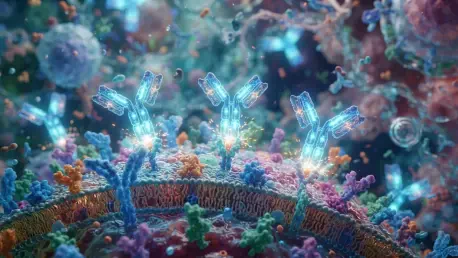
Building on this foundation, the collaboration with Divergence Labs highlights how Claude AI is revolutionizing the treatment of severe food allergies by targeting immunoglobulin E, or IgE. In a concentrated effort over the last few months, the AI model was tasked with designing antibodies capable of detaching IgE from immune cells to prevent life-threatening reactions. Remarkably, the system generated approximately 35,000 unique antibody designs in a single month, a feat of computational power that far exceeds the capacity of any human-led research team. This massive output allowed scientists to identify 20 promising candidates that showed significant detach-and-block capabilities in laboratory settings. Even more encouragingly, three of these designs demonstrated efficacy levels that exceeded current pharmaceutical standards. This rapid iteration cycle has shortened the preclinical phase by years, allowing researchers to focus their resources on the most viable candidates while maintaining a pace of innovation that was once considered impossible in the field of immunology.
This approach naturally leads to the expansion of AI’s role in oncology, where the partnership with Generate Biomedicines is yielding similar high-impact results in CAR T-cell therapy. Researchers utilized Claude to redesign the genetic instructions for these therapeutic cells, aiming to create a more efficient and stable treatment for aggressive cancers. The AI successfully produced a genetic sequence that is 70 percent shorter than the previous versions, which led to a 10-fold increase in the number of cancer-recognizing receptors on the cell surface. These modified cells proved to be more durable and effective at neutralizing tumors in lab tests, offering a potential solution for treating solid tumors that have historically resisted immunotherapy. As the industry moves from 2026 toward 2028, these optimized cells are set for further testing to ensure their long-term viability in human patients. This success in genetic simplification demonstrates that AI is not just a tool for discovery but a critical instrument for refining existing technologies to achieve superior clinical outcomes.
Operational Excellence: Optimization of Laboratory Workflows
In contrast to molecular design, the optimization of laboratory workflows has also seen massive gains through the use of Anthropic’s technology. BigHat Biosciences, for instance, used the model to refine over 1,000 molecular variants, significantly enhancing their thermal stability and binding affinity for cancer targets. Achieving a 10-fold increase in target binding ensures that lower doses of a drug can achieve the desired therapeutic effect, potentially reducing the risk of toxicity for patients. Furthermore, the focus on thermal stability addresses a critical logistical challenge in the global distribution of advanced biologics. By predicting which molecular structures will remain stable at various temperatures, the AI has removed much of the guesswork and physical testing traditionally required. This predictive accuracy has allowed the team to streamline their development process, ensuring that the most stable and effective versions of a drug are the ones that proceed to expensive manufacturing stages, thereby reducing the overall cost and risk of the drug discovery cycle.
The implementation of AI for regulatory compliance and quality control also reached a turning point during this period. Enveda utilized Claude to review over 1,000 pages of complex manufacturing records, identifying seven critical issues that had been overlooked during prior human audits. This automated review process reduced the time required for documentation checks by 89 percent, transforming a 25-hour task into one that was completed in under three hours. These successes demonstrated that the intersection of human expertise and machine intelligence created a safer and more efficient path for pharmaceutical innovation. Moving forward, the industry needed to adopt these automated systems as standard practice to maintain both speed and safety in a high-stakes environment. Stakeholders and regulators prioritized the integration of AI-driven auditing to ensure that manufacturing standards kept pace with rapid molecular breakthroughs. Ultimately, the successful deployment of these tools ensured that the next generation of life-saving treatments moved from the laboratory to the pharmacy with unprecedented precision and reliability.