
Gold nanoparticles demonstrate a unique capacity to absorb near-infrared light and convert it into precise thermal energy capable of destroying malignant cells without damaging all surrounding healthy tissue. This specific characteristic, known as the photothermal effect, has transformed oncological research by providing a localized alternative to systemic treatments that often cause collateral damage. By the mid-2020s, the scientific community focused heavily on refining these delivery systems to ensure maximum energy conversion efficiency. Modern approaches now utilize surface plasmon resonance to tune nanoparticles so they react exclusively to specific wavelengths of light, effectively turning them into microscopic thermal beacons within a tumor. As clinical researchers look to refine these methods in 2026, the emphasis has shifted from mere proof-of-concept to rigorous quantitative optimization. This transition ensures that the biological interactions are predictable, allowing for a standardized approach in the field of nanomedicine today.
Technical Precision: Calibrating the Optical Response
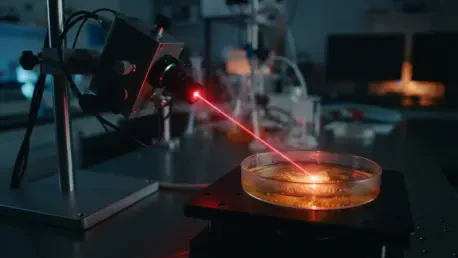
At the heart of these advancements lies the physical geometry of the nanostructures, which dictates their ability to interact with external energy sources. Research has identified gold nanorods, particularly those with a length of approximately 80 nanometers, as the most efficient vehicles for photothermal conversion. These specific dimensions allow for optimal light absorption when paired with a laser operating at a wavelength of 808 nanometers. This wavelength is part of the near-infrared window, where biological tissues are relatively transparent, allowing the light to penetrate deeply into the body without losing its energy to water or hemoglobin. When technicians apply a laser intensity between 0.5 and 3.0 watts per square centimeter for a duration of five to ten minutes, the nanostructures generate sufficient heat to trigger apoptosis. This methodical calibration prevents the destruction of nearby healthy structures while ensuring the core of the malignancy is neutralized effectively.
The quantitative impact of this precision is clearly visible in recent longitudinal data syntheses across diverse tumor models. For instance, the average intra-tumoral temperature elevation achieved during these procedures reached a significant benchmark of 15.30 degrees Celsius. This specific thermal rise is sufficient to disrupt the protein structures and metabolic pathways of cancer cells without causing widespread necrosis. The resulting reduction in tumor volume has been equally impressive, with a recorded average decrease of over 832 cubic millimeters compared to untreated groups. This metric highlights the potential for gold nanostructures to serve as a primary debulking tool before surgical intervention or as a standalone therapy for inoperable masses. By focusing on localized heat, the therapy minimizes the systemic inflammation typically associated with broader treatments. Consequently, the ability to control these variables with high precision offers a level of predictability in results.
Clinical Implementation: Safety and Synergy Protocols
Navigating the delicate balance between therapeutic efficacy and biological safety remains a cornerstone of successful nanostructure deployment. Detailed dose-response evaluations have mapped a nonlinear curve, revealing that the effectiveness of the treatment increases with nanoparticle concentration only up to a certain point. Specifically, a plateau occurs between 50 and 100 micrograms per milliliter, indicating that adding more material beyond this range does not translate to better patient outcomes. This finding is crucial for clinical safety, as it prevents the unnecessary accumulation of heavy metals within the liver or kidneys. Furthermore, the biocompatibility of these gold structures is maintained when doses remain at or below 15 milligrams per kilogram of body weight. By adhering to these established quantitative boundaries, practitioners can maximize the destructive force against the tumor while safeguarding the metabolic health of the patient. This data-driven approach removes ambiguity.
Beyond the implementation of gold nanostructures as a monotherapy, the contemporary medical landscape has embraced the power of combination strategies. The synergy observed when pairing photothermal therapy with two additional modalities—such as chemotherapy and immunotherapy—is profound. Research indicates a synergy index of 2.45, suggesting that the combined effect is more than twice as potent as the sum of the individual parts. The localized heat generated by the gold particles serves a dual purpose: it directly kills malignant cells and simultaneously increases the permeability of the tumor vasculature. This increased permeability allows chemotherapeutic agents to penetrate deeper into the cancerous mass, while the released tumor antigens trigger a more robust immune response. This multi-pronged attack ensures that even microscopic remnants of the disease are addressed. As we move through 2026, the integration of these pillars is becoming the standard for treating complex, resistant cases.
The establishment of a definitive quantitative framework for gold-based photothermal therapy provided the necessary roadmap for the next generation of clinical trials. It was clear that standardized protocols for laser intensity and nanoparticle dimensions significantly reduced the variability in patient outcomes observed in previous years. Researchers focused on the transition from animal models to human cohorts by prioritizing the optimization of the synergy index through multi-modal integration. By refining the dose-response parameters, clinicians ensured that the risk of systemic toxicity remained minimal while maximizing localized destruction. Future efforts moved toward the development of biodegradable coatings for these gold nanostructures to further enhance their clearance from the body. These strategic refinements transformed a laboratory curiosity into a scalable medical solution. Stakeholders in oncology recognized that the consistent application of these benchmarks offered the most viable path toward achieving long-lasting remission.