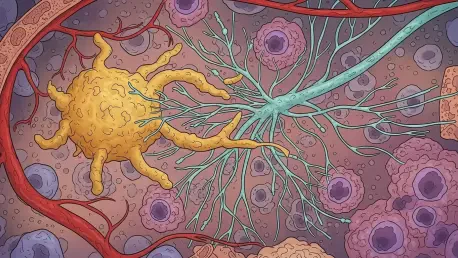
The world of oncology is shifting its focus from the cancer cells themselves to the complex environment that sustains them. Ivan Kairatov, a biopharma expert with extensive experience in research and development, joins us to discuss a groundbreaking discovery from the University of Oklahoma. For

The profound disconnect between the high percentage of cancer patients willing to participate in clinical research and the small fraction who actually enroll has long been an industry bottleneck. While data consistently shows that more than seventy percent of individuals battling cancer express a

The realization that trillions of microorganisms residing within the human digestive tract exert a profound influence on the systemic distribution of synthetic nanocarriers has completely revolutionized modern oncological strategies. Researchers have shifted their focus from merely optimizing the

A quiet revolution in preventative medicine is unfolding across the rugged landscapes of Northern Scotland, where scientists are uncovering how deep ancestral roots can predict life-altering health outcomes more accurately than modern medical records. For decades, the standard procedure for

The current oncology landscape faces a persistent bottleneck as traditional chimeric antigen receptor T-cell therapies continue to struggle with the immunosuppressive defenses of solid tumors. While liquid cancers have seen remarkable recovery rates, the dense extracellular matrix and hostile

The persistent mystery of why colorectal cancer frequently returns after seemingly successful surgical intervention and intensive chemotherapy has long haunted the oncology community, leaving many patients in a precarious state of uncertainty. Despite the advancements in modern medical protocols,