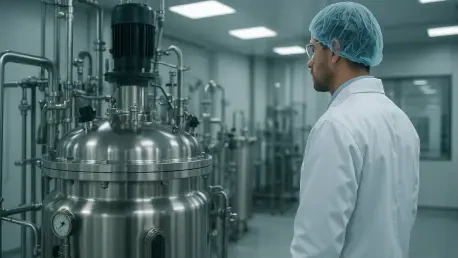

Raw material imports for medicine currently account for $749 million in annual spending, representing more than half of the country’s total medicinal foreign-exchange costs. This financial burden has catalyzed a strategic pivot toward domestic biotechnology, as the nation seeks to insulate its healthcare system from the volatility of the global pharmaceutical market. By focusing on high-tech localization, knowledge-based companies are transitioning from simple assembly to complex molecular synthesis. The current landscape in 2026 highlights a significant shift in industrial priorities, where the objective is to master the entire production cycle of essential drugs. This movement is not merely a response to economic pressure but a proactive effort to build a resilient knowledge economy. As these technological initiatives mature, they provide a foundation for long-term medical sovereignty, ensuring that patients have consistent access to life-saving treatments regardless of any international trade fluctuations.
Strategic Localization: Developing High-Value Biologicals
Mastering Recombinant Insulin Technology
The centerpiece of this localization effort is the domestic production of recombinant insulin analogues, a project that addresses one of the most significant healthcare expenditures in the nation. By utilizing advanced genetic engineering to manufacture insulin from the cellular stage, local firms are eliminating the need for expensive foreign imports that currently cost over $100 million each year. One prominent company has already secured its production license for insulin glargine and is finalizing its industrial scale-up to ensure a full market entry by January 2027. This technical milestone involves complex fermentation and purification processes that require a highly skilled workforce and state-of-the-art bioreactor facilities. Another key player is currently finalizing the necessary infrastructure to seek regulatory approval by March 2027, which will provide the market with multiple domestic sources for this critical hormone. These advancements represent a major leap in managing chronic diseases.
Successfully localizing insulin production does more than just reduce foreign exchange drain; it establishes a robust framework for biological manufacturing that can be applied to other therapeutic areas. The ability to produce recombinant proteins locally means that the healthcare system is no longer at the mercy of international price hikes or delivery delays. Furthermore, the collaboration between the Vice Presidency for Science and Technology and the Innovation and Prosperity Fund has provided the financial liquidity required to sustain these multi-year development cycles. As these insulin products move toward commercialization, they are expected to stabilize the domestic market and provide a cost-effective alternative for millions of patients. The expertise gained through this process is now being integrated into other sectors of the industry. This systemic growth ensures that the nation remains a leader in biotechnology while fostering a sustainable environment for future medical innovations.
Expanding the Immunization Infrastructure
Beyond chronic care, the strategic program is making significant strides in preventive immunology and pediatric nutrition through localized manufacturing of vaccines and formula components. The production line for the pneumococcal vaccine is already operational, with strategic plans in place to double the output to two million doses between 2026 and 2028. This expansion is vital for reducing the incidence of severe respiratory infections in children and the elderly. Simultaneously, a domestically developed meningococcal vaccine has transitioned from the laboratory into the clinical trial phase, targeting life-threatening bacterial meningitis. This progress is matched by a two-year initiative to produce the four essential components of infant formula—base powder, whey powder, lactose, and standardized oils—within the country. By mastering the synthesis of these core ingredients, the industry is securing the nutritional foundation for children while further reducing import dependency.
The integration of the biotechnology sector with the petrochemical industry ultimately provided the means to synthesize active pharmaceutical ingredients directly from domestic feedstocks. Stakeholders utilized existing hydrocarbon resources to create high-purity APIs, effectively closing the loop on the $749 million annual expenditure for raw materials. The government prioritized these projects because they combined economic efficiency with the urgent need for medical self-sufficiency. Moving forward, the focus shifted toward expanding these capabilities to include specialized medications for rare diseases. Regulatory agencies recommended that domestic firms continue to align their manufacturing standards with global benchmarks. By investing in cellular research and industrial-scale synthesis, the nation successfully transformed its pharmaceutical landscape into a self-sustaining ecosystem. This transition ensured that high-quality healthcare remained accessible, providing a roadmap for medical independence.