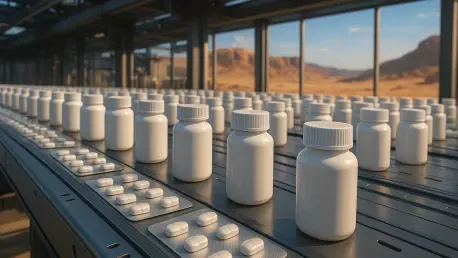

In the vast, scorched expanse of the Algerian hamada, where the horizon is often obscured by swirling silts and the sun beats down with unforgiving intensity, an unlikely beacon of scientific progress has taken root. The laboratory manages a consistent catalog of 15 to 20 different medications, ranging from basic analgesics like paracetamol to specialized glaucoma eye drops and antibiotics. This facility, the Mohamed Embarek Fakal·la Pharmaceutical Production Laboratory, serves as a vital lifeline for the approximately 173,000 Sahrawi refugees who have called this stony desert home for half a century. Displaced from Western Sahara, these resilient people have built a society in exile, complete with schools, hospitals, and governance structures. Amidst the shifting sands, the lab represents more than just a source of medicine; it is a symbol of self-sufficiency and a defiance of the geopolitical stagnation that has left a generation in limbo. Its presence in the Tindouf Province provides a sense of agency to a population that remains largely dependent on international aid for basic survival. By manufacturing its own pharmaceuticals, the Sahrawi community is not only addressing immediate health needs but also reclaiming a degree of sovereignty that is often denied to refugee populations. The laboratory functions as a “desert rose,” blooming in a landscape where the very idea of sterile manufacturing seems like a logistical impossibility.
Foundations of Resilience
Origins and Leadership: The Genesis of the Hamada Facility
The origins of this remarkable facility can be traced back to 1992, stemming from a serendipitous encounter between Carles Codina, a dedicated pharmacist representing the NGO Medicus Mundi Mediterrània, and a local Sahrawi technician. At the time, the technician was laboring in a modest dispensary, meticulously improvising antiseptic preparations with limited resources. This meeting served as a catalyst, exposing the critical necessity for a formalized and professionalized pharmaceutical production site within the camps. The project gained momentum through the mid-nineties, leading to the official inauguration of the laboratory in 1996. By 1998, the facility had commenced its initial production runs, transitioning from a conceptual goal into a functional reality that would eventually stabilize the local healthcare infrastructure. This early period was defined by a shared vision of reducing dependency on unpredictable international shipments and establishing a foundation for local scientific expertise that could withstand the pressures of exile.
Building upon this initial momentum, the laboratory underwent a significant transformation under the steady leadership of Director Mohamed Lamin Abdi. A pharmacist whose academic journey took him from the camps to Kharkiv, Ukraine, and later to Italy for doctoral studies, Abdi represents the intellectual capital that sustains the Sahrawi cause. His decision to return to the harsh environment of the hamada was fueled by a deep-seated commitment to his people’s health and political autonomy. Under his guidance, the facility evolved from a small-scale operation managing a few basic formulas into a sophisticated production center. Today, the laboratory’s output is diverse, encompassing essential items such as ibuprofen, ointments, ultrasound gels, and various life-saving serums. This expansion was not merely about increasing volume; it was about professionalizing the entire production chain, ensuring that every tablet and bottle met rigorous safety standards despite being manufactured in a region where the ambient temperature frequently exceeds 110 degrees Fahrenheit.
Strategic Impact: Efficiency Amidst Scarcity and Crisis
While the laboratory currently provides approximately 5% of the total pharmaceutical needs of the Sahrawi refugee camps, its strategic importance far exceeds this statistical footprint. In a region where the vast majority of medical supplies arrive through international aid programs, primarily funded by the European Union, the local population is often at the mercy of complex global logistics. Delays in shipping, bureaucratic hurdles, and shifting geopolitical priorities can lead to dangerous shortages of basic medications. In this volatile context, the Mohamed Embarek Fakal·la lab operates as a critical emergency reserve. It provides a buffer that allows local health authorities to manage sudden spikes in demand or gaps in international supply. This capability ensures that the most vulnerable residents, including children and the elderly, have access to essential treatments even when external help is stalled. The lab’s existence transforms the camp’s healthcare system from a passive recipient of charity into an active participant in its own maintenance and survival.
The true value of this local agility was perhaps most visible during the global health crises that have shaped the early 2020s. When international supply chains for basic hygiene products like hand sanitizer collapsed, the laboratory was able to pivot its production lines almost instantly. By manufacturing enough sanitizer to supply all the Sahrawi “wilayas,” or administrative camps, the facility provided a frontline defense against disease at a time when external aid was virtually nonexistent. Furthermore, the laboratory has achieved complete self-sufficiency in the production of sodium chloride bags for urinary irrigation. Previously, these heavy and expensive liquid-filled containers had to be imported from abroad, incurring massive transportation costs and logistical headaches. By producing roughly 200 of these bags each month just a few hundred feet from the local hospital’s operating rooms, the laboratory has drastically improved the reliability of surgical care while simultaneously reducing the financial burden on the Sahrawi health ministry.
Strategic Impact and Operational Hurdles
Environmental Adversaries: Battling the Desert Elements
Operating a high-precision, sterile pharmaceutical environment in the heart of the Algerian desert is an ongoing struggle against a quartet of environmental adversaries: the sun, the sand, the drought, and the wind. The extreme heat of the hamada is not just a personal discomfort for the staff; it is a direct threat to the stability of chemical compounds and the longevity of sensitive laboratory equipment. Maintaining the necessary climate control to keep raw materials and finished products within safe temperature ranges requires constant vigilance and significant energy resources. Furthermore, the invasive nature of desert sand is a persistent nightmare for machinery maintenance. Fine silt driven by the relentless wind finds its way into every crevice, threatening the integrity of sterile zones and causing premature wear on sophisticated medical apparatus. This is compounded by a chronic shortage of specialized technicians who are capable of repairing complex laboratory hardware in such a remote and isolated geographic location.
In addition to the environmental pressures, the facility faces a constant challenge in securing the raw materials required for pharmaceutical synthesis. Fatimetu Ahmed, who has served as the laboratory’s secretary for over two decades, highlights how the scarcity of active pharmaceutical ingredients and even basic packaging components often creates bottlenecks in the production cycle. Something as simple as a shortage of empty plastic containers or specific labeling materials can bring a production line to a standstill. This reality demands an extraordinary level of administrative ingenuity and long-term planning to manage inventory effectively. The staff must often engage in a delicate balancing act, prioritizing the production of the most urgently needed medications based on the fluctuating availability of ingredients. This environment of scarcity fosters a culture of innovation, where every resource is meticulously tracked and every potential waste is minimized to ensure that the laboratory remains operational despite the surrounding economic and physical hostility.
Socio-Economic Realities: The Human Cost and Financial Instability
The financial foundation of the laboratory is as precarious as the desert landscape itself, relying on a fragmented and often unpredictable funding model. Unlike large-scale humanitarian initiatives that might benefit from consolidated multi-year grants, this facility depends on “gap-filling” contributions from a variety of sources, including Medicus Mundi Mediterrània, the Catalan Fund for Development Cooperation, and various Spanish municipalities. This piecemeal approach to budgeting means that funds are often not guaranteed until the very end of a fiscal year, forcing the laboratory to cover its daily operating expenses upfront through careful management of its meager reserves. This financial instability creates a high-stress environment for administrators who must constantly advocate for small donations—sometimes ranging only a few hundred dollars—to keep the lights on. The lack of a centralized, reliable budget hinders long-term strategic investments and keeps the facility in a state of perpetual financial defensive maneuvering.
This economic uncertainty has a direct and significant impact on the laboratory’s most valuable asset: its human capital. The eleven Sahrawi technicians who operate the facility are highly trained professionals, many with advanced degrees, yet they receive what is often described as a “symbolic” incentive rather than a competitive professional salary. Currently, these workers earn approximately $115 a month, a sum that is frequently paid out in three-month intervals due to funding delays. This discrepancy between their high level of expertise and their low compensation has contributed to a “brain drain” within the camps. As young, educated Sahrawis look toward Europe for better economic opportunities and a more stable future, the laboratory faces the ongoing challenge of retaining its best talent. The dedication of those who stay is a testament to their commitment to the Sahrawi cause, but it also underscores the urgent need for a more sustainable economic model that honors the professional value of these specialized medical workers.
Future Innovations and Sovereignty
Shifting Perceptions: Cultural Integration and Modernization
One of the most profound achievements of the Mohamed Embarek Fakal·la laboratory is the dramatic shift it has inspired in public perception regarding locally produced medicine. In the facility’s early years, many refugees were understandably skeptical of “desert-made” pharmaceuticals, with some even discarding provided drugs in favor of more familiar imported brands. This skepticism was rooted in a lack of familiarity with local manufacturing capabilities and the psychological weight of being a displaced population. However, through consistent quality control and successful health outcomes, that doubt has been replaced by deep-seated trust. Today, the Sahrawi people specifically request medications produced at the lab, particularly its ointments and anti-inflammatory drugs like diclofenac, which have earned a reputation for superior efficacy. This trust has become so ingrained that refugees traveling to Mauritania or even Spain often carry these locally made products with them, viewing them as a reliable constant in an otherwise uncertain life in exile.
This cultural integration was further bolstered by the modernization of the facility, notably the opening of a high-sterilization “cleanroom” in 2015. This specialized environment allowed the laboratory to expand into the production of more sensitive medical items, such as amoxicillin capsules and specialized eye drops for the treatment of glaucoma. The implementation of rigorous safety protocols—including the mandatory use of protective masks, caps, and shoe covers—has not only ensured the purity of the products but also reinforced the lab’s professional image within the community. By adhering to international manufacturing standards in the middle of a refugee camp, the facility has demonstrated that quality and scientific rigor are not the exclusive domain of wealthy nations. This modernization has transformed the laboratory into a point of pride for the Sahrawi people, serving as a tangible example of what can be achieved through a combination of international solidarity and local determination to master modern technology.
Traditional Knowledge: Bridging Science and Sahrawi Sovereignty
Looking toward the current landscape of 2026, the laboratory has increasingly focused on bridging the gap between modern pharmacology and the traditional botanical knowledge of the Sahrawi people. In an effort to address the persistent rates of anemia and malnutrition that plague the camps, the lab has developed innovative nutritional supplements using local plant species known for their high concentrations of vitamins and iron. This initiative was validated by a series of pilot studies that demonstrated a measurable increase in hemoglobin levels among women and children who utilized the plant-based capsules. By integrating indigenous knowledge with modern scientific validation, the lab is creating solutions that are uniquely suited to the ecological and public health realities of the region. This approach not only provides a more culturally resonant form of healthcare but also opens new avenues for funding by showcasing the lab’s ability to innovate and solve complex problems using the resources available within its immediate environment.
The Mohamed Embarek Fakal·la Pharmaceutical Production Laboratory ultimately served as more than just a factory; it functioned as a center for higher education and a potent symbol of Sahrawi self-determination. By providing mentorship and continuing education to a new generation of technicians, the facility ensured that scientific knowledge was preserved and expanded within the refugee community, even in the face of long-term displacement. The lab’s history proved that local expertise, when supported by targeted international cooperation, could overcome even the most daunting environmental and economic obstacles. The success of the facility offered a clear roadmap for other displaced populations: the path to dignity and health was paved through the pursuit of scientific autonomy. While the “desert rose” faced ongoing challenges with sand, heat, and shifting budgets, its legacy remained a testament to the fact that human ingenuity and the quest for sovereignty could flourish in the most inhospitable corners of the globe. Moving forward, the international community was encouraged to support these localized manufacturing hubs as a more sustainable alternative to permanent aid dependency.