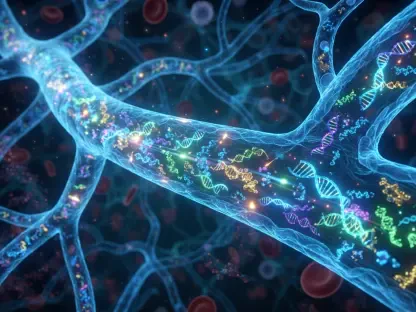

Polydopamine nanotubes provide a versatile clinical tool that can disrupt cancer cell activity through both photothermal heating and localized electrical stimulation. For years, the challenge of delivering targeted therapy without damaging surrounding healthy tissue has remained a central hurdle in the fight against aggressive tumors and neurodegenerative diseases. Traditional medicine often relies on systemic drugs that circulate through the entire body, leading to significant side effects and diminished efficacy at the cellular level. However, a collaborative team at the Italian Institute of Technology has now introduced a 500-nanometer solution that functions as a smart, multifunctional transducer. By integrating piezoelectric, photothermal, and antioxidant properties into a single organic structure, the research group led by Gianni Ciofani has unlocked a new dimension of precision. This development represents more than just a chemical innovation; it is a fundamental shift in how bioelectronic interfaces are designed to communicate with human biology.
Engineering the Geometry: From Spheres to Nanotubes
The core of this scientific advancement is the strategic manipulation of polydopamine, a synthetic polymer modeled after the neurotransmitter dopamine, which naturally occurs in the brain. Historically, polydopamine was primarily utilized in spherical nanoparticle formats due to its exceptional biocompatibility and adhesive properties. However, the IIT research group discovered that the physical behavior of the material changes drastically when it is structured as a hollow nanotube. This geometric shift is not merely aesthetic; it fundamental alters how the material reacts to external stimuli. Unlike the solid spheres used in earlier studies, these tubes possess a unique surface area and mechanical flexibility that allow them to interface more effectively with cell membranes. This structural refinement ensures that the material can remain within the body for extended periods without triggering an adverse immune response, making it a reliable candidate for long-term implants and targeted therapies.
Maintaining a diameter approximately 500 times smaller than a human hair, these nanotubes are designed to penetrate specific tissue layers with minimal disruption to the surrounding biological architecture. The production process involves complex nanolithography and chemical synthesis techniques that ensure uniformity across the entire batch of tubes. This level of consistency is vital for clinical applications where dose control and predictable material behavior are paramount. By transitioning from a simple drug carrier to a sophisticated transducer, the polydopamine structure now acts as a bridge between electronic devices and biological systems. This evolution reflects a broader trend in bioengineering where the focus is shifting toward materials that can actively participate in cellular repair rather than simply acting as passive conduits for medication. The success of this design highlights the importance of morphological engineering in the development of the next generation of medical devices.
Wireless Stimulation: Harnessing Piezoelectric and Photothermal Potential
The most revolutionary aspect of the new nanotube design is the emergence of piezoelectricity, a property typically found in inorganic crystals but rarely in biocompatible organic materials. When these nanotubes are exposed to mechanical stress, such as that generated by low-intensity ultrasound waves, they produce a localized electrical current. This capability effectively transforms each nanotube into a wireless electrode that can be activated from outside the body without any physical connections or batteries. In clinical settings, this allows physicians to stimulate specific nerve cells or muscle fibers remotely, providing a non-invasive alternative to traditional pacemakers or deep-brain stimulation electrodes. The ability to generate electricity on demand at the cellular level opens new pathways for treating conditions characterized by electrical signaling failures. Moreover, because the stimulus is mechanical in origin, it provides a high degree of spatial control, ensuring that only targeted tissues are affected.
Complementing the electrical stimulation is the material’s inherent photothermal activity, which allows the nanotubes to absorb near-infrared light and convert it into thermal energy. This localized heating serves as a precise trigger for biological processes, specifically the regulation of intracellular calcium levels. Since calcium acts as a primary messenger in almost all cellular functions, the ability to modulate its flow via light-induced heating offers researchers a powerful tool for controlling cell behavior. Unlike systemic heating, which can damage healthy tissue, the photothermal effect of these nanotubes is confined to the immediate vicinity of the nanostructure. This precision is particularly useful in neurobiology, where specific signaling pathways must be activated to promote repair or inhibit pathological activity. By integrating both electrical and thermal triggers, the nanotubes provide a dual-mode modulation system that can be tailored to the specific needs of a patient’s unique physiological environment.
Therapeutic Horizons: Antioxidant Defense and Clinical Implementation
Beyond their physical modulation capabilities, these nanotubes possess a natural antioxidant capacity that is vital for maintaining cellular health in diseased environments. Oxidative stress, caused by an imbalance of free radicals, is a primary driver of aging and various degenerative conditions, including Alzheimer’s and chronic inflammation. The polydopamine structure acts as a chemical sponge, neutralizing harmful reactive oxygen species before they can damage DNA or cellular membranes. This protective function is intrinsic to the material, meaning it does not require external activation to provide a baseline level of defense for the surrounding tissue. In a clinical context, this means that the nanotubes can serve a dual purpose: they act as a therapeutic intervention through active stimulation while simultaneously providing a protective environment that fosters natural healing. This multifaceted approach addresses both the symptoms and the underlying causes of cellular degradation in a holistic manner.
The development of these multifunctional nanotubes successfully demonstrated that merging physical and chemical properties into a single organic platform was possible for advanced medical use. Scientists at the IIT and their partner institutions focused on establishing a standardized protocol for the activation of these nanostructures, ensuring that ultrasound and light-based triggers functioned reliably in complex biological tissues. Clinical researchers suggested that the next phase involved the integration of these nanotubes into specialized oncology treatments to disrupt tumor proliferation through targeted hyperthermia and electrical interference. Simultaneously, the focus shifted toward optimizing dopamine delivery systems for neurology, aiming to replace systemic drugs with these precision-controlled transducers. These actionable steps paved the way for a new era of bioelectronic devices that prioritized patient comfort and therapeutic accuracy. By proving the safety and versatility of the 500-nanometer nanotubes, the research community provided a robust framework for high-precision medicine.