
A massive one-terabyte data breach claimed by the GENESIS threat actor has placed the sensitive medical records of millions of home healthcare patients at immediate risk. This alarming development emerged in the third quarter of 2026, sending shockwaves through a healthcare sector already reeling

By functioning as a clinician-extender, the newly announced ADVOCATE system will autonomously manage heart failure patients between scheduled office visits to improve long-term outcomes. This $62.7 million initiative, launched by the Advanced Research Projects Agency for Health, represents a

Bridging the gap between information and action requires supplementing traditional systems of record with a logic-driven system of intelligence that understands organizational constraints. The healthcare industry is currently navigating a pivotal transition where the novelty of generative AI has

The deceptive simplicity of a single hydrogen atom moving across a molecular scaffold has long been the invisible wall separating promising drug candidates from clinical failure. This phenomenon, known as tautomerism, involves the rapid relocation of a proton and a corresponding shift in double

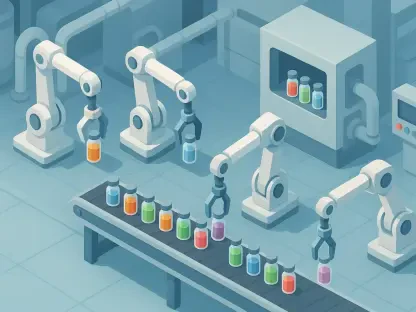
Technology suppliers are currently focused on removing technical burdens to allow smaller biotech firms to access high-level efficiency and reproducibility. The biomanufacturing industry stands at a critical juncture where the simple accumulation of biological data no longer provides a competitive
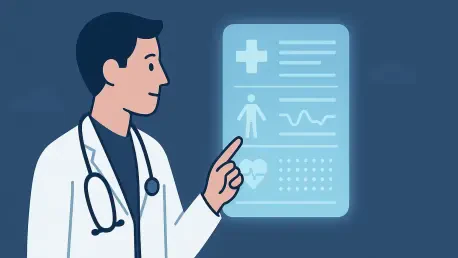
When researchers at the Yale School of Medicine fine-tuned AI models for clinical diagnosis, they discovered that increased diagnostic accuracy often came at the cost of the model verbatim memorizing sensitive patient data. This discovery, published in the journal Nature Communications, represents