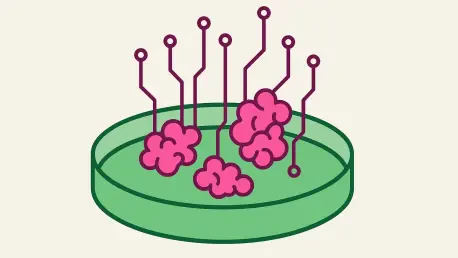

Sociologists argue that consciousness might require a depth of experience that goes far beyond the simple neural activity observed in a petri dish. Despite this philosophical skepticism, the pursuit of superintelligence is shifting from the cold architecture of silicon chips to the pulsating complexity of biological matter. While traditional artificial intelligence relies on mathematical simulations of neural pathways, a new frontier known as wetware utilizes actual human brain organoids to process information. These three-dimensional clusters of living neurons are grown from stem cells and represent a radical departure from conventional computing methods. By integrating biological tissue with electronic interfaces, researchers are no longer just mimicking the mind; they are harnessing its physical essence to create hybrid systems that blur the line between organic life and machine functionality. This technological evolution has already reached significant milestones through the development of bio-computers capable of interacting with digital environments in real-time.
Integrating Biological Matter Into Computational Frameworks
Scientists have successfully wired cellular clusters to electrodes, enabling these mini-brains to learn tasks that were once the sole province of software, such as playing classic video games like Pong or Doom. These experiments demonstrated that biological matter can be directed to perform goal-oriented computations, suggesting that the future of high-level processing may reside in laboratory-grown tissue rather than traditional hardware. Cortical Labs, a leader in this burgeoning industry, recently introduced the CL1 bio-computer, which utilizes living human neurons to interact with digital environments. Unlike traditional silicon chips, which require explicit programming to execute tasks, these biological systems learn through a process of reinforcement within a simulated environment. This shift represents a fundamental change in how humanity approaches problem-solving at the intersection of biology and engineering, creating a hybrid class of machinery that functions through organic logic and adaptability.
The emergence of wetware redefined the boundaries of what is considered a computer by moving away from binary logic toward the parallel processing of the human brain. While silicon-based systems excel at rapid calculations and data retrieval, they lack the innate plasticity and adaptability found in biological neurons. Organoids can reorganize their connections in response to new information, a process known as neuroplasticity, which allows them to solve problems with far less data than their digital counterparts. This inherent ability to learn and adapt makes biological systems particularly attractive for tasks requiring high levels of intuition or pattern recognition in unstructured environments. As these systems continue to evolve, the integration of biological components into cloud-based infrastructures has begun to offer a glimpse into a world where organic intelligence is a scalable resource. This convergence highlights a move toward adaptive technology that leverages the natural efficiency of human evolution.
Transforming Medical Research Through Living Neural Models
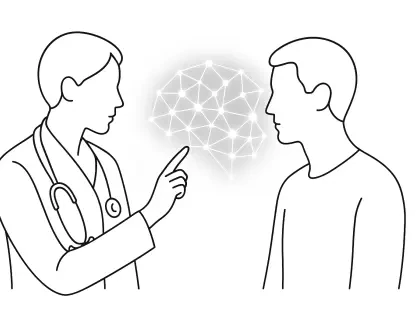
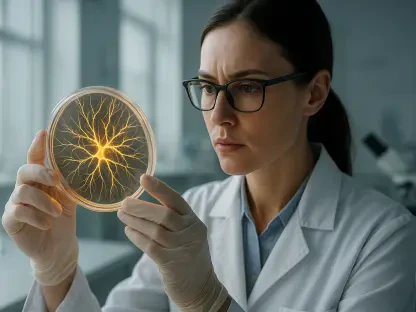
Beyond the realm of pure computing, organoids serve as an unparalleled tool for medical innovation and the study of human biology. Because these clusters are derived from human cells, they provide a far more accurate model for research than animal subjects, offering a transparent window into the developing brain. Scientists use these models to observe neurodevelopmental conditions like autism in real-time or to study the mechanics of memory and learning. This controlled environment allows for a granular look at how the human mind forms connections and responds to external stimuli without the ethical and logistical constraints of human testing. By monitoring the electrical signals within an organoid, researchers can pinpoint specific deviations in neural growth that lead to cognitive disorders. This level of precision was previously impossible, as animal brains do not perfectly replicate human neurological pathways. The use of human tissue ensures that findings are directly applicable to patients, speeding up discovery.
The pharmacological potential of this technology is equally transformative, providing a sophisticated testing ground for new medications. Researchers can evaluate how experimental compounds affect neural health and cognitive performance, paving the way for breakthroughs in treating Alzheimer’s disease, epilepsy, and chronic memory loss. By using stem cells from specific individuals, doctors may eventually create personalized organoids to predict how a patient will react to a drug before it is ever administered. This synergy between biological engineering and healthcare marks a new era of precision medicine that treats the brain as a dynamic, observable system. Furthermore, this approach reduces the reliance on controversial animal testing, providing a more ethical and scientifically sound alternative for the global pharmaceutical industry. As laboratories refine the process of growing these clusters, the cost of drug development could decrease significantly, making treatments more accessible through human-centric validation.
Overcoming Sustainability Hurdles and Physical Constraints
One of the most persuasive arguments for moving away from silicon is the staggering energy demand of modern artificial intelligence. Massive data centers powering advanced AI models consume enormous amounts of electricity, straining global power grids and natural resources. In contrast, the human brain is the most energy-efficient processor in existence, performing complex calculations on a fraction of the power required by a supercomputer. Biological computers offer a sustainable alternative, promising high-level intelligence with a minimal energy footprint, a shift that is already beginning as firms start offering cloud services powered by biological hardware. If biological systems can match or exceed the processing capabilities of silicon while consuming less power, the incentive for widespread adoption will be immense. This economic and environmental pressure is driving the transition toward wetware as a primary solution for the energy crisis in computing and the global carbon footprint of AI.
Stakeholders determined that the path forward for wetware required a synthesis of biological precision and ethical vigilance. Researchers implemented new protocols that treated biological computers not merely as hardware, but as sensitive entities necessitating specific care. The industry focused on developing microfluidic scaffolding to solve the vascularization problem, which allowed organoids to expand in size and complexity throughout 2026. Policymakers established international standards to ensure that the creation of synthetic intelligence remained transparent and beneficial to humanity. These actions provided a roadmap for integrating biological processors into the global infrastructure while addressing the energy crisis. Future considerations looked toward the possibility of closed-loop systems where organoids and silicon worked in tandem to solve the world’s most pressing challenges. By prioritizing sustainability, the scientific community ensured that this technology evolved as a responsible extension of human capability.