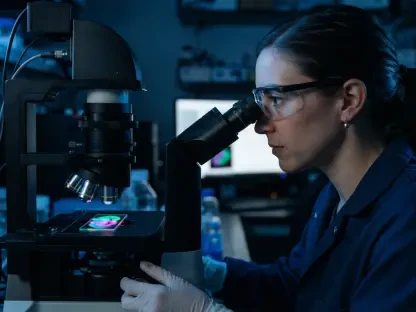

The FAST platform represents a significant technological step forward, providing a highly efficient and sustainable environment for exploring the foundational biological processes of life’s later stages. As the global demographic shifts toward an older population, the urgency to understand cellular senescence and its associated pathologies has never been greater. For years, scientists struggled with the sheer logistical weight of genome-wide studies, which require the simultaneous observation of thousands of genetic variations. At Umeå University, the development of the Flexible Aging Screening Technology platform has fundamentally altered this landscape. By combining high-throughput robotics with sophisticated biological modeling, researchers can now probe the microscopic changes that define the aging process. This advancement is not merely about speed; it is about the reliability and depth of the data produced. The platform allows for a level of consistency that manual methods could never achieve, ensuring that every observation contributes to a clearer picture of cellular health.
Investigating Cellular Quality Control and Mitochondrial Health
The Biological Foundations of Aging
Mitochondria act as the primary metabolic engines of the cell, driving nearly every biological process required for survival through the production of adenosine triphosphate. However, as an organism ages, these organelles frequently suffer from cumulative damage, leading to a precipitous drop in energy output and an increase in harmful oxidative stress. This mitochondrial dysfunction is a recognized precursor to debilitating neurodegenerative conditions, including Alzheimer’s and Parkinson’s diseases. Within the context of the FAST platform, researchers are specifically looking at how the cell manages these aging powerhouses. By observing the lifecycle of mitochondria across various genetic backgrounds, the team can identify which genes are responsible for maintaining organelle integrity. This research is vital because it moves beyond surface-level symptoms to address the root causes of cellular decay. Understanding these interactions requires a massive scale of observation that only automated systems can provide.
Discovering Molecular Triggers of Cellular Decay
Beyond energy production, the maintenance of protein homeostasis, or proteostasis, represents another critical pillar of cellular health that deteriorates with age. The FAST platform enables a genome-wide assessment of how cells identify and repair misfolded proteins before they aggregate into toxic clusters. These clusters are often the physical markers of aging in the brain, yet the precise pathways that govern their formation remain partially obscured. By utilizing a high-throughput framework, scientists can now screen over 6,500 different strains of cells to see how each genetic variation handles protein stress. This holistic view of the proteome allows for the discovery of specific molecular triggers that signal the onset of cellular failure. Instead of looking at individual proteins in isolation, the platform provides a panoramic view of the cellular environment. This level of detail is essential for developing interventions that can potentially slow down or even reverse the signs of biological aging at a molecular level.
Streamlining High-Throughput Genomic Screening
Overcoming Manual Bottlenecks with Automation
The logistics of managing such vast libraries were once a primary barrier to progress, necessitating the preparation of thousands of growth media plates every week. In a traditional setting, the manual preparation of these materials was not only labor-intensive but also highly prone to inconsistencies that could skew experimental results. The introduction of the WELLJET reagent dispenser solved this issue by providing a reliable, automated solution for plate preparation. Featuring an integrated plate stacker, this technology allows for the hands-free processing of large batches, which is essential for maintaining the high-throughput requirements of the FAST platform. Furthermore, the laboratory prioritized sustainability by using reusable components like autoclavable cassettes and metal pins for cell propagation. This approach significantly reduced the environmental footprint of the research, proving that large-scale genomic screening can be performed without generating excessive plastic waste. This synergy of efficiency and environmental consciousness has set a new standard for modern laboratory workflows.
Integrating Sustainability into Modern Science
A significant concern in large-scale screening is the volume of plastic waste generated by single-use pipette tips, which often reach into the millions for a single study. The FAST workflow was deliberately designed to mitigate this issue through the use of reusable metal pins for cell propagation that are sterilized between uses. By prioritizing reusable components, the laboratory demonstrated that high-output genomic research can be conducted in an environmentally conscious manner without sacrificing speed or accuracy. The choice of the WELLJET reagent dispenser aligned with this sustainable ethos, as its dispensing cassettes are both durable and autoclavable. By reusing these cassettes, the laboratory significantly reduced its reliance on disposable plastics, showing that high-output research and eco-friendly practices can coexist. This commitment to sustainability is increasingly important as laboratories worldwide seek ways to minimize their carbon footprint while continuing to push the boundaries of biological discovery and therapeutic innovation.
Achieving Precision through Automated Pipetting
The integration of automated liquid handling technology successfully revolutionized the research capabilities of the Kohler laboratories. By utilizing the WELLJET and MINI 96 systems, the team eliminated major bottlenecks that previously hindered plate preparation and sample reformatting. This technological synergy allowed the researchers to shift their focus from the physical demands of manual labor to the intellectual requirements of data analysis and experimental design. The FAST platform provided a robust and sustainable framework for exploring the molecular foundations of longevity. To continue this momentum, future initiatives should consider the implementation of deeper AI-driven analysis to interpret the massive datasets generated by these screenings. It was clear that the adoption of flexible, automated tools was the key to unlocking new insights into mitochondrial maintenance. Looking ahead, scaling these systems to include even more diverse genetic libraries will be essential for developing targeted therapies. The success of this project proved that specialized automation is a vital component of modern genomic studies.