
For millions of women worldwide, the journey toward an endometriosis diagnosis has historically been a grueling marathon of physical pain and psychological exhaustion, often spanning nearly a decade of clinical uncertainty. This chronic condition occurs when tissue similar to the uterine lining grows outside the womb, triggering severe inflammation and internal scarring that disrupts daily life and fertility. Until now, the medical community has struggled with a profound diagnostic gap, as standard imaging techniques like ultrasound and MRI frequently fail to detect the most common form of the disease. Consequently, many patients are forced to undergo invasive laparoscopic surgery just to confirm the presence of these lesions, a procedure that carries its own risks and recovery time. The emergence of a targeted molecular imaging agent now promises to fundamentally alter this landscape, offering a sophisticated way to visualize the disease without a single incision. By focusing on the biological activity of the lesions rather than just their physical structure, this technology addresses the inherent limitations of traditional radiology and provides a clearer path for those who have spent years searching for definitive answers.
Advanced Molecular Targeting: The Role of 99mTc-maraciclatide
The cornerstone of this medical advancement is a specialized molecular imaging agent known as 99mTc-maraciclatide, which functions as a highly specific biological scout within the human body. Unlike traditional contrast agents that simply circulate through the bloodstream, maraciclatide is engineered to bind specifically to αvβ3 integrin proteins. These proteins are expressed at high levels during angiogenesis, the process where the body generates new blood vessels to support growing tissue. In the context of endometriosis, the inflammatory lesions are highly vascularized, meaning they require a constant supply of blood to persist and spread. When the agent is injected into a patient, it seeks out these areas of abnormal vascular activity and attaches itself to the integrin receptors. This binding process effectively tags the problematic tissue with a radioactive marker that can be picked up by specialized scanners, allowing physicians to see the disease in a way that was previously impossible. This method targets the metabolic signature of the disease rather than relying on the visible size or shape of the lesions.
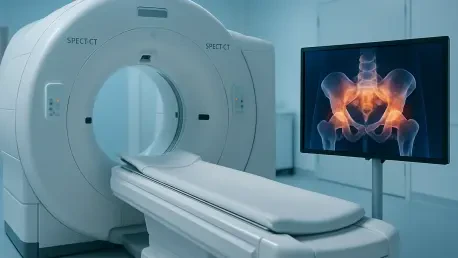
By utilizing SPECT-CT scanning technology, doctors can pinpoint the exact location of the molecular activity, creating a composite image that merges functional data with anatomical structure. This dual approach is particularly effective for identifying superficial peritoneal endometriosis, a manifestation of the disease that accounts for roughly eighty percent of all cases. These superficial lesions are often too thin or flat to be caught by the resolution limits of an MRI or the reflective properties of an ultrasound wave. Because maraciclatide focuses on the protein expression within the tissue, it bypasses the physical limitations of light and sound. The high sensitivity of this molecular bond ensures that even the smallest clusters of cells are highlighted against the background of healthy tissue. This level of precision marks a significant shift in gynecological care, moving away from subjective symptom management and toward an objective, data-driven diagnostic protocol. As the technology enters wider clinical validation through the end of 2026, it offers the potential to replace the current surgical gold standard with a simple outpatient procedure.
Redefining Clinical Accuracy and Reducing Surgical Risks
Preliminary clinical trials have demonstrated that this molecular approach offers a level of accuracy that far exceeds existing non-invasive methods, specifically in the realm of identifying subtle Spe lesions. In a recent study conducted by researchers at the University of Oxford, the imaging results from maraciclatide scans were compared directly against findings from surgical laparoscopies. The results were remarkably consistent, with the scan correctly identifying the presence or absence of the disease in the vast majority of participants. Perhaps most importantly, the test produced zero false positives, a critical metric for any diagnostic tool intended to guide surgical intervention. In the current medical paradigm, approximately forty percent of women who undergo diagnostic surgery are found to have no visible endometriosis, meaning they endured the risks of anesthesia and abdominal incisions for no clinical benefit. By filtering out these cases through a precise molecular scan, healthcare systems can reserve surgical resources for patients who are confirmed to have the disease, thereby optimizing hospital workflows and improving patient safety.
Beyond mere detection, this technology provides a window into the biological activity of the endometriosis itself, which could eventually assist in personalized treatment planning. Because the scan measures the density of integrin proteins, it may serve as an indicator of how aggressive or inflammatory a particular patient’s lesions are at any given time. This information is invaluable for monitoring the progression of the disease or evaluating how well a patient is responding to hormonal therapies. Traditional imaging often leaves doctors guessing whether a visible mass is active disease or inert scar tissue left over from a previous surgery. Maraciclatide solves this dilemma by only highlighting tissue that is actively recruiting new blood vessels. As medical practitioners integrate this tool into routine practice between 2026 and 2028, the focus will likely shift from basic identification to long-term management strategies. This transition ensures that the diagnostic process is not just a hurdle to be cleared, but a foundational step in a comprehensive, lifelong care plan that prioritizes the patient’s well-being over invasive exploration.
Integrating Diagnostics with Streamlined Healthcare Pathways
While the scientific breakthrough of molecular imaging is undeniable, its true success depends on the creation of robust healthcare infrastructures that can handle a surge in confirmed diagnoses. Experts in the field have noted that a faster diagnostic tool is only as effective as the treatment pipeline that follows it. If a patient receives a confirmed diagnosis via a maraciclatide scan but remains stuck on a waiting list for a specialist consultation, the clinical benefit of the early detection is diminished. Therefore, the implementation of this technology must coincide with systemic changes that bridge the gap between primary care and specialized surgical or medical intervention. This involves training more gynecologists to interpret molecular scans and establishing clear referral pathways that prevent patients from falling through the cracks of the healthcare system. The goal is to create a seamless transition from the radiology suite to the treatment room, ensuring that the clarity provided by the scan translates directly into relief for the patient.
Future clinical efforts should focus on expanding the accessibility of these scans beyond specialized research hospitals to ensure that geographic location does not remain a barrier to quality care. As the medical community moves forward, the focus must also include patient education to demystify the use of radioactive tracers and emphasize the safety profile of the procedure compared to traditional surgery. Healthcare providers should prioritize the development of integrated care clinics where imaging, pain management, and surgical expertise are co-located. This multidisciplinary approach will allow for the rapid development of treatment plans immediately following a positive scan. Moving into the late 2020s, the priority was clearly to move away from the “wait and see” approach that has historically plagued women’s health. By adopting molecular diagnostics as a first-line tool, the medical industry moved toward a future where endometriosis is caught early and treated aggressively, preventing the long-term complications of chronic pain and infertility that currently affect millions. Through these proactive steps, the standard of care underwent a permanent and necessary transformation.