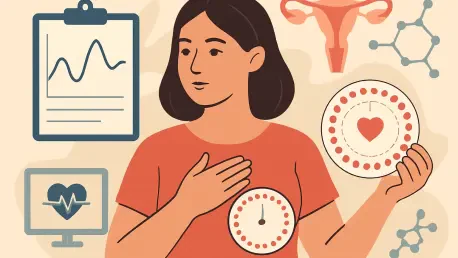

For decades, the medical community viewed the menstrual cycle almost exclusively through the narrow lens of reproductive capacity, overlooking its profound implications as a comprehensive barometer for a woman’s broader physiological state. This historical oversight has left a significant gap in preventative care, but recent advancements are finally positioning this rhythmic process alongside traditional vital signs like blood pressure and heart rate. Researchers at SRI International have introduced a transformative open-source algorithm known as WAVES, which stands for Women’s Health Assessment through Variability in Endocrine-Related Signals. This technology allows scientists to parse complex biological data to uncover how hormonal fluctuations correlate with metabolic function, immune system responses, and even the rate of biological aging. By treating these cycles as a continuous stream of health data rather than just a precursor to pregnancy, the medical field is entering a new era where personalized diagnostics can be tailored to the unique rhythms of the female body.
Shifting Paradigms in Endocrine Research
The Significance of Non-Conceptive Cycles
Dr. Marie Gombert-Labedens, the lead author of the study, emphasized that approximately 99% of menstrual cycles in the average American woman are non-conceptive, yet these instances have been largely ignored in clinical datasets that prioritize fertility outcomes. The shift toward analyzing these non-conceptive periods reveals that the endocrine system interacts dynamically with nearly every major organ system, providing a real-time reflection of internal balance. When hormonal signals are interpreted as data points for metabolic health, researchers can identify subtle shifts that might precede more overt symptoms of chronic conditions. This broader focus ensures that the vast majority of a woman’s life is represented in medical research, moving away from a perspective that only values female health in relation to childbearing. By broadening the scope of study, the WAVES algorithm offers a more inclusive and accurate representation of female physiology across different life stages and lifestyles.
Integrating this data into standard medical assessments involves identifying digital biomarkers that indicate how the body responds to stress, nutrition, and environmental factors. The WAVES algorithm facilitates this by analyzing daily basal body temperature and other physiological markers to detect patterns that were previously too subtle for manual observation. These digital signatures provide a baseline for what is normal for an individual, allowing healthcare providers to spot deviations that could signal thyroid issues, insulin resistance, or inflammatory responses long before traditional tests might flag them. Furthermore, the ability to track these signals continuously throughout the cycle offers a level of precision that a single blood test or annual physical simply cannot match. This methodology transforms the menstrual cycle into a dynamic dashboard for health monitoring, empowering both patients and clinicians with actionable insights into the underlying mechanisms that drive overall well-being and long-term resilience.
Aging Trends and Physiological Rhythms
One of the most striking findings from the analysis of over 5,600 cycles is the clear correlation between aging and specific changes in menstrual patterns, such as a trend toward shorter and less regular cycles as women move through their thirties and early forties. The study, published in Science Advances, demonstrated that these shifts are often accompanied by subtle increases in average basal body temperature, marking a measurable change in the body’s internal set point. These predictable variations suggest that the menstrual cycle functions similarly to other biological rhythms, such as the circadian clock or cardiac cycles, which maintain homeostasis through repeated patterns. As these rhythms begin to drift or lose their consistency, they serve as early indicators of the natural biological aging process and the shifting hormonal landscape. Understanding these benchmarks allows for a more nuanced approach to middle-age health, where changes are seen as data-driven transitions rather than abrupt or unexpected medical crises.
By establishing these aging-related trends, the research provides a framework for distinguishing between healthy biological maturation and pathological irregularities that may require intervention. The predictability of these shifts means that deviations from the expected aging curve can be flagged as potential health risks, much like an irregular heartbeat might prompt further cardiovascular screening. This perspective elevates the menstrual cycle to a primary indicator of systemic health, where the regularity and quality of the cycle are viewed as essential components of a robust physiological state. Moreover, the study highlights how these endocrine signals are deeply intertwined with the body’s overall stress-response systems, meaning that chronic stress or poor health can manifest as accelerated changes in cycle characteristics. This interconnectedness underscores the importance of monitoring menstrual health as a preventative measure, ensuring that any systemic disruptions are caught early when they are most manageable through lifestyle changes or targeted therapies.
Redefining Medical Norms and Individual Baselines
Moving Beyond the 28-Day Standard
For generations, medical textbooks have promoted the 28-day cycle as the gold standard for reproductive health, yet the massive dataset analyzed in this study revealed that only 12.4% of participants actually experience a cycle of this length. This finding effectively debunks the notion that a 28-day rhythm is the norm, suggesting instead that it is a statistical outlier rather than a universal baseline for health. When the medical community adheres to an arbitrary standard, individuals whose natural rhythms fall outside that window are often misdiagnosed or dismissed as having irregular cycles when they may actually be perfectly healthy within their own personal parameters. The WAVES research emphasizes that each person possesses a unique, highly stable temperature baseline and phase duration that remains consistent for them over time. This high degree of individual variability necessitates a shift away from a one-size-fits-all model toward a personalized medicine approach that respects the inherent diversity of female biology.
Embracing this variability requires a fundamental change in how clinicians interpret patient-reported data and diagnostic test results. Instead of comparing a woman’s cycle to an idealized average, healthcare providers should look for stability or changes within that specific individual’s historical data. This approach reduces the frequency of unnecessary medical interventions and anxiety for patients who do not fit the traditional 28-day mold. Furthermore, recognizing these individual baselines allows for the detection of true irregularities—deviations from a person’s own normal—which are far more indicative of underlying health issues than a simple deviation from the textbook average. This paradigm shift encourages a more collaborative relationship between patients and providers, where personal data tracking becomes a tool for empowerment and precision. By validating the unique biological signatures of each individual, the medical field can move toward a more accurate and respectful understanding of the complexities inherent in human health and endocrine function.
The Future: Open-Source Tools and Precision Medicine
The decision to make the WAVES algorithm open-source marks a significant milestone in the democratization of health data, providing the global scientific community with a sophisticated tool to analyze endocrine-related signals. This transparency allows researchers from various disciplines to build upon the existing framework, fostering collaboration that could lead to breakthroughs in treating conditions like endometriosis, polycystic ovary syndrome, and early-onset menopause. By providing a standardized method for parsing complex physiological data, the algorithm enables more consistent and comparable studies across different populations and geographic regions. This collective effort is essential for developing a more comprehensive understanding of how environmental and genetic factors influence menstrual health on a global scale. As more institutions adopt these digital tools, the resulting data pool will become a powerful resource for identifying new biomarkers and refining diagnostic criteria, ultimately improving health outcomes for millions of women worldwide through more informed and timely clinical care.
Integrating these advanced algorithms into mainstream healthcare systems paved the way for the next generation of precision medicine, where diagnostic tools are finally tailored to the specific physiological needs of women. The transition toward utilizing menstrual data as a vital sign successfully shifted the conversation from reproductive limitations to holistic health optimization and proactive wellness. Medical professionals increasingly utilized these personalized insights to develop targeted treatment plans that addressed the root causes of systemic imbalances rather than merely treating symptoms. This forward-looking approach established a new standard of care that prioritized the longitudinal tracking of endocrine health as a cornerstone of preventative medicine. As the scientific community continues to explore the rich landscape of digital biomarkers, the focus remains on empowering individuals with a deeper understanding of their own bodies. This evolution in medical thinking ensured that the menstrual cycle is no longer viewed as a peripheral concern but as a central component of a long, healthy, and well-monitored life.