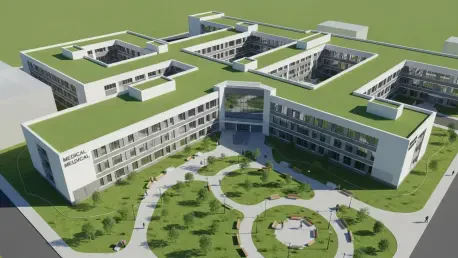

The official commencement of construction on a specialized youth mental health center in Calgary marks a transformative milestone for families who have long struggled to find adequate clinical support for high-acuity psychiatric conditions. This groundbreaking project, situated on a sprawling 3.81-acre site within the Stoney industrial business park known as The District, represents a paradigm shift in how the province approaches adolescent wellness. Managed by the non-profit CASA Mental Health, the facility is designed to provide intensive, long-term care for students whose needs exceed the capabilities of traditional outpatient services. By establishing a dedicated clinical hub in a strategic urban corridor, the organization seeks to create a bridge between crisis stabilization and community reintegration. This development serves as a response to a growing demand for specialized infrastructure that prioritizes the unique developmental and psychological requirements of teenagers, moving away from a one-size-fits-all medical model toward a more nuanced and supportive environment.
Expanding Capacity for Specialized Adolescent Care
Once the facility reaches operational status, it will significantly bolster the region’s healthcare capacity by providing 81 specialized spots for youth navigating complex mental health challenges. This capacity is strategically split between 57 residential beds for those requiring around-the-clock clinical supervision and 24 day-patient slots for adolescents who need intensive daily intervention but can safely return to their homes in the evenings. Such a dual-track system allows for a flexible approach to treatment, ensuring that the level of care is precisely calibrated to the severity of each individual case. The facility aims to serve as a safety net for those caught in the gap between acute hospital wards and standard therapy sessions. By offering a tiered recovery pathway, the center provides a controlled environment where stabilization is the primary goal, allowing young patients to rebuild their psychological resilience without the immediate pressures of their typical daily environments or the limitations of short-term psychiatric stays.
To manage these complex cases effectively, the center will employ a multi-disciplinary team of approximately 40 permanent staff members, including psychiatrists, mental health therapists, and behavior specialists. This professional cohort is tasked with addressing the most prevalent and debilitating conditions facing modern youth, such as major depressive disorder, chronic anxiety, and severe manifestations of bipolar disorder. Beyond clinical diagnosis, the staff will implement a “wraparound” service model that extends support to the entire family unit, recognizing that a child’s recovery is deeply intertwined with their domestic support system. By involving therapy support navigators and specialized nurses, the facility ensures that every aspect of the patient’s life is considered during the recovery process. This holistic methodology is intended to move beyond simple symptom management, focusing instead on providing the psychological tools and social strategies necessary for long-term stability and a successful transition back into the broader community.
Integrating Education and Clinical Intervention
A distinctive feature of the CASA model is its commitment to maintaining academic continuity through a unique, semester-based approach to clinical care. Recognizing that many adolescents experience a significant setback in their education during mental health crises, the facility incorporates a fully functional high school environment within its therapeutic walls. Students residing at the center will attend classes during the day, taught by educators who understand the intersections of learning and mental wellness, ensuring that they do not fall behind their peers. This integration of education and therapy allows for a more natural daily rhythm, reducing the stigma associated with long-term treatment and keeping the youth connected to their future goals. The focus remains on providing a seamless experience where clinical progress and academic achievement occur simultaneously, rather than forcing families to choose between their child’s health and their educational milestones.
The construction in Calgary is part of a broader, $75-million provincial investment designed to decentralize high-acuity mental health services and bring them closer to the communities that need them most. In addition to the Calgary hub, similar facilities are planned for Fort McMurray and Medicine Hat, creating a distributed network of care across Alberta. This regional expansion addresses a long-standing grievance for many families who previously had to travel hundreds of miles to access specialized psychiatric support, often leading to isolation and increased financial strain. By establishing these hubs in multiple urban centers, the province aims to reduce the logistical barriers to treatment, making it easier for families to remain involved in the therapeutic process. Furthermore, these residential centers are supported by school-based programs that provide early intervention for younger children, creating a comprehensive continuum of care that ranges from initial classroom support to intensive residential stabilization.
Dismantling Barriers and Systemic Inefficiencies
One of the most critical objectives of this new facility is to eliminate the legal and bureaucratic hurdles that have historically prevented families from accessing intensive psychiatric care. In previous years, many parents felt forced into a “legal paradox” where specialized residential treatment was only accessible if a child was involved with the justice system or under the care of child protective services. This system effectively penalized families for seeking help before a crisis reached a criminal or state-involved level. The new Calgary center operates on a referral-based system that bypasses these requirements, allowing parents and medical professionals to secure high-intensity support without surrendering guardianship or waiting for a legal catastrophe. By decoupling mental health treatment from the legal system, the facility provides a more humane and accessible pathway for those struggling with high-acuity needs, ensuring that medical necessity remains the primary driver for admission.
The urgency of this project is underscored by data indicating that one in four Canadian youth is currently navigating some form of mental illness, a statistic that has prompted calls for a more unified healthcare strategy. Researchers have frequently pointed out that the current mental health landscape in the province has often resembled a patchwork approach, where patients frequently fall through the cracks during transitions between different levels of care. The new facility aims to address these systemic gaps by standardizing treatment protocols and providing a centralized location for specialized intervention. By focusing on data-driven outcomes and a consistent clinical framework, the center seeks to move away from fragmented services and toward a more cohesive network. This transition is essential for tracking long-term trends and ensuring that the resources allocated to youth mental health are producing measurable improvements in patient stability and community reintegration over time.
Future Trajectory and Implementation Strategies
As construction proceeds under the direction of Clark Builders, the focus has shifted toward the logistical preparations necessary for an operational launch in 2027. The upcoming months will involve not only the physical completion of the structure but also the rigorous recruitment and training of the specialized staff required to run such a complex institution. Establishing the clinical culture and operational workflows early on is vital for ensuring that the facility can hit the ground running when it begins accepting its first patient referrals. Stakeholders are already looking toward the implementation phase, where the primary challenge will be integrating the center into the existing provincial health network to ensure a smooth flow of patients. The successful launch of this facility is viewed as a pilot for how large-scale, non-profit-led mental health initiatives can collaborate with government funding to solve urgent public health challenges in a rapidly growing urban environment.
The transition toward a more robust mental health infrastructure required several actionable steps that defined the project’s development phase. Decision-makers prioritized the creation of a two-month follow-up program for every youth discharged from the facility, recognizing that the period immediately following intensive care is the most vulnerable time for relapse. This post-discharge support was designed to provide a safety net for students as they navigated the return to their local schools and home environments. Additionally, the project emphasized the need for a unified digital tracking system to monitor patient progress across different regions, ensuring that the lessons learned in Calgary could be applied to future sites in Fort McMurray and Medicine Hat. By focusing on these long-term integration strategies, the initiative moved beyond the construction of a building and toward the establishment of a sustainable, results-oriented framework for youth psychiatric care that aimed to change the lives of thousands of families across the province.