
The rapid evolution of therapeutic medicine has reached a critical juncture where the ability to discover life-saving treatments often outpaces the industrial capacity to manufacture them safely and efficiently at a global scale. To bridge this widening gap, the National Institute for Innovation in Manufacturing Biopharmaceuticals, commonly known as NIIMBL, has unveiled a strategic investment of $9.7 million aimed at fortifying the domestic biopharmaceutical infrastructure. This initiative, executed through Project Call 9.1, represents a sophisticated collaboration involving 39 diverse organizations that include top-tier academic institutions, federal agencies, and private sector giants. By channeling these resources into specific technological bottlenecks and human capital development, the institute seeks to ensure that the United States maintains its competitive edge in a sector that is increasingly defined by complex biologics and personalized medicine. This funding cycle is not merely a financial injection but a calculated effort to modernize the very fabric of American medical production.
Driving Innovation Through Advanced Manufacturing
Modernizing Production: AI and Continuous Processes
One of the most significant technical hurdles in modern medicine involves the reliable production of adeno-associated viruses, which serve as the primary delivery vehicles for revolutionary gene therapies. Currently, the manufacturing of these viral vectors is plagued by high costs, low yields, and significant batch-to-batch variability that can hinder patient access to treatment. To address these systemic issues, Michigan Technological University and the Massachusetts Institute of Technology are spearheading efforts to transition from traditional batch processing to automated, continuous purification and higher-yield bioreactor systems. These projects aim to create a seamless flow of production where impurities are removed in real-time, significantly reducing the physical footprint of manufacturing facilities while simultaneously increasing the volume of viable therapeutic material. Such advancements are essential for bringing the price of gene therapies down to a level that is sustainable for healthcare systems.
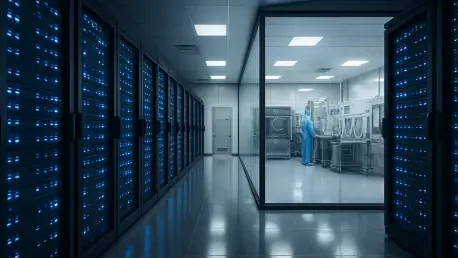
The integration of artificial intelligence into the factory floor represents the next frontier in achieving industrial efficiency and precision within the biopharma sector. North Carolina State University is currently leveraging Bayesian optimization, a sophisticated machine learning framework, to intelligently navigate the complex variables inherent in the purification process. Instead of relying on time-consuming trial-and-error experimentation, these AI models can predict the most efficient production parameters by analyzing vast datasets from previous runs. This digital transformation is further exemplified by the development of “Digital Twins” at the University of Delaware in partnership with Sanofi. By creating virtual replicas of physical manufacturing lines, engineers can simulate various production scenarios and preemptively adjust settings based on real-time data. This proactive approach ensures that quality control is baked into the process itself rather than being a retrospective check, thereby minimizing waste and ensuring a consistent supply of medication.
Real-Time Monitoring: The Role of Fiber-Optics
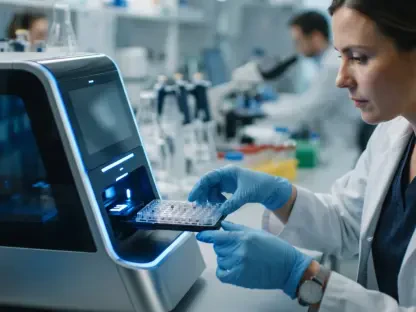
Beyond simulation and algorithmic optimization, the physical monitoring of biological substances during production remains a cornerstone of the new NIIMBL-funded technological roadmap. The University of Houston is currently advancing the use of specialized fiber-optic probes designed to detect and quantify antibodies directly within the bioreactor environment. Traditional methods often require taking samples out of the sterile production line and sending them to an external laboratory, a process that can take days and introduces numerous opportunities for contamination. By implementing in-line sensing technology, manufacturers can receive instantaneous feedback on the health and concentration of their biological products. This immediate visibility allows for rapid interventions if a batch begins to deviate from specifications, effectively preventing the loss of expensive materials and ensuring that every dose meets the highest safety standards.
Furthermore, the implementation of these high-tech sensing tools is a prerequisite for the broader industry shift toward “Quality by Design” principles. When sensors can provide a continuous stream of data regarding protein folding, glycosylation patterns, and molecular weight, the entire manufacturing ecosystem becomes more resilient to fluctuations in raw material quality. This level of granular control is particularly vital when dealing with complex biologics that are sensitive to even minor changes in temperature or pH levels. As these fiber-optic and digital monitoring tools become standardized across the industry, the gap between experimental laboratory success and large-scale industrial output will continue to shrink. This technological foundation ensures that the United States can produce the next generation of vaccines and oncology treatments with a level of precision that was previously considered unattainable in a commercial setting.
Empowering the Next Generation of Biopharma Professionals
Workforce Diversity: Expanding the Talent Pipeline
The sophistication of new manufacturing technologies is ultimately dependent on the availability of a highly skilled and adaptable workforce capable of managing these complex systems. NIIMBL has recognized that the traditional talent pipeline is no longer sufficient to meet the surging demand for bioprocessing technicians and engineers, leading to a dedicated focus on inclusive recruitment strategies. A standout project led by Texas A&M University is specifically designed to integrate neurodivergent individuals, including those on the autism spectrum, into the biomanufacturing sector. This initiative recognizes that many neurodiverse candidates possess a natural aptitude for pattern recognition, intense focus, and exceptional attention to detail—traits that are incredibly valuable in high-precision environments where even a small oversight can lead to a failed batch. By creating tailored onboarding and support systems, the industry can tap into a previously underutilized pool of talent.
In addition to neurodiversity initiatives, the funding supports broader efforts to lower the barriers of entry for individuals from diverse socioeconomic backgrounds who may not have pursued traditional four-year degrees in biotechnology. By partnering with industry leaders like Pfizer and Janssen, these programs ensure that the curriculum is grounded in the practical realities of the modern factory floor rather than just theoretical concepts. This approach creates a more robust and equitable workforce that reflects the diversity of the patient populations the industry serves. When companies embrace a wider range of cognitive styles and life experiences, they foster an environment of innovation and problem-solving that is essential for navigating the technical challenges of bioproduction. Strengthening the human element of the industry is just as critical as upgrading the machinery, as it ensures long-term operational stability and a culture of continuous improvement.
Experiential Learning: Bridging the Academic Gap
To ensure that new entrants into the biopharma field are ready for the rigors of commercial production, NIIMBL is investing heavily in hands-on training hubs and apprenticeship models. The University City Science Center and The Wistar Institute are currently developing programs that place students and career-changers directly into real-world manufacturing environments through the BioPharma Apprenticeship & Training Hub. These initiatives move beyond the classroom by providing direct exposure to the specific hardware and software used by major employers such as GSK and CSL Behring. By working alongside seasoned professionals in a supervised setting, participants gain the “muscle memory” and technical intuition required to operate bioreactors and purification columns. This experiential learning model significantly reduces the time it takes for a new hire to become a productive member of a manufacturing team.
This strategic focus on practical training also addresses the persistent “skills gap” that many companies report when hiring recent graduates from traditional academic programs. While a solid foundation in biology and chemistry is necessary, the ability to navigate a highly regulated Good Manufacturing Practice environment is a distinct skill set that is best acquired through immersion. The apprenticeship programs funded by this investment act as a bridge, aligning educational outcomes with the immediate needs of the industry. This synergy between academia and the private sector ensures that the United States is not just producing researchers who can discover new molecules, but also the skilled technicians who can manufacture them at scale. By institutionalizing these training pathways, NIIMBL is building a sustainable engine for job creation that supports both individual career growth and national economic health.
Securing National Interests and Economic Sovereignty
Strategic Collaboration: Strengthening Supply Chains
The strategic implications of the $9.7 million investment extend far beyond the laboratory and the classroom, touching upon issues of national security and economic independence. Recent global disruptions have underscored the dangers of relying on hyper-extended international supply chains for critical medicines and vaccines. By fostering a domestic ecosystem where academic pioneers work in lockstep with corporate leaders like Bristol-Myers Squibb and Genentech, NIIMBL is actively encouraging the “reshoring” of vital manufacturing capabilities. This collaborative model allows for the sharing of financial and technical risks, making it more feasible for companies to invest in expensive, cutting-edge facilities within the United States. When the entire lifecycle of a drug—from initial research to final packaging—can be contained domestically, the nation is better protected against geopolitical shifts and logistics crises.
Furthermore, this collaborative framework facilitates the rapid adoption of industry-wide standards for new technologies like AAV production and digital twinning. When multiple organizations work toward a common goal under the NIIMBL umbrella, they can establish benchmarks for quality and efficiency that benefit the entire sector. This collective progress prevents the fragmentation of the market and ensures that American companies are not duplicating efforts or working in isolation. The resulting synergy creates a formidable industrial base that is capable of responding to public health emergencies with unprecedented speed. By prioritizing strategic domestic collaboration, the United States secures its position as the global leader in the bioeconomy, ensuring that the most advanced medical treatments are developed, manufactured, and distributed from within its own borders.
Future Considerations: Scaling the Impact
Moving forward, the success of these initiatives will depend on the ability of both public and private stakeholders to scale these pilot projects into industry-standard practices. Decision-makers should prioritize the continued integration of artificial intelligence and automated systems across all levels of production to maintain a competitive cost structure. Furthermore, expanding the neurodiversity and apprenticeship programs to more states will be essential for addressing the nationwide labor shortage in technical fields. Companies should actively look to adopt the digital twin and real-time monitoring technologies developed in these projects to reduce their operational risks and improve their sustainability profiles. By committing to a long-term strategy of technological investment and workforce inclusivity, the biopharmaceutical industry can ensure that the domestic manufacturing base remains resilient, innovative, and capable of meeting the healthcare demands of the future.
The strategic funding provided by NIIMBL has successfully laid the groundwork for a more technologically advanced and inclusive biopharmaceutical landscape. By focusing on the dual pillars of process automation and workforce diversification, the institute addressed the most critical vulnerabilities in the current domestic supply chain. These efforts transitioned the industry toward a data-driven model that prioritizes precision and speed, while simultaneously opening doors for a new generation of skilled professionals. The collaboration between academic researchers and industrial giants proved to be a vital catalyst for moving theoretical breakthroughs into the commercial reality of American factories. Ultimately, these investments solidified the infrastructure necessary to produce next-generation therapies reliably and autonomously, ensuring that national health interests remain protected in an increasingly complex global environment.