
Sustainability is increasingly viewed as a risk mitigation strategy rather than a simple cost center, directly enabling a site to double its capacity in the future. As the current landscape of late 2026 unfolds, the American biopharmaceutical manufacturing sector has transitioned from a period of tentative exploration into an era of unprecedented domestic expansion. This growth is not merely a reaction to global supply chain volatility but a calculated move toward permanent, resilient infrastructure within the United States. Global leaders are re-evaluating their footprints, moving away from offshore reliance and toward concentrated hubs in the Mid-Atlantic and Southeast regions. States like Maryland, Virginia, and North Carolina have transformed into central nervous systems for biologics production, buoyed by multi-billion dollar commitments that signify a long-term commitment to American soil. The focus has shifted from the initial speed of construction to the long-term viability of these facilities. This involves a deep dive into the technical and operational foundations—water, electricity, and specialized labor—that allow a plant to scale effectively over time. In this environment, the ability to anticipate demand shifts through flexible design has become the primary differentiator between successful scaling and operational stagnation.
Strategic Planning: Implementing a Framework for Scalable Design
The regional concentration of biomanufacturing expertise has created a unique ecosystem where competition and collaboration coexist. In Maryland, the influx of international expertise is palpable through Samsung Biologics’ strategic acquisition of existing facilities in Rockville and the entry of India-based Syngene International into the Baltimore market. Meanwhile, South Korea’s Nature Cell is developing an expansive stem cell campus, and Taiwan’s Bora Pharmaceuticals has solidified its presence in the BioHealth Capital Region. These developments highlight a shift where established sites are being upgraded with sophisticated clean utilities to support next-generation therapies. The challenge for these facilities lies in balancing the immediate need for production with the foresight required for future modifications. Engineering teams are no longer just building for the product in hand; they are constructing platforms capable of hosting a rotating portfolio of biological assets. This requires a fundamental change in how site master plans are drafted, moving away from static blueprints toward modular and adaptable architectural strategies.
Forecasting Demand: Moving Beyond Current Product Pipelines
A significant hurdle in facility design is the tendency to build specifically for a drug candidate currently in late-stage clinical trials. Because pharmaceutical demand is notoriously difficult to predict, a facility designed too rigidly around a single process often becomes obsolete or requires a complete overhaul if the product fails or if demand suddenly triples. Industry leaders like Priyesh Malegaonkar of Samsung Biologics suggest that the most successful sites are those that plan for the forecast they do not yet have. This involves allocating physical space and utility “headroom” from the very beginning of the project. By reserving square footage and ensuring that structural supports can handle additional equipment loads, companies can avoid the prohibitive costs of expanding a facility while it is actively operating under strict Current Good Manufacturing Practice (cGMP) regulations. This forward-looking approach ensures that the facility remains an asset through multiple product lifecycles rather than a one-off liability.
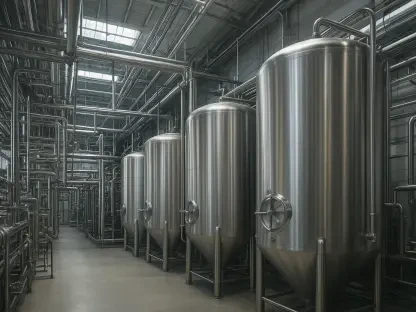
The flexibility required for modern scaling also extends to the technical architecture of the production suites themselves. Instead of fixed stainless steel tanks that are difficult to move or resize, many developers are opting for ballroom-style manufacturing floors that can accommodate varied single-use technology setups. This allows for rapid changeovers and the ability to scale out by adding more units rather than scaling up with larger, more permanent ones. When a site has the foresight to install high-capacity utility headers and flexible connection points throughout the facility, the timeline for integrating a new production line is reduced from years to months. This agility is vital in 2026, where the speed to market for life-saving biologics is a primary competitive advantage. Designing for the unknown requires a higher initial investment, but the long-term savings realized by avoiding structural retrofits far outweigh the upfront capital expenditure.
Utility Infrastructure: Managing the Primary Constraints of Scale
In the specialized world of biomanufacturing, physical square footage is rarely the ultimate bottleneck that halts an expansion; rather, clean utility capacity serves as the primary constraint. A company can easily lease more warehouse space or build an additional wing, but if the high-purity water systems, clean steam generators, or electrical grids are already running at maximum capacity, the expansion is dead on arrival. Experts like Matt Dillon of Pureflow emphasize that sizing these core utilities for future growth is one of the most cost-effective decisions a developer can make during the initial build phase. Installing a larger Water For Injection (WFI) loop or an oversized HVAC system during the greenfield stage costs a fraction of what it would take to replace those systems later. Furthermore, upgrading utilities in an active cGMP environment introduces significant risks to product quality and manufacturing schedules, often requiring lengthy shutdowns that few companies can afford.
Beyond the physical capacity of utility systems, the strategic routing of these services throughout a facility is equally critical. Smart design involves creating utility “alleys” or interstitial spaces that allow for maintenance and upgrades without technicians ever entering the sterile production zones. This separation of the mechanical and the biological not only enhances safety and compliance but also allows for the seamless addition of new equipment. For example, if a facility anticipates a future need for increased nitrogen or specialized gas lines, pre-installing the main distribution manifolds and leaving capped valves in strategic locations can save millions in future engineering costs. This proactive mindset treats the utility infrastructure as a living system that must grow in tandem with the facility’s output. By prioritizing these “unseen” systems, biomanufacturers ensure that their sites are truly scalable and capable of supporting the high-intensity processes required for modern biologic production.
Workforce Evolution: Developing Human Capital and Talent Pipelines
The rapid growth across the Southeast and Mid-Atlantic has outpaced the traditional supply of experienced biomanufacturing professionals. In Virginia and North Carolina, where AstraZeneca and Eli Lilly have committed over $9.5 billion to new sites, the demand for specialized engineers and technicians has reached a fever pitch. This talent gap is particularly acute for “capital project” roles—the individuals who can bridge the gap between architectural design and daily operational reality. Traditional recruiting methods are often insufficient to find staff who possess both the technical knowledge of biological systems and the project management skills needed to oversee massive construction efforts. Consequently, the industry is seeing a shift toward regional talent hubs where universities and private companies collaborate to build bespoke training programs. These partnerships are essential for creating a pipeline of workers who are ready to hit the ground running as these multi-billion dollar campuses come online between now and 2028.
Internal Transitions: Cultivating Capital Project Engineers from Operations
One of the most effective strategies for closing the talent gap is the development of capital project engineers from within a company’s own operations and maintenance departments. Personnel who have spent years managing clean utilities and production suites day-to-day have a “lived experience” that external contractors often lack. They understand the practical frustrations of a poorly placed valve or a drainage system that is difficult to clean, and they can bring this perspective to the design of the next facility expansion. When an operator transitions into a design role, they act as a bridge between the theoretical plans of an architect and the functional needs of the manufacturing floor. This internal mobility not only fills critical roles but also increases employee retention by providing a clear career path for technical staff who might otherwise seek opportunities elsewhere in the booming biotech market.
This philosophy of internal growth also helps preserve institutional memory, which is vital when a site undergoes multiple phases of expansion over a decade. When the people who helped build Phase 1 are still present to oversee Phase 2, the risk of repeating past mistakes or accidentally undoing previous engineering successes is significantly reduced. This continuity is especially important given the high rate of mergers and acquisitions in the industry; as sites change ownership, the “human infrastructure” remains the most reliable source of information regarding the facility’s capabilities. By investing in the professional development of their current workforce, biomanufacturers are building a more resilient and knowledgeable engineering base. These internal experts are uniquely qualified to ensure that new systems are not only efficient on paper but also robust and maintainable in a high-pressure, 24/7 manufacturing environment.
Collaborative Design: Integrating Quality and Operations Early
The historical silos between engineering, operations, and quality control are being dismantled in favor of a more integrated, cross-functional approach to facility design. Traditionally, an engineering team would design a plant and then “hand it over” to the operations team, often leading to friction when the practical realities of manufacturing were not fully accounted for. Today, forward-thinking organizations are bringing quality assurance and production managers into the design phase during the earliest conceptual stages. This allows for the identification of potential compliance issues or workflow bottlenecks before they are literally set in stone. For instance, a quality manager might notice that the layout of a changing room could lead to cross-contamination risks, or an operator might point out that a piece of equipment is positioned in a way that makes routine maintenance impossible without a total suite shutdown.
By catching these issues early, companies can implement changes while they are still just lines on a computer screen, rather than waiting until they are expensive physical errors that require remediation. This collaborative process also creates a sense of ownership among the staff who will eventually run the facility, leading to smoother commissioning and validation phases. Furthermore, integrating the “design intent” documentation—the record of why specific choices were made—into this collaborative process ensures that future expansion teams understand the logic behind the site’s layout. This level of transparency and cooperation is essential for maintaining the high standards of safety and efficiency required in biomanufacturing. As the industry continues to scale, this integrated design philosophy is becoming the gold standard for reducing operational risk and ensuring that new capacity can be brought online as quickly and safely as possible.
Environmental Stewardship: Committing to Sustainability and Resource Management
As biomanufacturing facilities grow in both size and complexity, their environmental footprint expands exponentially. The demand for high-purity water and massive amounts of electricity to run HVAC systems for cleanrooms puts a significant strain on local resources. In 2026, sustainability is no longer just a checkbox for corporate social responsibility reports; it is a critical factor in the long-term viability of a manufacturing site. A facility that cannot secure a reliable and sustainable supply of water or power will eventually face operational limits that no amount of capital investment can overcome. Therefore, biomanufacturers are increasingly coordinating with local municipalities and utility providers to ensure that the infrastructure surrounding their plants is robust enough to support decadal growth. This involves looking far beyond the immediate three-year business cycle and assessing resource availability on a fifteen-year horizon to ensure that the site can remain competitive and compliant.
Resource Planning: Assessing Long-Term Municipal and Grid Capacity
Long-term resource stewardship requires a deep level of integration between the manufacturing site and the local community. For a massive campus like the one FUJIFILM Diosynth Biotechnologies is expanding in North Carolina, the projected water usage can rival that of a small city. To mitigate the risk of future shortages, companies are investing in on-site water reclamation and recycling systems that allow them to use the same water for multiple industrial processes before discharging it. Similarly, as the electrical grid transitions toward more renewable sources, biomanufacturers are exploring microgrids and on-site energy storage to ensure business continuity during potential outages. This proactive coordination with local government ensures that the facility’s growth does not come at the expense of the community’s resources, fostering a more stable and supportive environment for long-term industrial operations.
Furthermore, the site selection process has evolved to prioritize regions with a clear commitment to infrastructure investment. When a company like AstraZeneca or Merck chooses a location, they are not just looking at the available land; they are evaluating the long-term reliability of the local power grid and the capacity of the wastewater treatment plants. In the Southeast, many municipalities are now offering “biotech-ready” industrial parks where the heavy lifting of utility upgrades has already been completed. This reduces the risk for manufacturers and accelerates the timeline for bringing new capacity online. By aligning their growth strategies with regional infrastructure plans, biomanufacturers can ensure they have the resources needed to scale their operations without encountering external bottlenecks. This strategic alignment is a key component of the resilience required to maintain a dominant position in the global biopharmaceutical market.
Financial Strategy: Redefining the Value of Infrastructure Investments
The financial justification for investing in high-capacity utilities and sustainable technology is shifting from simple payback periods to comprehensive risk mitigation. In the past, a project that didn’t show a return on investment within three years might be scrapped, but in the current high-stakes environment, leaders recognize that these investments are essential for business continuity. An oversized water system or a redundant power supply may not generate immediate revenue, but they are the only things that allow a site to double its production volume in five years without a complete teardown. This redefinition of value treats infrastructure as a strategic asset that provides the “option” for future growth. By spending more during the initial construction phase to ensure scalability, companies are effectively buying insurance against the high costs and risks of future facility modifications.
The transformation of American biomanufacturing relied on a fundamental shift in how organizations approached infrastructure. Stakeholders realized that the massive capital inflows of the mid-2020s required more than just physical buildings; they demanded a sophisticated understanding of utility limits and human capital development. By prioritizing long-term resource stewardship and internal talent pathways, the industry successfully mitigated the risks of rapid expansion. This period demonstrated that the most resilient sites were those that documented their design intent with meticulous care, ensuring that subsequent generations of engineers could build upon existing foundations rather than being hindered by them. Ultimately, the successful scaling of domestic production was achieved not through single-product facilities, but through flexible, utility-rich campuses that viewed sustainability as an essential pillar of growth. Moving forward, developers should implement rigorous fifteen-year municipal resource reviews and establish internal bridge programs that transition veteran operations staff into capital engineering roles to maintain institutional memory and design integrity across the entire lifecycle of the facility.