
The traditional ‘take-make-waste’ model of medical manufacturing is being challenged by researchers who view the environmental footprint of healthcare as a critical engineering problem. For decades, the medical industry has operated under a strict mandate of patient safety and clinical sterility, a focus that has inadvertently created a massive accumulation of non-biodegradable waste. In the current landscape of 2026, the volume of discarded single-use plastics has reached a tipping point, forcing a radical reimagining of how clinical supplies are designed and disposed of. Emerging bioengineering strategies are now proving that the standard of care does not have to be sacrificed for the sake of ecological health. By integrating advanced material science into the foundational design of medical tools, innovators are shifting the paradigm toward a circular economy. This transformation suggests that the future of healthcare depends as much on environmental stewardship as it does on clinical precision.
The Problem of Medical Plastic Waste
Rethinking the Lifecycle: From Plastic to Biodegradability
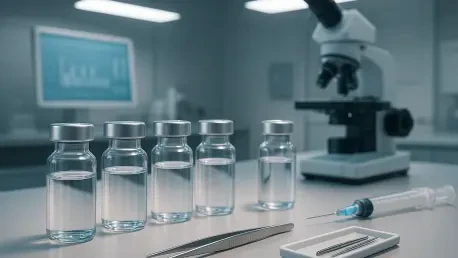
The medical syringe remains one of the most ubiquitous examples of the current waste crisis, as these devices are traditionally manufactured from robust plastics designed for one-time use and ultimate durability. Because these items often carry biohazardous risks after use, they cannot be easily integrated into standard recycling streams and are instead diverted to incinerators or deep landfills where they persist for centuries. The energy-intensive processes required for the sterilization and safe disposal of these materials contribute significantly to the carbon footprint of hospital systems worldwide. This persistent lifecycle issue highlights the urgent need for a fundamental shift in the “take-make-waste” philosophy that has dominated the supply chain. Addressing this requires more than just better recycling; it demands a total overhaul of material selection to ensure that the tools of modern medicine do not leave a permanent scar on the planet.
Designing for Degradation: The Circular Economy Model
A circular economy in the medical sector begins with the innovative concept that a product’s eventual disposal must be a primary consideration during its initial engineering phase. Engineers like Kavya Shah are currently developing materials that maintain the necessary structural integrity for high-pressure medical use while possessing the unique capacity to self-degrade under specific environmental conditions. This “bold idea” allows for the creation of syringes that perform flawlessly in a clinical setting but break down naturally once they are discarded in specialized waste environments. By focusing on the end-of-life characteristics of synthetic materials, bioengineering is bridging the gap between immediate medical necessity and long-term ecological responsibility. This systemic approach ensures that the production of sterile, disposable equipment remains compatible with the broader goals of environmental sustainability without compromising the safety of patients or healthcare providers.
Synergizing Academic Research and Industry
Bridging the Gap: Laboratory Concepts to Market Products
Moving a sustainable concept from a university laboratory to the global medical market requires a strong bridge between academic inquiry and industrial application. The ongoing collaboration between UMass Dartmouth and Intrinsic Advanced Materials (IAM) serves as a primary example of how university-led research can pilot groundbreaking technologies like CiCLO. This patented additive allows synthetic plastics to biodegrade at rates comparable to natural fibers in environments such as landfills or oceans, where such materials would otherwise remain intact for hundreds of years. For undergraduate researchers, these partnerships provide the essential resources and chemical additives needed to test the viability of biodegradable syringes in real-world scenarios. This synergy ensures that innovation is not confined to theoretical papers but is actively developed into scalable solutions that can be adopted by large-scale manufacturers and distributed to hospitals globally.
Real-World Validation: The Role of Corporate Partnerships
When industry leaders from companies like IAM engage directly with academic institutions, it significantly accelerates the validation process for new medical technologies. In the current year of 2026, executives are increasingly traveling to campus labs to oversee the testing of biodegradable materials, ensuring they meet the rigorous safety and durability standards required for medical certification. These interactions provide students with a unique platform to prove that their sustainable designs can withstand the high-pressure environments of clinical usage without premature degradation. This level of corporate involvement not only benefits the firms searching for eco-friendly alternatives but also empowers the academic community to act as a dynamic incubator for high-impact solutions. By validating these technologies through rigorous testing and industrial oversight, the bioengineering field is creating a clear path for the widespread adoption of sustainable medical supplies in the near future.
The Role of Higher Education as an Incubator
Fostering Ambition: Undergraduate Research and Support
Higher education institutions play a pivotal role in nurturing the proactive spirit of students who aim to challenge established industry norms through scientific innovation. Access to specialized facilities, such as the School for Marine Science and Technology and the Biodegradability Lab at UMass Dartmouth, allows students to engage in high-level research early in their academic careers. These hubs provide the technical tools and institutional trust necessary for undergraduates to pursue ambitious, cross-disciplinary ideas that intersect marine science and bioengineering. By removing the traditional barriers to entry for first-year students, universities are transforming into epicenter of entrepreneurship where the next generation of engineers can experiment with sustainable materials. This hands-on experience is vital for developing the technical proficiency and confidence required to lead complex projects that address global problems like plastic pollution in the healthcare sector.
Mentorship and Culture: Driving Systemic Engineering
The success of sustainable bioengineering projects is often rooted in a supportive environment characterized by faculty mentorship and a diverse campus culture. Professors such as Chris Ward and Dapeng Li provide the necessary technical guidance while allowing students the autonomy to lead their own research initiatives. This relationship fosters a sense of ownership that is essential for driving long-term projects from the conceptual stage to the testing phase. Furthermore, an inclusive atmosphere that supports organizations like the Society of Women in Engineering ensures that a wide array of perspectives informs the engineering process. This holistic support system enables young innovators to bridge the gap between bedside clinical medicine and the macro-scale challenges of systemic engineering. By cultivating a space where bold ideas are encouraged and supported, universities are effectively shaping the leaders who will define the future of sustainable healthcare manufacturing.
Future Considerations: Scaling Sustainable Healthcare Solutions
The analysis of current bioengineering trends emphasized that the transition to a sustainable medical future required a complete departure from traditional manufacturing habits. Researchers concluded that the successful implementation of biodegradable syringes and other clinical tools depended on the seamless integration of material science and industrial scalability. The project demonstrated that when academic institutions provided the necessary laboratory infrastructure, students were capable of forging significant partnerships with global material firms to address plastic waste. These efforts suggested that the next phase of healthcare innovation would be defined by the ability to mass-produce eco-friendly supplies that maintained the highest levels of sterility and safety. By prioritizing the lifecycle of medical products at the design stage, the industry began to see a clear path toward reducing its environmental footprint while continuing to provide essential life-saving care to populations around the world.
Future steps involved the rigorous standardization of biodegradability testing to ensure that new materials behaved predictably across various disposal environments. Engineers highlighted the importance of creating a unified regulatory framework that could certify sustainable medical devices for global use, thereby encouraging widespread adoption by healthcare providers. The collaboration between universities and industry established a blueprint for how technical ambition could be converted into practical, market-ready solutions. This move toward a circular medical economy proved that systemic change was possible when environmental stewardship was treated as a core engineering requirement rather than a secondary concern. As the field continued to evolve, the focus remained on refining these sustainable materials to ensure they could eventually replace all non-biodegradable single-use plastics in clinical settings. The integration of these advanced technologies marked a significant milestone in the ongoing effort to align modern medicine with ecological health.