
In China, Shanghai Jiao Tong University is using robots guided by artificial intelligence to plan and carry out genetics experiments. Called AutoDNA, the system offers a glimpse of how self-driving labs could handle complicated research with little help from scientists. In its tests, the system has searched for a mutation associated with cancer and stored a written message in DNA.
How AutoDNA Runs a Genetics Experiment
A human operator gives AutoDNA a prompt to get things started. Then a group of AI agents—software systems that divide up the work—plans the experiment and sees it through from start to finish.
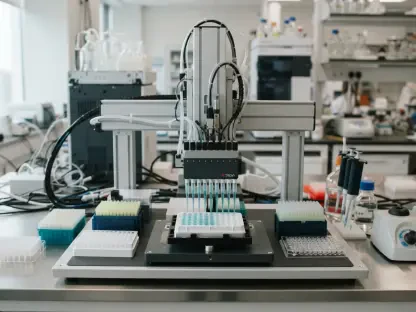
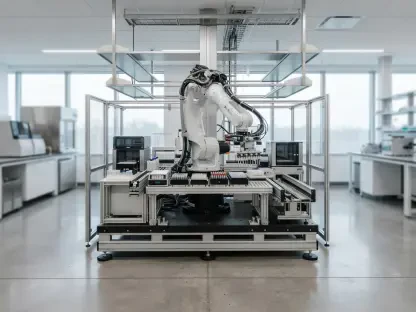
Robotic arms carry samples between machines. AutoDNA can run more than 20 kinds of instruments and perform thousands of individual operations within one project. Its tasks include making DNA and sequencing it, which means reading the order of the chemical letters that carry genetic information. People still replenish the chemicals used in experiments and maintain the equipment. This is a laboratory research system, with the reported tests demonstrating experimental tasks.
Chemical engineer Milad Abolhasani, who is at North Carolina State University in the city of Raleigh, points to how independently the system works and how many different kinds of equipment it can use. He thinks labs that run on their own will play a larger role in science.
What Makes Self-Driving Labs Hard to Build
Machines have been doing individual jobs in labs for years, such as stirring chemicals and warming them up. Now researchers are looking at whether AI can put together plans for complicated experiments and handle problems along the way, change how the work gets done and keep different machines working together to get an experiment finished.
Haibo Chen, a computer scientist with Shanghai Jiao Tong University who helped write the report, says that is difficult in molecular biology. These experiments use all sorts of equipment, and each step has to be done carefully and precisely. In many systems, specialists still have to get the instruments ready, so AI does only part of the job. Chen and the other researchers started with AI in mind when they built the lab. They want a molecular biology lab that can do experiments without much help from people.
For that to happen, the instruments have to work together, rather than just having a machine do one part of an experiment. To test the system, the researchers asked it to find a mutation linked to cancer and use DNA to store a message.
What Health Researchers Can Take From the Tests
Researchers tested AutoDNA by asking it to search a DNA sample for a mutation linked to cancer. Another test asked AutoDNA to store a message using DNA’s four nucleotide bases, which are chemical letters abbreviated as A and C and G and T. Researchers chose a familiar saying about intelligence and being able to adjust when things change. These projects show some of the different tasks researchers wanted AutoDNA to attempt.
The results show examples of the work AutoDNA can do in a lab.
Hospitals and companies that develop health technology may find the cancer test interesting for what it shows about lab research. It does not, however, establish that AutoDNA can help make decisions about caring for patients. Finding a mutation during a laboratory experiment leaves questions unanswered about whether AutoDNA can be used in a clinical setting. There are still questions about cost and access, too. Even when AI runs an experiment, people have to refill the chemicals and keep the equipment in working order. Further research will need to check how reliably AutoDNA works and what it takes to keep it running before it is clear how useful it can be beyond these tests.