
Anthropic’s IPO filing puts a sharper question before biopharma: how far should an AI supplier move into the science its customers depend on? In its SEC prospectus, substantial spending by major drugmakers sits alongside plans for a molecular biology lab and an internal discovery program. Investors now have to weigh commercial adoption, experimental evidence and regulatory exposure together.
Enterprise Spending Creates a New Development Question
Anthropic’s S-1 says nine companies among the Fortune 500’s ten largest pharmaceutical businesses each spent $100,000 or more with it during the twelve-month period ending September 30. Eight businesses among the equivalent healthcare group reached that spending level.
Those figures establish a commercial foothold. They leave open how deeply Claude is embedded in research, which tasks account for the spending and whether it improves development outcomes.
The filing gives neither sector-specific revenue nor customer totals by industry.
Drugmakers should carry that distinction into their next purchasing decision.
An enterprise contract can support broad experimentation without proving that a model belongs inside a consequential scientific workflow. Moving from employee use to discovery or clinical-development infrastructure requires evidence tied to the intended task.
Anthropic is making that transition more explicit. Its prospectus identifies healthcare and life sciences as expansion priorities and describes Claude being used for discovery and development by customers, partners and internal scientists. The company cites IQVIA’s projection that worldwide pharmaceutical expenditure will surpass $2 trillion in 2026.
That forecast describes the size of the surrounding market, not the revenue available to an AI vendor. To capture the opportunity, the technology has to earn a lasting place in work that delivers useful scientific or operational results.
A Supplier Is Becoming a Research Participant
Anthropic’s development strategy extends beyond selling access to a model.
The company says it is recruiting domain specialists and establishing a molecular biology laboratory. In April, it bought Coefficient Bio using 15.4 million Class A shares. Its S-1 also places Claude Science among its principal products alongside Claude Code. Anthropic’s internal preclinical program targets neglected diseases, while its partnerships include research collaborations with HHMI and the Allen Institute. Novo Nordisk agreed in September to use Claude in discovery work.
Together, these moves suggest a supplier seeking direct experience of experimental research. That could help it develop tools around the constraints scientists actually face. It also introduces a question for prospective customers: how should they evaluate a vendor that supplies research infrastructure while pursuing scientific discoveries itself?
Governance deserves attention alongside performance. Novartis CEO Vas Narasimhan joined Anthropic’s board in April, adding pharmaceutical leadership to the company’s oversight. That connection does not validate any particular application, but it reinforces how closely the AI developer’s direction is becoming linked to biopharma.
The practical competitive pressure is therefore broader than access to a capable model. If research workbenches, domain connections and experimental tools become integrated, buyers may increasingly judge suppliers on how well those components fit their development processes.
Laboratory Results Need a Narrower Reading Than Market Ambition
Anthropic has begun presenting experimental results, giving potential users something more concrete to assess than general claims about AI capability. On October 20, it reported that 17 designs out of 211 met laboratory binding criteria against scorpion neurotoxins.
That is a measurable result within a defined experiment. It does not demonstrate clinical benefit or establish a drug-development success rate. Companies considering similar applications should examine what was tested, how success was defined and what work remained after the model produced its designs.
A separate enzyme discovery illustrates another adoption challenge. Anthropic reported in September that Claude had identified a previously unreported enzyme system containing CRISPR-like repeats. Mario Rodríguez Mestre says his team had already identified the enzyme in work that remained unpublished. Anthropic says the finding came from published data and that user transcripts were excluded from Claude’s training.
On their own, the competing accounts leave priority and provenance unresolved. They also make the case for keeping records in discovery workflows so researchers can trace inputs and assess novelty.
Even a plausible scientific output needs a defensible route from the underlying data to the claim.
For buyers, useful evaluation should separate several questions:
- Does the system improve performance on a defined research task?
- Can scientists trace the evidence behind its output?
- What experimental confirmation is required before the result informs development?
- Who remains responsible for review and subsequent decisions?
These checks would make pilot programs more informative and reduce the risk of treating model fluency as scientific validation.
Regulatory Exposure Will Shape the Adoption Path
Anthropic’s filing acknowledges that its research activity may bring obligations involving biosafety, hazardous substances and rules governing preclinical or clinical work. The filing also warns that candidates from the program might never generate revenue.
In healthcare, the company flags potential FDA oversight and HIPAA requirements, along with medical-practice restrictions and liability for errors that harm patients. Disclosing those risks does not establish that every product will receive the same regulatory treatment. They do mean that adoption plans should distinguish research support from uses that influence patient care.
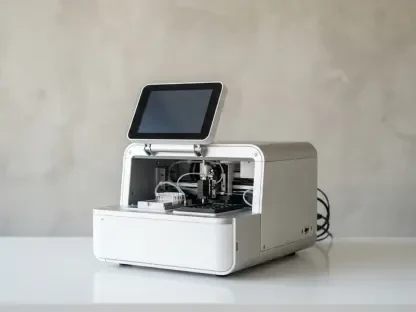
Laboratory automation adds another boundary. Anthropic’s Model Hardware Standard remains a research-preview tool, but it allows Claude to control equipment including microscopes and liquid handlers. Connecting generated instructions to physical experiments would require a different level of operational scrutiny than reviewing text on a screen.
Access controls are also part of the commercial model. Anthropic limits Mythos to approved organizations in cybersecurity and life sciences. Its prospectus nevertheless acknowledges both biological-weapons risks from advanced capabilities and previous circumvention of safeguards.
With the IPO, growth expectations become more closely tied to these issues. Biopharma customers should adopt in stages, defining the task, testing the evidence and putting oversight in place before expanding the system’s authority. For Anthropic, the strategic outcome hinges on turning its existing commercial reach into research workflows customers can validate and govern.