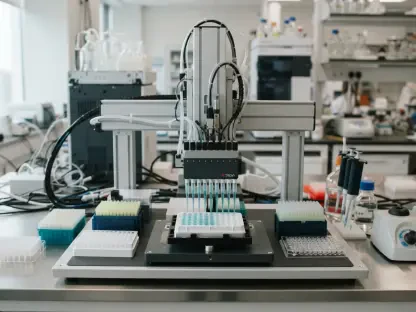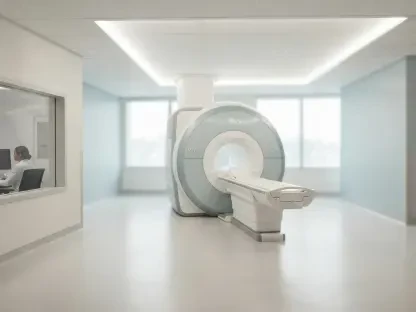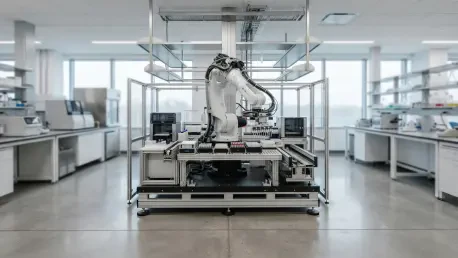

Engineers are now grouping instruments based on specific environmental requirements like vibration sensitivity and heat output rather than by traditional department lines. This fundamental shift marks a departure from the legacy model of the laboratory as a mere collection of standalone workbenches and focuses instead on a holistic, integrated ecosystem where every component is critical to the broader operational success. As scientific research moves deeper into the realms of artificial intelligence, high-throughput robotics, and machine learning, the physical facility must evolve to serve as an active participant in data generation. This transformation is driven by the reality that in an automated environment, the margin for error has diminished significantly, making the architectural and engineering infrastructure the ultimate safeguard for data integrity. By viewing the laboratory as a cohesive operating system, planners are now prioritizing the interconnectedness of specialized equipment, ensuring that power, climate, and structural stability are harmonized to support continuous, unattended experimentation. This approach recognizes that a failure in one utility or a subtle environmental disturbance no longer affects just a single experiment but can compromise entire workflows and massive datasets across the enterprise.
Environmental Stability: The Foundation of Precision
Next-generation automated instruments demonstrate a level of environmental sensitivity that far exceeds that of their manual predecessors, necessitating a complete rethink of how space is partitioned and managed. In traditional manual laboratories, the presence of a human researcher served as a built-in monitoring system; an operator would notice a flickering light, a draft from an open door, or a slight tremor in the bench and take corrective action before proceeding. However, in the modern automated facility, high-precision instruments such as electron microscopes and sophisticated mass spectrometers operate within complex, multi-stage workflows that feed directly into digital databases without an immediate human filter. This lack of intervention means that a minor environmental fluctuation, such as a localized spike in temperature or a sub-perceptible vibration, can cause a cascading risk that degrades the accuracy of an entire experiment. To mitigate these threats, design strategies have pivoted toward advanced structural interventions, such as the use of thickened topping slabs and the placement of vibration-sensitive equipment near structural columns to dampen movement from mechanical systems or general foot traffic within the building.
Beyond structural stability, the control of thermal and light-based interference has become a prerequisite for maintaining the rigorous standards required by modern pharmaceutical and diagnostic research. Instruments like mass spectrometers are notoriously prone to measurement drift if the ambient temperature shifts even slightly outside of a very narrow operating window, leading to data that is inconsistent over time. Designers are increasingly implementing specialized zoning techniques, where high-heat-producing robotics are sequestered from instruments that require cryogenic stability, and ultraviolet-protective films are applied to laboratory glass to prevent both heat gain and photographic interference. This level of environmental control is not merely a matter of comfort for the personnel remaining in the facility but is a critical engineering requirement to prevent micron-scale measurement errors. By establishing these hyper-stable zones, facility planners ensure that the automated workflows can run for days or weeks at a time with the certainty that the external environment will not introduce variables that could invalidate months of costly scientific inquiry.
Systemic Integrity: Combating the Threat of Drift
A significant challenge in the current landscape of laboratory automation is the distinction between a catastrophic instrument failure and the more insidious phenomenon known as instrument drift. When a piece of hardware experiences a total failure, the automated workflow typically halts, and the issue is immediately identified and resolved by the maintenance team. In contrast, calibration drift occurs when an instrument slowly loses its precision over time while continuing to output data that appears plausible to the automated system. Because there is no longer a human scientist manually verifying every reading at the point of collection, a drifting instrument can continue to operate for extended periods, silently corrupting a large volume of data before the discrepancy is finally caught during a later stage of analysis. To address this risk, the industry is moving away from traditional fixed maintenance schedules and toward condition-based maintenance models that rely on continuous performance monitoring. This approach utilizes a digital brain—often a Laboratory Management System—to track real-time utility consumption and diagnostic health indicators, allowing for intervention the moment a tool begins to stray from its calibrated baseline.
The implementation of these predictive maintenance frameworks requires a robust underlying infrastructure that must be planned and installed during the initial construction phase of the laboratory. Sensors embedded within the facility’s power and gas distribution systems provide a constant stream of data that can be analyzed by artificial intelligence to identify patterns indicative of impending equipment degradation. For instance, an unusual increase in power draw from a refrigerated sample storage unit might suggest a failing compressor before the internal temperature actually begins to rise, allowing for a proactive repair that saves valuable biological samples. From 2026 to 2028, the adoption of these smart infrastructure components is expected to become the industry standard, moving the focus of reliability from reactive troubleshooting to proactive ecosystem management. This shift ensures that the laboratory remains a stable environment for research, where the physical utilities are as precisely monitored and maintained as the scientific instruments they support, thereby creating a truly resilient foundation for long-term experimental success.
Strategic Frameworks: Designing for Resiliency and Agility
To effectively manage the systemic risks inherent in automated research, modern facility design is increasingly adopting comprehensive verification frameworks like ASTM E2500, which focus on ensuring that systems are fit for their specific purpose within the context of the entire operating environment. This holistic perspective represents a departure from old-fashioned validation methods that focused on individual instruments in isolation, often ignoring how those tools interact with the building’s power grid, air handling units, and other adjacent machinery. By applying a systems-oriented approach, designers can create a laboratory that is more than the sum of its parts, ensuring that the infrastructure is prepared for the unique demands of high-throughput robotics. This involves strategic zoning where instruments are grouped by their utility requirements and environmental tolerance, which allows for more efficient distribution of services and reduces the risk of cross-contamination or interference between disparate research activities. Such frameworks provide a roadmap for creating facilities that are inherently reliable and capable of producing high-quality data under a variety of operating conditions.
In addition to reliability, modern laboratory design must prioritize modularity and ease of maintenance to ensure that the facility can adapt to the rapid pace of technological innovation without requiring a complete overhaul. Designing for serviceability involves more than just providing adequate floor space; it requires the creation of utility grids and access points that allow technicians to perform calibration or repairs without disrupting nearby automated workflows. Modular benching and overhead service carriers enable the lab to be reconfigured quickly as new instruments are introduced or research priorities shift, ensuring that the physical environment never becomes a bottleneck for scientific progress. This emphasis on resiliency over simple redundancy means that the laboratory is built to withstand both technical failures and evolving requirements, maintaining a consistent level of performance throughout its lifecycle. By integrating these flexible design elements, organizations can future-proof their investments, creating a dynamic workspace that supports the continuous improvement of automated processes while minimizing the downtime associated with equipment upgrades and routine facility maintenance.
Collaborative Intelligence: Human Oversight in Hybrid Environments
While the rise of robotics and artificial intelligence has significantly reduced the need for manual sample handling, the role of human expertise remains a cornerstone of the reliable laboratory ecosystem. Current regulatory guidelines, such as the European Medicines Agency’s Annex 22, emphasize the necessity of a “human-in-the-loop” approach for all critical decision-making processes, ensuring that automation serves to enhance rather than replace professional judgment. This requirement has a profound impact on facility design, as labs must now provide spaces that are optimized for human collaboration and the oversight of automated sequences. Scientists need access to high-visibility areas where they can monitor system performance, troubleshoot software glitches, and validate the results generated by AI-driven analysis. The laboratory of today is a hybrid environment where the physical layout must facilitate seamless communication between the researchers and the digital systems they manage, fostering a culture of accountability and precision that is essential for maintaining public trust in scientific outcomes.
The challenge of creating a cohesive ecosystem is further complicated by the presence of legacy equipment that was never originally designed for integration into a modern digital network. These older instruments often represent “blind spots” in an automated workflow because they require manual data entry and lack the sophisticated cybersecurity protocols found in newer hardware. Bridging this technological gap requires a strategic facility planning approach that evaluates how every piece of equipment—regardless of its age—fits into the broader data integrity strategy. Planners must implement solutions that allow legacy tools to communicate with the central Laboratory Management System, whether through external sensors or specialized software interfaces, to ensure that no part of the research process remains isolated. By creating a unified communication layer, facilities can mitigate the risks associated with hardware silos and cybersecurity vulnerabilities, ensuring that the entire laboratory functions as a single, synchronized entity. This integration of human intelligence, cutting-edge automation, and legacy hardware creates a robust environment where every asset is leveraged to its full potential to drive scientific discovery.
Implementing Integrated Laboratory Operating Systems
The transition toward automated research environments demanded a fundamental reconsideration of how physical facilities supported scientific precision and data integrity. Organizations that successfully navigated this period of change moved beyond the traditional view of the lab as a passive container for instruments, instead treating the building as a vital, integrated component of the research workflow. These successful facilities prioritized high-resolution environmental zoning and structural stability, effectively shielding sensitive automated tools from the subtle disturbances that previously led to costly data errors. By implementing condition-based maintenance systems and robust monitoring networks, they managed to eliminate the insidious threat of instrument drift, ensuring that the data being fed into artificial intelligence models remained accurate and reliable over long-term studies. The resulting infrastructure was not only more resilient but also significantly more efficient, as it allowed for continuous operation with minimal human intervention.
Moving forward, the focus shifted toward the seamless integration of modularity and human oversight within these complex digital landscapes. The most effective laboratories deployed adaptable utility grids and service-friendly layouts, which permitted the rapid incorporation of new technologies without the need for facility-wide shutdowns. They also addressed the complexities of hybrid technological environments by creating secure bridges between legacy hardware and modern AI networks, ensuring that every data point was accounted for and protected. As research requirements continue to evolve, the primary lesson learned was that the physical environment must be as dynamic and sophisticated as the science it facilitates. Future laboratory planning must now begin with a comprehensive audit of existing network capabilities and structural limits to identify potential points of failure before automation is even introduced. By maintaining this holistic view of the laboratory as a singular, calibrated ecosystem, the scientific community secured the foundation necessary for the next era of breakthroughs in medicine and technology.