
Imagine a future where birth injuries, facial defects, and other cartilage-related conditions could be treated effectively and efficiently with a novel tissue that combines softness, elasticity, and stability. This future has moved significantly closer to reality with the discovery of a new

Prostate cancer screening has long relied on blood tests, MRIs, and biopsies, each carrying its own set of drawbacks, such as causing discomfort and leading to the overdiagnosis of low-grade cancers that might not pose significant health risks. These traditional approaches, while effective in

Recent research led by scientists at Scripps Research has unveiled groundbreaking insights into the structure and behavior of the protein transthyretin, which could have significant implications for the treatment of transthyretin amyloidosis (ATTR). This disease, marked by the misfolding of
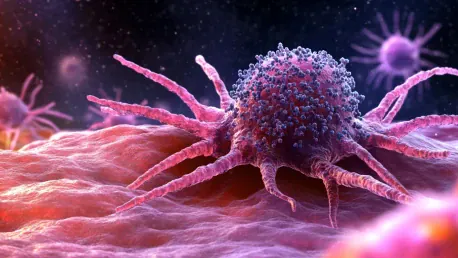
The groundbreaking research conducted by Van Andel Institute scientists sheds new light on how developmental epigenetic changes can profoundly influence cancer risk later in life. The study, published in Nature Cancer, identifies two distinct epigenetic states formed during development, which are

The potential breakthrough in treating liver cirrhosis caused by metabolic dysfunction-associated steatohepatitis (MASH) has come from a recent study by Akero Therapeutics. Efruxifermin, an experimental drug, has shown significant promise in reversing liver damage in patients suffering from this

Genetic testing for Lynch Syndrome (LS) is crucial in preventing certain cancers, especially for women diagnosed with endometrial (womb) cancer. This inherited condition significantly raises the lifetime risk of various cancers, including bowel, ovarian, pancreatic, and womb cancers. Despite