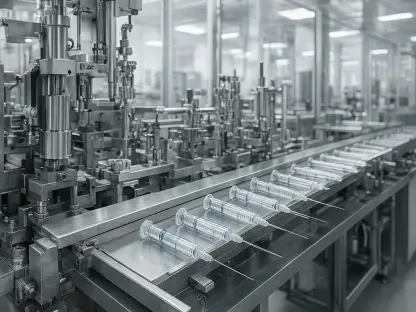

A comparative study using a trastuzumab biosimilar revealed that automation can reduce the average variability in glycan profiling by twenty-eight percent compared to manual processing. This discovery comes at a critical time in 2026, as the pharmaceutical sector grapples with the increasing structural complexity of next-generation monoclonal antibodies and bispecific proteins. N-glycosylation, a vital post-translational modification, dictates a drug’s clinical success, yet its analysis has historically been a bottleneck due to the intense manual labor required for sample preparation. Conventional methods often fall victim to human error, leading to inconsistent data that can delay regulatory approvals or complicate the monitoring of Critical Quality Attributes. As manufacturers strive to harmonize global production sites, the shift toward standardized robotic workflows has become an operational imperative rather than a luxury. By eliminating the nuances of individual operator techniques, these automated systems provide a level of data integrity that satisfies the most stringent global health authorities. This transformation ensures that every batch of a life-saving biologic is characterized with unprecedented precision, paving the way for more efficient development cycles and more reliable patient outcomes in an era of personalized medicine.
Biological Significance and Clinical Performance
Therapeutic Efficacy: The Role of Glycan Structures
The sugar structures attached to the fragment crystallizable region of an antibody are not merely aesthetic additions but are functional components that directly influence therapeutic outcomes. Specifically, the presence of core fucose on the N-glycan at the Asparagine 297 residue can drastically alter how an antibody binds to FcγRIIIa receptors on natural killer cells. This interaction is the primary driver of antibody-dependent cellular cytotoxicity, a mechanism of action central to the success of oncology drugs like trastuzumab. When glycosylation is inconsistent, the potency of the drug fluctuates, which can lead to unpredictable patient responses. This variability is why the pharmaceutical industry is so focused on maintaining a specific glycan profile throughout the manufacturing process, as even minor deviations in fucosylation can render a treatment significantly less effective than its clinical trial benchmarks suggested.
Beyond simple binding affinity, the structural diversity of glycans influences the overall immune signaling environment. Certain terminal sugars can either mask or expose parts of the protein backbone, which in turn affects how the molecule is perceived by the patient’s innate immune system. In 2026, as developers create more sophisticated bispecific antibodies that target multiple antigens simultaneously, the complexity of these glycan interactions grows exponentially. Ensuring that the correct glycoforms are present is no longer just a regulatory checkbox; it is a foundational requirement for engineering the desired biological response. Automated profiling provides the high-resolution data needed to confirm that these complex molecules are synthesized correctly within the host cells, allowing researchers to fine-tune bioreactor conditions to produce the most potent versions of these therapies.
Safety and Pharmacokinetics: Ensuring Long-Term Stability
Pharmacokinetics, or how the body processes and eliminates a drug, is heavily dependent on the glycan moieties present on the antibody. For instance, the degree of sialylation and the presence of high-mannose structures are known to influence the circulatory half-life of biotherapeutics. High-mannose glycans, while often appearing in small percentages, are recognized by mannose receptors in the liver, leading to rapid clearance from the bloodstream. If a manufacturing batch has an unexpectedly high level of these structures, the drug may be eliminated before it can achieve its therapeutic effect, necessitating more frequent dosing and increasing the risk of side effects. Automated N-glycan profiling allows for the rapid detection of these shifts, ensuring that each batch remains within the established pharmacokinetic parameters to maintain consistent patient exposure levels.
Furthermore, the immunogenicity of a biologic is a primary safety concern that is closely tied to its glycosylation state. If a drug displays non-human or improperly processed glycan structures, the patient’s immune system may mount an anti-drug antibody response, which can lead to everything from reduced efficacy to severe allergic reactions. Stability during storage is also affected, as specific glycans contribute to the structural integrity of the antibody, preventing aggregation and degradation over time. By utilizing automated systems to monitor these attributes with high precision, manufacturers can guarantee that the product remains safe and stable throughout its entire shelf life. This level of oversight is particularly vital for biosimilars, where the goal is to prove that the new product is highly similar to the reference biologic in both its structural makeup and its clinical behavior.
Operational Advantages of Automated Workflows
Throughput Efficiency: Reducing Laboratory Bottlenecks
One of the most immediate impacts of moving to an automated platform is the dramatic reduction in active laboratory time required to prepare samples for analysis. Traditionally, a skilled analyst might spend up to five hours of intense, hands-on labor to process a 96-well plate, involving multiple steps of pipetting, centrifugation, and incubation. In contrast, modern automated liquid-handling systems can complete the same workflow in approximately two and a half hours, with minimal human intervention. This shift effectively doubles the capacity of the analytical department without increasing the headcount, which is a major advantage for companies operating in the high-pressure environment of 2026. This efficiency is particularly critical during the early stages of drug development, where thousands of cell clones must be screened to find the most productive and stable candidates for large-scale manufacturing.
The scalability offered by automation extends beyond just speed; it also allows for the parallel processing of diverse sample types with higher consistency. Automated systems can manage complex denaturation, enzymatic digestion using PNGase F, and fluorescent labeling steps with robotic precision that human operators simply cannot match over long shifts. By freeing up scientists from repetitive bench work, organizations can redirect their talent toward higher-level tasks such as data interpretation and strategic process optimization. This redistribution of intellectual resources accelerates the overall development timeline, allowing life-saving medications to reach the market months or even years earlier than would be possible with manual techniques. Moreover, the standardized nature of robotic steps ensures that every sample is treated identically, regardless of when it was processed or which technician initiated the run.
Reproducibility Standards: Minimizing Operator Variation
The inherent variability of manual laboratory work is a significant risk factor in biopharmaceutical quality control. Even the most experienced technicians can have slight variations in how they pipette reagents or time their incubation periods, leading to fluctuations in the resulting glycan profiles. These “operator effects” can obscure the actual biological differences between samples, making it difficult to determine if a shift in glycosylation is due to a change in the manufacturing process or simply an artifact of the analysis. Automation eliminates these variables by executing every movement with micron-level accuracy and precise timing. The study conducted on trastuzumab biosimilars showed that the coefficient of variation, a standard measure of precision, was significantly lower across the board when using automated systems, especially for the most critical glycan species.
This enhanced reproducibility is most valuable when measuring minor glycan species, such as sialylated or high-mannose forms, which are often present at levels below five percent of the total pool. In manual workflows, these low-abundance glycans frequently show high levels of instability in the data, with variability sometimes reaching twenty percent or more. However, the automated approach can reduce this variability to less than three percent, providing a clear and reliable picture of these biologically active components. For manufacturers, this means that a “failed” batch is much less likely to be the result of a measurement error, and real trends in product quality can be identified with much higher confidence. This precision is the cornerstone of building a robust analytical foundation that can survive the rigorous scrutiny of global regulatory audits and ensure long-term product consistency.
Navigating Methodological Transitions
Quantitative Shifts: Addressing Workflow Dependent Biases
A nuanced challenge in adopting automation is the realization that automated and manual results are often not directly interchangeable in their absolute numerical values. Data from recent studies indicates that automated workflows may report higher percentages of major glycans like G0F while showing lower levels of galactosylated species like G1F and G2F compared to manual preparation. These shifts are typically not a sign of failure but are instead “method-specific biases” caused by differences in how reagents are handled and how glycans are recovered during the final cleanup stages. For example, the robotic system might use different solid-phase extraction chemistries or wash protocols that favor the recovery of certain sugar structures over others. Understanding these shifts is crucial for any laboratory looking to modernize its infrastructure without losing the context of its historical data.
Despite these quantitative differences, the relationship between manual and automated data remains highly predictable, with linear correlations often exceeding an R-squared value of 0.99. This suggests that while the “yardstick” for measurement has changed, the underlying biological signal remains perfectly intact. The laboratory must simply account for this shift when comparing new data to legacy results. In 2026, sophisticated data integration software is used to bridge these gaps, allowing analysts to translate results between different platforms seamlessly. Recognizing that every analytical method has its own unique signature allows organizations to embrace the benefits of automation while maintaining a sophisticated understanding of their product’s historical quality profile. This awareness prevents the misinterpretation of data and ensures that the transition to modern technology does not lead to unnecessary concerns about product drift.
Bridging Protocols: Validating Method Transitions
Because of the potential for quantitative shifts, the implementation of a bridging study is a mandatory step for any biopharmaceutical company transitioning from manual to automated glycosylation profiling. These studies involve running a series of identical samples through both workflows to establish a statistically sound correlation between the two sets of results. This process is essential for drugs that are already in clinical trials or have been on the market for several years, as their release specifications were likely set using manual data. A successful bridging study provides the evidence needed to recalibrate those specifications for an automated environment, ensuring that the drug continues to meet its safety and efficacy requirements without interruption. Without this validation, a company risks a regulatory disconnect that could halt production or lead to the rejection of new batches.
The bridging process also serves as a critical opportunity to verify that the automated system can detect the same range of glycan species as the manual method. It is not enough for the major peaks to align; the “minor” species that contribute to immunogenicity and clearance must also be consistently identified and quantified. By performing these comprehensive comparisons, manufacturers can build a robust documentation package that demonstrates to health authorities that the new method is not only faster and more precise but also provides an equivalent, if not superior, level of characterization. This strategic approach to technology adoption safeguards the integrity of a product’s lifecycle and ensures that the transition to “Lab 4.0” is a smooth, data-driven evolution. These validation protocols are now a standard part of the roadmap for any company aiming to maintain a competitive edge in the global biologics market.
Future Trends in Analytical Standardization
Lab 4.0: Integrating Global Manufacturing Sites
The move toward automation is a fundamental pillar of the Lab 4.0 initiative, which seeks to create a fully digital and interconnected laboratory environment. For large pharmaceutical corporations with manufacturing facilities spread across multiple continents, automation offers a unique solution to the problem of site-to-site variability. By deploying identical robotic platforms and standardized software protocols in every location, a company can ensure that a trastuzumab sample tested in Singapore yields the exact same results as one tested in Ireland. This level of harmonization is impossible to achieve with manual techniques, which are inherently subject to local differences in training and laboratory culture. In 2026, this global consistency is vital for maintaining a resilient supply chain and ensuring that patients receive the same high-quality medication regardless of where it was produced.
Furthermore, the high-quality, low-noise data generated by automated profiling is a prerequisite for the effective use of artificial intelligence and machine learning in bioprocessing. These advanced digital tools require massive datasets with minimal variability to accurately predict how changes in cell culture conditions will impact the final product. By feeding highly reproducible automated glycan data into these models, scientists can create “digital twins” of their manufacturing processes. These simulations allow them to optimize production parameters in a virtual environment before making real-world changes, significantly reducing the cost and risk of process development. This convergence of robotics and data science is transforming biopharmaceutical operations from a reactive discipline into a proactive, predictive one, where quality is engineered into the process from the very beginning.
Strategic Outcomes: Advancing Biotherapeutic Characterization
The implementation of automated N-glycan profiling provided a clear path forward for biopharmaceutical companies seeking to enhance their operational efficiency and product quality. The results indicated that the transition to robotic systems not only halved the sample preparation time but also drastically reduced the variability in critical measurements, particularly for low-abundance glycans. Stakeholders recognized that while absolute values might shift during the move away from manual methods, the superior precision and linear correlation of automated workflows more than justified the effort of performing bridging studies. This shift was characterized as a necessary evolution to meet the regulatory demands of 2026, where data integrity and batch-to-batch consistency were prioritized more than ever before.
Moving forward, laboratories were encouraged to view automation as the foundation for broader digital transformation rather than a standalone upgrade. It was concluded that the most successful organizations would be those that integrated these high-throughput systems with advanced data analytics to support a Quality by Design approach. By establishing a standardized analytical “source of truth” across global sites, the industry took a significant step toward making complex biotherapeutics more accessible and reliable. These technological advancements ensured that the next generation of treatments was built on a platform of scientific rigor, ultimately benefiting patients through the delivery of more consistent and effective life-saving medicines. The proactive adoption of these automated tools became the defining characteristic of leaders in the modern biopharmaceutical landscape.