
The pharmaceutical landscape stands at a critical juncture where the massive investments in drug discovery are frequently met with disappointing clinical outcomes due to the inherent biological disconnect between animal models and human physiology. For many years, the industry has accepted a status quo where nearly ninety percent of drugs that pass preclinical trials ultimately fail when they reach human subjects. This staggering failure rate is not merely a financial burden but a significant barrier to getting life-saving treatments to those in desperate need. Today, however, a profound paradigm shift is underway as scientists move beyond the limitations of traditional methodologies. By integrating three-dimensional organoids, sophisticated robotics, and cutting-edge artificial intelligence, the scientific community is building a more accurate bridge to human biology. This movement is not just about improving efficiency; it is about fundamentally rethinking how we understand disease and treatment at a cellular level, signaling a potential end to the reliance on animal subjects.
The Push for Better Predictive Models
Addressing the Failures of Traditional Research: The Eroom’s Law Challenge
The persistent reliance on two-dimensional cell cultures and animal models has long been identified as the primary culprit behind the phenomenon known as Eroom’s Law, which observes that drug development becomes exponentially slower and more expensive over time. While these traditional systems provided the foundation for twentieth-century medicine, they lack the structural complexity and genetic nuances required to simulate the multi-faceted interactions of a living human organ. Animals, though biologically complex, often possess metabolic pathways and molecular targets that differ significantly from those found in humans, leading to false positives during the early stages of research. These inaccuracies mean that toxic side effects or lack of efficacy often remain hidden until the most expensive stages of human testing. By 2026 and through 2028, the industry is increasingly prioritizing models that provide high-fidelity representations of human tissue to avoid these costly pitfalls.
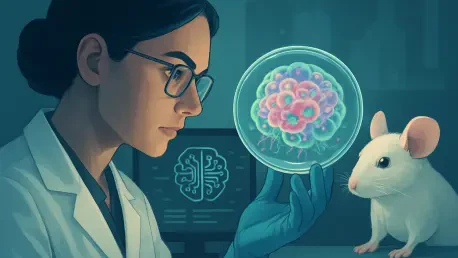
Beyond the financial implications of failed clinical trials, the ethical considerations surrounding animal testing have intensified, prompting a search for more humane and scientifically sound alternatives. Traditional methods often require thousands of subjects to achieve statistically significant results, yet the biological data harvested frequently fails to translate into clinical success for human patients. This discrepancy has led many researchers to argue that the ‘gold standard’ of animal testing is actually a bottleneck hindering medical progress. Organoids offer a way out of this dilemma by providing self-organizing tissues that recapitulate the architectural and functional complexity of human organs in a controlled laboratory environment. These micro-organs allow for the study of disease progression and drug responses with a level of precision that was previously unimaginable. As the focus shifts toward 2027, the emphasis is on refining these 3D systems to ensure they can eventually replace outdated models across all phases of preclinical research.
Global Regulatory Evolution: Policy Integration and Modernization
The transition toward new approach methodologies is being accelerated by a significant shift in the global regulatory climate, as major agencies recognize the superior predictive power of human-derived models. In the United States, the implementation of the FDA Modernization Act 2.0 has removed the long-standing mandate that all new drugs must be tested on animals before entering human trials. This landmark legislation allows for the submission of data from organoids, organs-on-a-chip, and advanced computer simulations to demonstrate safety and efficacy. Such a change represents a fundamental acknowledgement that the scientific landscape has evolved past the need for animal-centric protocols. Regulatory bodies are now working closely with biotechnology firms to establish new benchmarks for validating these non-animal methods. This collaborative effort ensures that while the methods of testing change, the rigorous standards for patient safety remain as high as ever during this period of transition.
Internationally, the movement away from animal testing is gaining momentum with organizations like the UK’s Medicines and Healthcare products Regulatory Agency leading the charge in Europe. By 2026, these agencies have already begun facilitating early-stage reviews based on non-animal data, particularly for complex biological products like monoclonal antibodies. These policy changes are driven by a pragmatic understanding that human-specific therapies require human-specific testing platforms. As we look toward the 2027 to 2030 timeframe, the goal is to create a standardized global framework that harmonizes the use of these modern alternatives across different jurisdictions. This synchronization will reduce the administrative burden on pharmaceutical companies and speed up the delivery of innovative treatments to global markets. The shift is not merely a legal update but a strategic realignment of the entire healthcare ecosystem to prioritize biological relevance and ethical responsibility.
Overcoming Growth Bottlenecks with Technology
From Artisanal Cultures: The Move to Industrialized Robotics
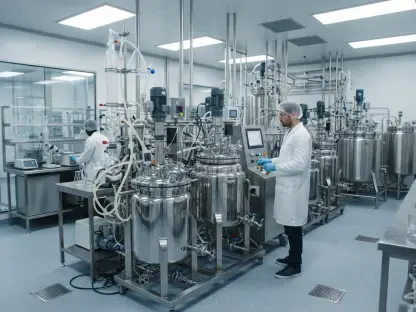
Despite their potential, the widespread adoption of organoids was initially hampered by the manual, labor-intensive nature of their production, which often resembled a specialized craft rather than a scalable science. Growing these complex tissues requires meticulous attention to detail, with human researchers spending hours monitoring growth media and ensuring consistent environmental conditions. This variability led to inconsistencies between laboratory batches, making it difficult to achieve the reproducibility required for large-scale pharmaceutical applications. To address this, the industry is now deploying sophisticated robotic platforms like the CellXpress.ai system, which automates the entire culturing process. These machines handle the delicate tasks of feeding and maintaining organoids with a level of precision that human hands cannot match. Automation ensures that every organoid in a study is grown under identical conditions, effectively eliminating the risk of human error and variability.
The integration of robotics is transforming organoid production from a boutique laboratory process into an industrial-scale operation capable of supporting high-throughput screening. Automated systems can manage thousands of individual cultures simultaneously, allowing researchers to test vast libraries of chemical compounds in a fraction of the time it would take using traditional methods. This scalability is essential for the rapid identification of promising drug candidates and for understanding the nuances of rare diseases that require extensive data sets. By 2026 and moving into 2028, the focus is on creating fully autonomous ‘bio-foundries’ where the intervention of human staff is minimal, and the workflow is optimized for maximum throughput. These facilities represent the future of drug discovery, where the speed of research is no longer limited by manual labor but by the capacity of the hardware. This shift toward industrialization is a critical step in making human-derived models the standard for the entire pharmaceutical industry.
Computational Intelligence: High-Precision Morphological Analysis
Artificial intelligence is the critical engine driving the next phase of organoid research, providing the analytical power necessary to interpret the vast amounts of data generated by these complex 3D systems. Unlike simple 2D cultures, organoids develop intricate structures and show dynamic behaviors that are difficult to quantify using traditional imaging techniques. AI-driven platforms can monitor these cultures in real-time, using machine learning algorithms to detect subtle changes in morphology or cellular health that might be invisible to the human eye. These systems can make autonomous decisions about the health of a culture, adjusting environmental parameters or identifying the optimal time for drug exposure. This level of intelligent oversight ensures that the organoids reach the necessary maturity and functionality to provide reliable data. As we move from 2026 into 2029, the sophistication of these AI models will only grow, enabling more nuanced simulations of human physiology.
Advanced imaging tools, such as the ImageXpress HCS.ai system, are now being paired with deep-learning software to analyze complex biological networks within organoids, such as the neuronal firing patterns in brain models. These technologies allow researchers to visualize and quantify the internal workings of a tissue in three dimensions, providing a deep understanding of how a drug affects specific cellular interactions. The ability to process such massive datasets rapidly is a game-changer for translational science, as it allows for the discovery of complex biomarkers and drug mechanisms that were previously hidden. Furthermore, AI helps in predictive modeling, where computer simulations are trained on organoid data to forecast human reactions to various compounds. This synergy between physical biological models and digital intelligence creates a feedback loop that continually refines our understanding of human health. The result is a research environment where data is not just collected but is intelligently synthesized to drive innovation.
Clinical Integration and the Precision Medicine Paradigm
Patient-Specific Models: Advancing Targeted Oncological Applications
One of the most immediate and impactful applications of organoid technology is the development of patient-derived tumor models, which are revolutionizing the field of precision oncology. By taking a small sample of a patient’s own cancer cells and growing them into 3D organoids, oncologists can create a personalized ‘avatar’ of that individual’s disease in the laboratory. This allows for the testing of a wide range of chemotherapy agents and targeted therapies on the patient’s actual cells before any treatment is administered in the clinic. The results provide a clear indication of which drugs are most effective and which might cause adverse reactions, effectively eliminating the traditional trial-and-error approach to cancer care. From 2026 through 2030, this personalized approach is expected to become a standard component of cancer treatment plans, significantly improving survival rates and reducing the physical toll of ineffective treatments on patients with advanced malignancies.
The ability to produce these personalized models at scale is also opening new doors for understanding rare and orphan diseases that have historically lacked effective treatments due to a lack of animal models. Because organoids are derived from human stem cells, they can be engineered to carry specific genetic mutations, allowing researchers to study the exact molecular drivers of a disease in a human context. This capability is particularly valuable for developing therapies that target the underlying genetic causes of a condition rather than just managing symptoms. Collaborative initiatives are currently underway to create vast biobanks of patient-derived organoids, which serve as a global resource for researchers working on these challenging cases. As these biobanks grow from 2026 onward, they will provide the diverse genetic data necessary to develop treatments that are effective for people of all backgrounds. This shift toward a more inclusive and personalized model of medicine represents a major leap forward for global health equity.
Human-Specific Platforms: Evaluating Genetic and Molecular Therapies
As the pharmaceutical industry shifts its focus toward next-generation drug modalities, such as CRISPR-based gene editing and complex antibody-based therapies, the limitations of animal models have become even more pronounced. These advanced treatments are frequently designed to interact with highly specific human molecular pathways or genetic sequences that simply do not exist in traditional laboratory animals. Consequently, testing these therapies in mice or non-human primates often yields data that is irrelevant or misleading, posing a significant risk to human safety during the initial clinical trials. Organoids provide a human-centric platform that can be tailored to express the exact molecular targets of these new drugs, offering a level of biological fidelity that animal models cannot achieve. This specificity is essential for ensuring that gene-editing tools hit their intended targets without causing off-target effects. Moving from 2026 into 2031, organoids will be the primary testing ground for these innovative cures.
Furthermore, the use of organoids in the preclinical stages of drug development is proving to be a critical factor in the successful testing of therapies that modulate the human immune system. Many modern treatments work by training the body’s own defenses to recognize and attack diseased cells, a process that is highly dependent on human-specific immune signaling. By incorporating immune cells into organoid cultures, researchers can create complex multi-lineage models that simulate the interaction between a drug, a tumor, and the surrounding immune environment. This level of systemic modeling is vital for predicting cytokine storms or other severe immune reactions that might occur in human patients but are often absent in animal studies. As we navigate the period from 2026 to 2030, these ‘immune-competent’ organoids will become indispensable for the development of safe and effective immunotherapies. This progress ensures that the next wave of medical breakthroughs is built on a foundation of solid, human-relevant evidence.
The integration of organoid technology, automated robotics, and artificial intelligence established a new framework for medical research that successfully addressed the long-standing flaws of traditional preclinical models. By prioritizing human biological relevance over outdated animal protocols, the scientific community significantly improved the success rate of clinical trials and reduced the time required to bring new therapies to the market. Researchers moved beyond the artisanal limitations of early organoid work, adopting standardized platforms that ensured consistency and scalability across global laboratories. Regulatory bodies played a pivotal role by modernizing their guidelines to accept human-derived data, which encouraged the widespread adoption of these ethical alternatives. Ultimately, this shift empowered a more personalized approach to healthcare, where treatments were precisely tailored to the unique genetic profiles of individual patients. The era of trial-and-error medicine was effectively replaced by a more predictable and efficient system that centered on the complexities of human biology.