
Ivan Kairatov brings a sophisticated perspective to the intersection of medical technology and data science, drawing from years of experience in biopharmaceutical research and development. In this discussion, he delves into a pioneering study from the University of Utah and the University of Illinois, Chicago, which introduces a cuffless, wearable device designed to monitor blood pressure continuously. This technology addresses the limitations of traditional, bulky inflatable cuffs that offer only sporadic readings, often leaving critical cardiovascular changes undetected. By utilizing physics-informed machine learning and bioimpedance, the interdisciplinary team has developed a way to capture the fluid dynamics of blood flow in real-time. Throughout the interview, Kairatov explains how this approach moves beyond the “black box” nature of current wearables, the clinical significance of testing in intensive care environments, and why viewing blood pressure as a continuous temporal waveform is the key to managing what is often called the silent killer.
Traditional cuff readings provide two static numbers, but blood pressure actually functions as a continuous temporal waveform. How does this new technology move beyond the “snapshot” approach to capture the full picture of cardiovascular health?
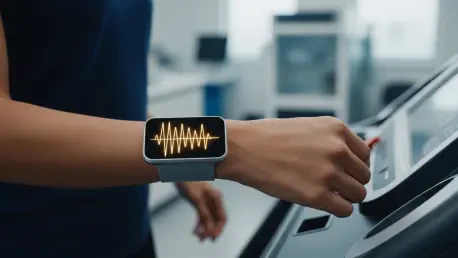
The current standard for measuring blood pressure is fundamentally limited because it relies on the physical sensation of an inflatable cuff squeezing your arm until blood flow stops and then resumes. This process gives you a systolic and diastolic readout, like the familiar 120/80, which represents only the maximum and minimum pressure values at a single point in time. As the researchers pointed out, this is like looking at a single still frame from a movie and trying to guess the entire plot; you are essentially missing 99% of the information about how your body responds to the world. By using a wearable smartwatch that records velocity and pulse as a continuous waveform, we can finally see the “movie” of a patient’s cardiovascular health as they climb stairs, run, or simply deal with the stresses of a workday. This technology tracks the electrical properties of the blood as it travels through the artery at the wrist, allowing for a much richer data set that reflects the true, fluctuating nature of a person’s physiology. It is a massive leap from a static, uncomfortable clinical measurement to a dynamic understanding of the heart’s rhythm.
Many existing wearables use light-based sensors to estimate vitals, yet this research pivots toward bioimpedance. What makes electrical measurements more reliable for clinical adoption compared to the “black box” nature of current devices?
While many popular consumer devices use light to guess blood pressure, the scientific basis for those estimations isn’t fully understood, which creates a significant barrier to clinical trust. Doctors are hesitant to make life-saving decisions based on a “black box” algorithm where the relationship between the light reflection and the actual pressure isn’t transparent. Bioimpedance changes the game because it uses a painless and imperceptible electrical current to measure how easily electricity flows through blood and tissue. Because blood flow changes with every single heartbeat, these tiny electrical fluctuations carry specific, high-fidelity information about the underlying pressure. It is a more direct way of observing the body’s internal state, providing a clear scientific foundation that can be interpreted and validated. This transparency is what will eventually lead to these devices being adopted in hospitals and clinics rather than just being used as fitness gadgets.
The integration of physics directly into machine learning models is a significant shift in AI application. How do fluid dynamics and electromagnetism act as guardrails for the predictions made by this wearable?
One of the greatest risks in pure machine learning is that a model might predict something that looks statistically plausible but is physically impossible. By building physical principles—specifically fluid dynamics and electromagnetism—directly into the mathematical model, the researchers have created a system with built-in guardrails. The network is programmed to understand how blood actually pulsates and how electricity interacts with biological tissue, which prevents it from making errors that a “physics-blind” AI might make. This approach transforms the device from a simple prediction engine into a sophisticated tool that solves what mathematicians call a classic inverse problem: recovering a complex waveform from indirect electrical measurements. It makes the output far more accurate and interpretable because the results are always grounded in the laws of physics. This shift toward physics-informed models ensures that the data is not just a guess, but a reliable reflection of the hemodynamic reality inside the patient’s arteries.
Testing this device involved 150 actual people in various settings, including the intensive care unit. What does this diverse testing environment tell us about the device’s readiness for high-stakes medical use?
The fact that the team, including graduate students like Henry Crandall and Tyler Schuessler, went the extra mile to test the device in the intensive care unit and the Madsen Health Center is incredibly impressive. Testing on 150 people across both ICU and outpatient settings proves that the technology is robust enough to handle the target population, not just healthy volunteers in a controlled lab. In a high-stakes environment like the ICU, accuracy is a matter of life and death, and showing that the device can track cardiovascular health continuously during both rest and activity is a major milestone. Furthermore, the system does not require individual calibration for every user, which has been one of the biggest technical hurdles for wearable blood pressure tech in the past. This versatility suggests that we are looking at a tool that can be deployed across a wide range of patients, regardless of their specific physical characteristics or the intensity of their activity. It validates the technology as a serious medical instrument capable of monitoring the “silent killer” before it leads to heart attacks or strokes.
What is your forecast for the future of cardiovascular monitoring as these types of physics-informed wearables move from the laboratory toward widespread commercial and clinical use?
I expect that we are on the verge of a revolution where the inflatable cuff becomes a relic of the past, replaced by continuous, imperceptible monitoring that fits seamlessly into our daily lives. As the University of Utah’s Technology Licensing Office explores opportunities to bring this invention to market, we will see a shift toward proactive rather than reactive heart health management. Physicians will no longer have to rely on a single reading taken in a stressful clinic environment, which can often be misleading; instead, they will have access to weeks of continuous data that shows how a patient’s heart behaves in the real world. This will allow for highly personalized treatment plans and the early detection of aneurysms and other cardiovascular threats that currently go unnoticed. Ultimately, this technology will turn our wearables into clinical-grade sentinels, providing a constant stream of reliable data that could save millions of lives by making the invisible fluctuations of blood pressure visible and actionable. It is the realization of a “Holy Grail” in medicine: a way to watch the full movie of our health without ever having to press pause.