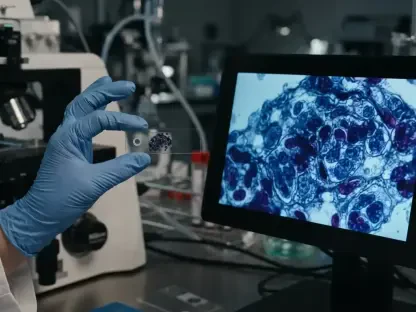

The persistent struggle against KRAS mutations has long been a defining battle in modern oncology, representing a target once thought to be totally unreachable by conventional drug design due to the protein’s lack of accessible binding pockets. For decades, clinicians and researchers faced a daunting wall when dealing with non-small cell lung cancer, colorectal cancer, and pancreatic ductal adenocarcinoma, where KRAS variants frequently drive aggressive tumor growth and resistance to standard therapies. However, the recent emergence of darlifarnib marks a significant shift in this narrative, demonstrating a level of molecular efficacy that suggests the “undruggable” era has finally concluded. By utilizing an innovative covalent binding mechanism, this novel small molecule specifically locks onto the mutant protein in its inactive state, effectively preventing the downstream signaling cascades that otherwise fuel uncontrolled cellular proliferation.
Evolution of Targeted Therapy Design
Molecular Architecture: The Specificity of Darlifarnib
The chemical structure of darlifarnib is engineered to exploit a specific cysteine residue located deep within the Switch II pocket of the KRAS protein, a site that was historically considered too narrow for therapeutic intervention. Unlike earlier generation inhibitors that struggled with limited residency time or low affinity, this compound forms a highly stable bond that ensures prolonged suppression of the oncogenic signal throughout the cellular lifecycle. This structural precision allows darlifarnib to maintain high selectivity for the G12C and G12D mutations while sparing the wild-type protein, thereby significantly reducing the risk of off-target toxicities that often plague systemic chemotherapy regimens. By focusing on the unique biochemical signature of the mutation, researchers have successfully developed a tool that acts like a molecular key, fitting perfectly into the mutant structure to shut down its activity without disrupting healthy cellular functions in patients.
Central Nervous System Penetration: A New Therapeutic Frontier
Beyond the immediate binding affinity, the pharmacological profile of darlifarnib incorporates advanced pharmacokinetic properties that enable it to cross the blood-brain barrier with unprecedented efficiency for its class. This capability is particularly vital for patients whose KRAS-mutant cancers have metastasized to the central nervous system, a complication that previously carried a very poor prognosis due to the lack of effective intracranial drug penetration. Current laboratory models and early clinical observations suggest that the drug maintains therapeutic concentrations in brain tissue long enough to induce significant regression of metastatic lesions, offering a new lifeline to a demographic with few remaining options. Furthermore, the metabolic stability of the molecule ensures that it remains active within the bloodstream for extended periods, allowing for a more manageable dosing schedule compared to its predecessors, ultimately enhancing overall compliance.
Clinical Performance and Future Trajectory
Comparative Analysis: Impact on Patient Survivability
Recent data from multi-center clinical trials conducted throughout 2026 revealed that patients receiving darlifarnib experienced a median progression-free survival that significantly outperformed the results seen with historical standard-of-care treatments. The objective response rates reached levels that were previously unattainable in late-stage KRAS-mutant lung and colorectal populations, with many participants achieving durable partial or complete remissions that lasted well beyond the expected timeframe. These results are bolstered by a favorable safety profile, characterized by a low incidence of Grade 3 or higher adverse events, which allows patients to maintain a high quality of life while undergoing intensive targeted therapy. The robustness of this data has prompted a rapid expansion of clinical testing into first-line settings, where the drug is being evaluated both as a monotherapy and in combination with existing immune checkpoint inhibitors to maximize therapeutic effects.
Strategic Implementation: Shifting the Diagnostic Paradigm
The medical community recognized that the success of darlifarnib paved the way for a broader application of allele-specific inhibitors across a wider range of genetic variants. Regulatory bodies fast-tracked the approval process for darlifarnib in several key international markets, reflecting the urgent need for more effective interventions in the KRAS-driven cancer space. Pharmaceutical developers shifted their focus toward integrating this compound into standard diagnostic and treatment workflows, ensuring that genomic sequencing became a mandatory step for all newly diagnosed oncology patients. As a result of these developments, healthcare providers began implementing comprehensive screening protocols to identify candidates who would benefit most from this targeted approach, effectively transforming the management of formerly terminal conditions. Moving forward, the industry prioritized the development of similar molecules for rarer KRAS mutations, utilizing the structural blueprints established during these trials.