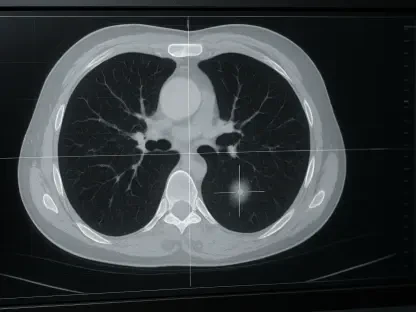

The silent migration of malignant cells toward the skeletal system remains the most significant threat to the long-term survival of patients diagnosed with high-risk prostate cancer. For decades, clinicians have operated under a significant diagnostic disadvantage, relying on structural imaging that often fails to reveal the earliest signs of bone involvement. This clinical blind spot allows “occult” or hidden metastases to take root while the disease is still categorized as localized, leading to the potential under-treatment of an inherently aggressive malignancy.
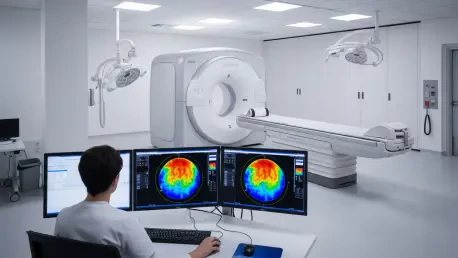
Prostate-Specific Membrane Antigen (PSMA) Positron Emission Tomography (PET) imaging has emerged as a disruptive force in this traditional diagnostic landscape. By targeting the PSMA protein overexpressed on the surface of cancer cells, this molecular technique allows for a level of detection that was previously impossible. It provides a biological snapshot of the disease, identifying microscopic clusters of cells long before they cause the structural changes detectable by legacy technology.
Identifying Low-Volume Metastatic Disease Through Molecular Imaging
The shift from structural to molecular imaging represents a paradigm change in the management of high-risk prostate cancer. While traditional scans focus on bone mineral density or anatomical changes, PSMA PET utilizes highly specific tracers to highlight cancer activity at the cellular level. This capability is crucial because bone remains the most common site for distant spread, and early detection in this area fundamentally alters the therapeutic roadmap for the patient.
Addressing the challenge of “occult” metastases is a priority for modern oncology centers seeking to eliminate diagnostic uncertainty. When these hidden lesions evade detection, patients often undergo localized treatments like surgery or radiation that may not address the systemic nature of their disease. PSMA PET bridges this gap by providing a more accurate diagnostic picture, ensuring that the clinical stage matches the biological reality of the cancer’s progression.
The Evolution of Diagnostic Staging and Its Clinical Importance
Historically, the reliance on Computed Tomography (CT) and technetium-99m bone scans created a ceiling for diagnostic accuracy. These modalities are limited by their sensitivity; they often require a significant volume of tumor growth or bone reaction to produce a positive signal. Consequently, many patients with early-stage spread were classified as having localized disease, a miscategorization that can lead to rapid recurrence and missed opportunities for early systemic intervention.
Accurate staging at the point of initial diagnosis is the cornerstone of effective cancer care, especially for aggressive phenotypes. As molecular imaging becomes the new gold standard in major oncological centers, the definition of “localized” disease is being redefined. By catching the disease during its early transition to the skeleton, clinicians can pivot away from failing local strategies and move toward more robust, life-extending protocols that target the cancer wherever it resides in the body.
Research Methodology, Findings, and Implications
The integration of advanced molecular tracers into routine practice requires rigorous validation through clinical data and comparative studies. Researchers have sought to determine whether the lesions found exclusively on PSMA PET carry the same clinical weight as those found on older scans. This inquiry is essential for justifying the shift toward more intensive treatment models for patients who were previously thought to have much lower disease volumes.
Methodology
The investigation utilized a retrospective study design, analyzing patient data from prestigious academic institutions including the University of California, San Francisco, and UCLA. The study focused on a specific cohort of patients who were diagnosed with “low-volume” metastatic disease—defined as having one to five skeletal lesions identified only through PSMA PET. This group was critical because their traditional scans showed no evidence of cancer spread, placing them in a unique diagnostic category.
A comparative analysis was then conducted between these patients and a much larger cohort of nearly one thousand individuals who had negative PSMA PET scans. The research team meticulously tracked clinical outcomes, including the time to disease progression and overall survival rates. This methodology allowed for a direct assessment of whether these “PET-only” lesions were merely incidental findings or true indicators of a more dangerous and aggressive disease state.
Findings
The results of the study revealed a staggering 80 percent upstaging rate, meaning that four out of five patients with PET-detected bone metastases had received “normal” results from conventional imaging. This finding confirmed that legacy scans are frequently blind to the early stages of skeletal spread. Furthermore, the clinical risks associated with these hidden lesions were far higher than expected, as these patients showed a fivefold higher probability of progressing to castration-resistant prostate cancer.
The discovery that even minimal bone involvement correlates with a fourfold increase in mortality risk provided the most sobering evidence for the technology’s diagnostic power. The data indicated that these low-volume metastases were not indolent; they behaved with the same biological aggression as high-volume disease. Even when only one or two lesions were visible, the patient’s long-term health prospects mirrored those of more advanced cases, necessitating a complete re-evaluation of their risk profile.
Implications
The necessity for “therapy intensification” became a central theme following these findings, as the study proved that localized treatment alone is often insufficient for these patients. By identifying disease that was previously hidden, PSMA PET effectively moves patients out of the diagnostic “gray zone” and into a category that requires more aggressive systemic frameworks. This shift is vital for preventing the progression of the disease and improving the likelihood of long-term remission.
Ultimately, the data supported a decisive transition from a prostate-centric treatment model to a systemic one for upstaged patients. Utilizing this information allows for a more personalized approach where the intensity of the therapy matches the true extent of the malignancy. This transition ensures that medical resources are directed appropriately, providing a much-needed correction to the historical under-treatment of patients with micro-metastatic spread.
Reflection and Future Directions
The success of PSMA PET as a diagnostic tool reflects a broader movement toward precision oncology where imaging acts as a predictive window. Rather than just identifying the presence of a tumor, modern imaging provides insight into how that tumor will likely respond to specific treatments over time. This predictive power is the key to closing the gap between advanced technology and improved clinical outcomes for patients worldwide.
Reflection
The ability of PSMA PET to serve as a harbinger for long-term health outcomes validated its role as an indispensable part of the staging process. Reflecting on the transition from traditional scans, it is clear that molecular imaging provides a more honest assessment of a patient’s biological state. Reclassifying patients who were once thought to have localized disease was a necessary challenge that ultimately protected them from ineffective and incomplete treatment paths.
The significant mortality risks associated with even minimal bone involvement underscored the importance of early detection in the skeleton. Bridging the gap between imaging innovation and clinical application remained a priority as the data solidified PSMA PET’s standing. This technology did not just provide clearer pictures; it provided a more accurate understanding of the disease’s aggressive potential, allowing for better-informed medical decisions.
Future Directions
Future research suggested a need to explore the most effective combinations of hormone therapy, chemotherapy, and radiation for patients with PET-only metastases. As these patients are now identified earlier, the focus moved toward optimizing the timing and duration of systemic treatments to maximize survival. Standardizing these findings into global treatment guidelines became an essential next step to ensure that staging practices were uniform across all healthcare systems.
There also remained a critical need to increase the accessibility of molecular imaging outside of specialized academic medical centers. Ensuring that community hospitals have the infrastructure to provide PSMA PET scans was identified as a key goal for the coming years. Expanding access will allow a broader population of patients to benefit from the precision of molecular staging, regardless of their proximity to major research hubs.
Redefining the Standard of Care in Prostate Oncology
The transformative role of PSMA PET in detecting hidden skeletal spread significantly improved the accuracy of initial cancer staging. The investigation proved that “occult” metastases are clinically aggressive and require immediate, intensive attention rather than a watchful waiting approach or localized intervention. By highlighting the risks inherent in low-volume bone disease, the research facilitated a necessary evolution in the way clinicians approached high-risk cases.
The move toward personalized medicine was accelerated by the integration of these molecular insights into daily clinical practice. Physicians recognized that the survival of their patients depended on the ability to detect and treat cancer at its earliest metastatic stage. Ultimately, the data confirmed that PSMA PET is the essential tool for identifying the true scope of prostate cancer, ensuring that every patient receives a treatment plan tailored to the reality of their condition.