
More than five decades after the conclusion of regional conflicts, hundreds of thousands of Vietnamese families continue to wait for definitive news regarding the location and identification of their missing loved ones. The Vietnamese government has intensified its commitment to resolving these cases by deploying sophisticated biotechnological frameworks designed to handle severely degraded biological samples. Estimates suggest that approximately 300,000 soldiers remain unidentified, often resting in mass graves or remote locations where the elements have ravaged organic remains. In 2026, the transition from traditional forensic methods to high-throughput genetic sequencing marks a pivotal shift in the nation’s restorative justice efforts. This technological evolution addresses the profound difficulties posed by the humid, acidic soil of Southeast Asia, which typically destroys standard DNA markers within a few decades. By modernizing laboratory infrastructure and training a new generation of molecular biologists, the state aims to provide closure to an aging generation of relatives while creating a comprehensive genetic legacy for the country.
1. Scrubbing and Purifying the Bone Samples
Scrubbing and purifying bone samples represents the first critical phase in the recovery pipeline where technicians mitigate the impact of environmental contamination. Each fragment retrieved from the field undergoes a rigorous decontamination protocol to remove exogenous DNA from soil microbes, fungi, and modern handlers. The process involves washing the remains with ultra-pure water and specialized chemical solutions that strip away surface biofilms without compromising the internal structural integrity of the bone. Scientists often use ultrasonic baths to dislodge microscopic debris trapped within the porous matrix of the skeletal remains, ensuring that the final material is as pristine as possible before chemical digestion. This meticulous preparation is vital because even a single foreign skin cell or bacterial strand can overwhelm the sensitive amplification processes used later in the sequence. By standardizing these purification rituals, laboratories ensure that the resulting data reflects the soldier’s actual genome rather than the surrounding environment.
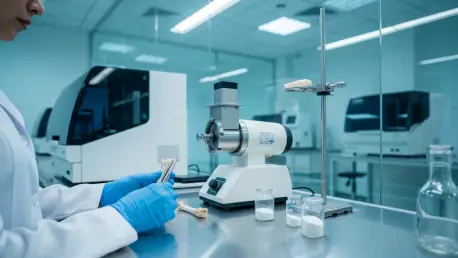
Once the external surfaces are verified clean, the next objective involves pulverizing the remains into a fine dust to maximize the surface area for molecular extraction. This transformation is achieved through the use of high-speed laboratory grinders, often operating at cryogenic temperatures to prevent heat-induced damage to the delicate genetic strands. Fragments are submerged in liquid nitrogen, which renders the bone extremely brittle and allows it to be crushed into a consistent powder with minimal mechanical friction. This powder, often resembling the consistency of flour, is then weighed and distributed into sterile vials for the subsequent chemical phases. The move toward automated grinding systems in 2026 has increased the throughput of national laboratories, allowing for the simultaneous processing of dozens of samples while maintaining strict isolation. This physical reduction is essential for breaking down the mineralized hydroxyapatite structure that protects the DNA, making it accessible for the powerful enzymes and reagents used.
2. Isolating and Mapping the Genetic Material
Isolating the genetic material from the bone dust requires a sophisticated chemical extraction process that separates the double-helix molecules from calcium and proteins. In 2026, researchers utilize advanced silica-column technologies and magnetic bead separation to pull the DNA out of the liquid lysate produced during the digestion of the bone powder. This stage is particularly challenging for older remains, as the DNA is often fragmented into tiny pieces rather than long, continuous strands. Technicians must use specialized reagents that are optimized for short fragment recovery, ensuring that even the most degraded genetic signatures are preserved. The resulting liquid, known as the DNA extract, contains the concentrated essence of the soldier’s identity, though it is still invisible to the naked eye. Frequent quality checks are performed using fluorometric quantification to ensure that the yield is sufficient for the complex sequencing procedures that follow. This extraction excellence is the foundation upon which all subsequent identification successes are built.
With the purified DNA in hand, the focus shifts to mapping the sequences and decoding the genetic profile using high-resolution Next-Generation Sequencing platforms. This technology allows scientists to read billions of base pairs simultaneously, identifying specific markers such as Single Nucleotide Polymorphisms that are unique to an individual. Unlike older methods that relied on larger, intact samples, current mapping techniques are designed to stitch together the broken fragments of the genetic code into a cohesive digital representation. By comparing these sequences against a reference human genome, the laboratory can determine the soldier’s ancestry, physical traits, and specific lineage markers. This digital map serves as the permanent record of the individual, which can be stored indefinitely in secure servers for comparison against any potential family member. The precision of this mapping is so high in 2026 that it can distinguish between closely related individuals, which is a necessity when multiple family members may have perished in the same conflict.
3. Cross-Referencing Results With Family Records
The final technical hurdle involves cross-referencing the newly generated genetic profiles with the extensive national database of family records and DNA samples. This comparative analysis looks for high degrees of similarity in mitochondrial DNA, which is passed down through the maternal line, or autosomal markers that indicate direct kinship. In 2026, the Vietnamese government maintains a robust infrastructure for collecting biological samples from relatives of the missing, creating a vast search space for potential matches. Sophisticated algorithms calculate the probability of kinship, providing a statistical confidence level that must exceed 99.9 percent before a positive identification is declared. This process often brings together disparate pieces of evidence, such as the location of the recovery and historical military records, to provide a holistic verification of the soldier’s identity. When a match is found, it transforms an anonymous set of remains into a named individual with a history, a family, and a rightful place in the national memory.
The successful integration of these advanced genomic workflows provided a transformative solution for identifying the nation’s fallen heroes. Forensic experts established a refined protocol that overcame the environmental barriers of the past, ensuring that no sample was considered too degraded for analysis. The project prioritized the expansion of the national DNA databank, which allowed for thousands of successful matches that had previously been deemed impossible. Families who waited decades for news finally received the definitive closures they sought, as the identification process became a cornerstone of the country’s humanitarian efforts. Moving forward, the focus shifted toward automating the early stages of sample preparation and fostering international partnerships to share best practices in ancient DNA recovery. These initiatives ensured that the legacy of those who served was honored with scientific precision and profound cultural respect. The systematic approach to genetic verification redefined the intersection of technology and national heritage.