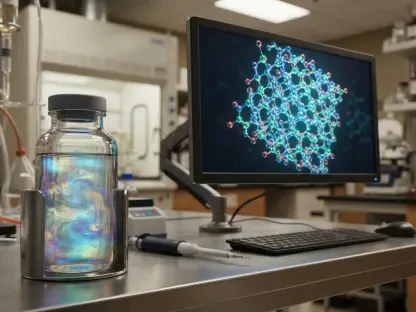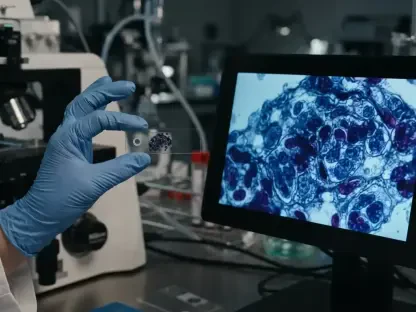

The transition from traditional trial-and-error chemical assays to high-precision computational forecasting has effectively rewritten the blueprint for modern therapeutic development across the global pharmaceutical industry. This evolution is particularly evident in the fight against Idiopathic Pulmonary Fibrosis, a condition where the clock ticks relentlessly against the patient and current treatments offer only a modest delay in progression. Historically, finding a compound that could navigate the complex signaling of lung scarring felt like searching for a needle in a haystack of millions of possibilities. Machine learning has fundamentally altered this search by providing a digital compass that points directly toward high-probability candidates before a single pipette is ever touched.
The emergence of these computational frameworks represents a response to the “Eroom’s Law” phenomenon, where the cost of developing new drugs has increased exponentially despite technological gains. By integrating deep learning with structural biology, researchers are now moving toward a “top-down” approach that prioritizes molecular logic over random screening. This shift allows the industry to move beyond general-purpose medicine toward targeted interventions that address the specific molecular drivers of fibrosis, such as the TGF-β pathway, with unprecedented speed.
Introduction to Machine Learning in Pharmaceutical Research
The core principle of machine learning in this context involves training algorithms to recognize the subtle patterns that define an active drug molecule. Unlike traditional software that follows rigid rules, these systems learn the “language” of chemistry through exposure to massive datasets of known molecular interactions. This technology has evolved from simple regression models to complex neural networks that can simulate how a compound will dock into a human protein, predicting efficacy without the immediate need for animal testing.
This evolution is significant because it democratizes the discovery of rare disease treatments. In the broader technological landscape, ML-driven discovery serves as a bridge between high-performance computing and clinical medicine. It allows for the rapid exploration of vast chemical spaces, including natural product libraries that were previously too complex to screen manually. Consequently, the focus is shifting from simply discovering drugs to understanding the underlying mechanics of why a specific molecule works against a specific disease.
Essential Components: ML-Driven Discovery Architectures
Molecular Representation: The Uni-Mol Framework
The success of any predictive model depends heavily on how it “sees” a molecule. The Uni-Mol framework represents a leap beyond traditional 2D fingerprints, which often fail to account for the spatial reality of atoms. By utilizing a three-dimensional representation, Uni-Mol captures the geometric constraints and electronic properties that dictate how a molecule fits into a biological receptor. This spatial awareness is what allows the system to differentiate between compounds that look similar on paper but behave differently in the body.
Furthermore, this framework functions as a universal backbone for various downstream tasks, from predicting toxicity to estimating binding affinity. Its performance is rooted in its ability to process structural data in a way that mimics actual physical forces. This level of detail ensures that the candidates emerging from the digital screen are not just statistical anomalies but are chemically viable entities with a high likelihood of successful synthesis and biological activity.
Predictive Modeling: Performance Metrics
To transition from a digital prediction to a clinical reality, a model must prove its reliability through rigorous validation. Key metrics like the area under the precision-recall curve (AUPRC) and the area under the receiver operating characteristic curve (AUROC) serve as the benchmarks for this performance. In recent studies, achieving an AUPRC of 0.936 and an AUROC of 0.902 indicates a superior ability to filter out “false positives”—compounds that appear active in simulations but fail in the laboratory.
The real-world usage of these metrics involves testing the model against external databases like ChEMBL to ensure it can generalize its knowledge to new, unseen chemical structures. This predictive power is essential for navigating the immense variety of herbal and synthetic compounds. By maintaining such high performance, the system significantly reduces the “attrition rate” in drug development, ensuring that the expensive experimental phase is reserved only for the most promising molecules.
Current Trends: Computational Pharmacology
A dominant trend in the current landscape is the resurgence of interest in natural products, facilitated by AI’s ability to decode complex botanical chemistry. Researchers are increasingly turning to massive libraries of herbal compounds, seeking “multitarget” molecules that can modulate several pathways at once. This shift reflects a move away from the “one drug, one target” philosophy, acknowledging that complex diseases like fibrosis require more holistic interventions.
Moreover, there is a growing emphasis on the integration of “dry lab” predictions with “wet lab” validation. Innovations now allow for real-time feedback loops where experimental data from cellular assays is fed back into the machine learning model to refine its accuracy. This iterative process has created a more dynamic and responsive research environment, where the boundaries between computer science and biology are becoming increasingly blurred.
Practical Implementation: Inhibiting the TGF-β/ALK5 Signaling Cascade
The deployment of this technology has led to the identification of dihydromyricetin (DHM) as a potent inhibitor of the ALK5 receptor, a master regulator of lung scarring. By binding directly to the kinase domain of the receptor, DHM effectively mutes the signals that trigger excessive collagen production. This specific use case demonstrates how ML can pinpoint a single effective compound from a library of over 16,700 candidates, a feat that would take years using conventional methods.
Beyond identifying the compound, ML helped map the entire inhibitory mechanism, showing how DHM prevents the transformation of healthy cells into scar-forming myofibroblasts. This application is currently being explored in the respiratory sector, where DHM’s favorable safety profile and water solubility make it an ideal candidate for inhaled therapies. Such successful implementations serve as a proof of concept for using AI to tackle other fibroproliferative diseases, including those affecting the heart and kidneys.
Technical and Clinical Hurdles
Despite the rapid progress, several technical hurdles remain, particularly regarding the “black box” nature of some deep learning models. Regulatory bodies often require a clear explanation of how a model arrived at a specific prediction before they will approve a compound for human trials. This lack of interpretability can slow down the adoption of even the most accurate systems, necessitating the development of more transparent AI architectures that can explain their molecular logic.
Additionally, the quality of training data presents a constant challenge. If the initial dataset is biased or contains errors, the resulting model will mirror those flaws. Market obstacles also include the high cost of the initial computational infrastructure and the need for specialized personnel who are fluent in both data science and pharmacology. Overcoming these limitations requires a concerted effort to standardize data collection and improve the explainability of clinical AI.
Future Directions: AI-Enhanced Medicine
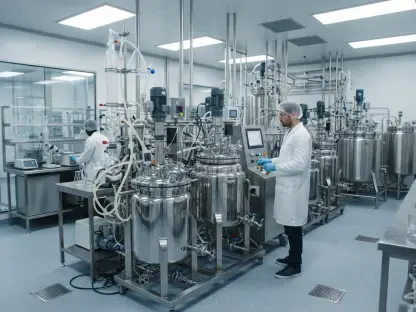
The trajectory of this technology points toward a future of automated, autonomous drug discovery pipelines. We are likely to see the integration of ML with robotic synthesis laboratories, where the computer not only designs the drug but also directs the machines to create it. This would further compress the timeline from disease identification to treatment availability, potentially allowing for the rapid development of personalized therapies tailored to an individual’s unique genetic profile.
In the long term, the impact of these advancements will extend beyond drug discovery into the realm of preventive medicine. By predicting how a disease will evolve at the molecular level, AI-enhanced systems could suggest lifestyle or pharmacological interventions before clinical symptoms even appear. This proactive approach has the potential to transform healthcare from a system of reactive treatment to one of continuous, data-driven wellness management.
Concluding Assessment
The review of these computational advancements confirmed that the integration of machine learning into the pharmacological pipeline yielded substantial dividends. The identification of dihydromyricetin as a viable treatment for pulmonary fibrosis stood as a primary example of how digital screening successfully bypassed the bottlenecks of traditional research. This methodology proved that high-performance models like Uni-Mol could navigate the intricacies of protein-ligand interactions with a level of accuracy that was previously unattainable.
The evaluation underscored a fundamental shift toward more efficient, data-centric research strategies that maximized the potential of existing chemical libraries. Researchers established that the synergy between AI and experimental biology not only accelerated the discovery process but also provided deeper mechanistic insights into complex diseases. Ultimately, these developments represented a decisive step toward a future where the marriage of computational intelligence and natural chemistry would redefine the boundaries of medical possibility.