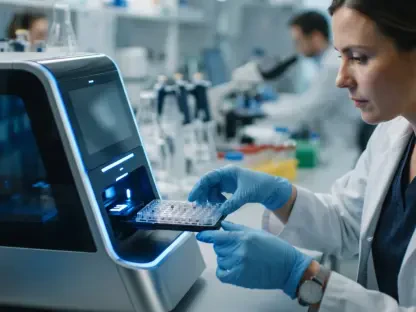

The global manufacturing landscape is currently undergoing a seismic shift as traditional chemical processes are being replaced by biological systems that utilize living organisms to create essential materials. Nova Scotia is positioning itself at the forefront of this industrial revolution by announcing a strategic one-million-dollar investment through Research Nova Scotia to bolster the province’s biomanufacturing capabilities. This funding is specifically directed toward the Verschuren Centre for Sustainability in Energy and the Environment, located at Cape Breton University, which serves as a vital bridge between laboratory innovation and commercial viability. By providing the financial resources necessary to bridge the gap between academic discovery and industrial scale, the provincial government is signaling a long-term commitment to high-tech growth. This initiative is designed to ensure that promising startups can navigate the treacherous transition to mass production without leaving the province. Strengthening this sector helps the region remain competitive.
Bridging the Gap: Overcoming the Scaling Bottleneck
One of the most significant obstacles in the journey of a biotechnology startup is the phase often referred to as the “valley of death,” where small-scale laboratory successes fail to translate into profitable industrial production. While a research team might successfully engineer a microbe to produce a specific protein in a test tube, reproducing that result in a ten-thousand-liter fermentation tank involves a completely different set of engineering challenges. These hurdles include maintaining precise temperature controls, ensuring oxygen saturation, and managing the physical stresses placed on living cells at high volumes. For many young companies, the cost of the specialized equipment required to test these variables is prohibitively high, leading to a bottleneck that can stall innovation for years. This investment addresses this gap by funding the hardware and technical support necessary to prove that these biological processes are not only scientifically sound but also commercially viable. By lowering entry barriers, the province allows smaller firms to compete on a global level.
The Verschuren Centre functions as a specialized incubator that mitigates these risks by providing shared infrastructure that individual startups would find impossible to finance independently. By offering access to advanced fermentation equipment and downstream processing units, the facility allows entrepreneurs to focus on refining industrial protocols rather than worrying about capital expenditures. A primary focus of the current expansion involves the technical tasks of separation and purification, essential for creating bio-based products that meet the stringent purity standards of the global market. Without these sophisticated purification systems, a bio-based chemical cannot be integrated into food-grade supply chains, regardless of how innovative the science might be. The center provides the specialized engineering expertise required to optimize these processes, ensuring that every liter of product harvested from a bioreactor is of the highest quality. This technical support is vital for transforming biological batches into refined products ready for the consumer marketplace.
Precision Fermentation: Redefining Industry through Microbes
At the heart of this technological transformation is a process known as precision fermentation, which utilizes genetically optimized microbes to act as microscopic manufacturing plants. Instead of relying on traditional extraction methods that require massive amounts of land or fossil fuels, this method grows specific molecules in controlled environments. These bio-manufactured substances serve as the fundamental building blocks for many consumer goods, including everything from performance fabrics to food ingredients. Because these microbes can be programmed to produce nearly any organic molecule, the potential for market disruption is immense, offering a way to decouple industrial production from resource depletion. This approach allows for the creation of materials chemically identical to petroleum-derived counterparts but with a lower carbon footprint. The province is betting that these sustainable alternatives will soon become the standard in trade. Such a shift enables industries to produce complex goods while significantly reducing their environmental impact.
The transition toward bio-based manufacturing represents a fundamental shift toward a circular economy where materials are grown in a sustainable loop rather than extracted and discarded. By integrating these bio-molecules into existing manufacturing streams, companies can reduce their environmental impact without having to redesign entire production lines or sacrifice performance. This compatibility is a key selling point for established corporations looking to meet climate targets while maintaining the functionality of their legacy products. The Verschuren Centre is working to refine these bio-based alternatives so they can replace petrochemicals in products like biodegradable plastics and eco-friendly dyes. As global regulations tighten around plastic waste, the demand for these “drop-in” biological solutions is expected to grow. This investment ensures that Nova Scotian companies are prepared to meet that demand by providing a stable platform for the improvement of these technologies. This proactive approach helps the local economy transition away from legacy systems.
Strategic Resource Allocation: Machinery and Digital Integration
The one-million-dollar investment is being carefully distributed across priority areas to ensure the highest possible return for the regional economy. A substantial portion of the capital is being used to acquire high-tech diagnostic machinery and automated control systems that allow for precise monitoring of biological reactions. Furthermore, the funding supports the hiring of specialized consultants who bring years of experience in chemical engineering and market navigation to the startups housed at the center. These experts provide the strategic guidance necessary to move products through complex regulatory hurdles in the United States and Europe, which is often a major barrier for small firms. By building a robust internal team, the Verschuren Centre can manage multiple high-stakes projects simultaneously, increasing the throughput of innovation. This holistic approach ensures that the center provides not just the physical tools, but also the intellectual capital required for long-term commercial success in a competitive global landscape.
In an effort to future-proof the industry, the center is prioritizing the integration of artificial intelligence and digital twin technology into its scaling operations. This involves creating digital models of physical bioreactors, allowing engineers to simulate different production scenarios and predict failures before they occur in the real world. This digital integration is coupled with a focus on “knowledge transfer,” where the expertise of veteran industry professionals is captured and converted into repeatable digital blueprints. As the older generation of engineers approaches retirement, capturing this knowledge is vital for maintaining the momentum of the biotech sector. AI-driven diagnostic systems can identify subtle patterns in data that human observers might miss, leading to higher yields and more efficient resource usage. By leveraging these advanced digital tools, the center is creating a highly efficient environment that can adapt to the changing needs of the global market. This creates a lasting technological advantage for the region.
Regional Prosperity: Economic Growth and Market Applications
The diverse group of companies currently operating out of the Verschuren Centre illustrates the broad economic potential of this investment across various sectors. For instance, some innovators are focusing on the textile industry by developing sustainable dyes that eliminate the toxic waste associated with traditional garment manufacturing. Other teams are working on advanced polymers that offer the durability of traditional plastics but break down safely in the environment after their useful life is over. These projects are the foundations of new companies that will provide high-quality, high-paying jobs for the local workforce. By fostering a cluster of related industries in Cape Breton, the province is creating a resilient economic ecosystem that is less dependent on traditional seasonal industries. The success of these individual ventures collectively contributes to a stronger provincial brand as a leader in green technology. This strategic concentration of talent and resources turns the province into a magnet for high-growth technology firms.
Beyond local economic benefits, the Verschuren Centre is being recognized as a global destination for engineering excellence and bio-innovation. Firms from Europe and the United States have already begun to take notice of the specialized equipment available in Nova Scotia, leading to new international partnerships and investment opportunities. This global interest helps to diversify the province’s economic base and brings international talent to the region, further enriching the local innovation culture. The ability to attract foreign direct investment into the biotechnology sector is a clear indicator that the province’s strategy is working on a global scale. By positioning itself as a key node in the international bio-economy, Nova Scotia is ensuring its long-term competitiveness in a world that is moving away from fossil-fuel-based manufacturing. The center’s role as a catalyst for international business development underscores the importance of maintaining a cutting-edge technological infrastructure in Atlantic Canada. This path provides a stable foundation.
Future Considerations: Sustaining the Biomanufacturing Ecosystem
The long-term success of the initiative depended heavily on the creation of a specialized talent pipeline that could sustain the growing demand for biotechnological expertise. Educational programs at Cape Breton University were adjusted to include more hands-on training in large-scale fermentation and bioreactor management, ensuring that graduates were ready to enter the workforce immediately. This focus on human capital complemented the physical infrastructure, creating a well-rounded environment where innovation could flourish over the long term. By retaining local talent, the province avoided the brain drain that often affects smaller jurisdictions, keeping high-value skills within the regional economy. This historical focus on education eventually established a self-sustaining cycle where experienced workers mentored the next generation of biomanufacturing professionals. The collaboration between academia and industry became a cornerstone of the province’s broader economic strategy for the decade.
Ultimately, the province recognized that physical infrastructure alone was not enough to maintain a global lead in the biomanufacturing sector. The next phase of development focused on streamlining regulatory pathways to allow bio-based products to reach consumers more efficiently while maintaining safety standards. Policymakers and industry leaders worked together to create a framework that encouraged the adoption of sustainable materials in government procurement and public works. This proactive stance provided a stable market for local companies and served as an example for other regions looking to modernize their industrial bases. As global competition for green technology intensified, Nova Scotia’s early investment in the Verschuren Centre provided the necessary head start to secure a significant share of the international market. This strategic move successfully transitioned the province into a hub of high-tech production that balanced economic growth with environmental responsibility. The leadership continued to emphasize the value of local expertise.