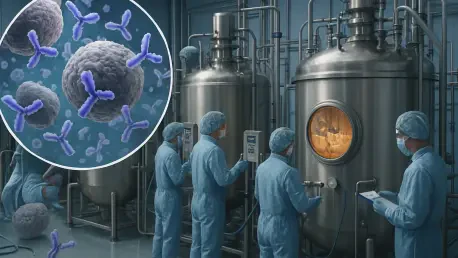

The biopharmaceutical landscape in 2026 operates as a high-stakes arena where the efficiency of protein production directly determines the accessibility of life-saving treatments for millions of patients. Central to this enterprise are Chinese hamster ovary (CHO) cells, which currently serve as the primary biological engine for more than 80 percent of therapeutic monoclonal antibodies manufactured worldwide. This industrial dominance is not accidental; CHO cells possess a remarkable ability to perform human-like post-translational modifications and exhibit significant adaptability when transitioned into large-scale suspension cultures. However, the path from successful laboratory-scale experiments to high-density, production-scale manufacturing is notoriously difficult and fraught with complex technical hurdles. While low-density cultures often maintain high viability and predictable behavior, the introduction of high-density fed-batch or perfusion systems frequently encounters problems like premature cell death and a sharp decline in antibody titers. These issues generally stem from a disconnect between the stability found in laboratory environments and the physical realities of massive production tanks where standard process parameters like pH and dissolved oxygen may appear correct but fail to reflect the true cellular experience.
Cellular Mechanics: Navigating the Sensitivity of CHO Cultures
Shear Stress: Addressing Lethal and Sublethal Forces
The physical fragility of Chinese hamster ovary cells remains a central concern when scaling up to high-density environments because these cells lack the protective rigid cell walls found in bacteria or yeast. Protected only by a delicate plasma membrane, CHO cells are exceptionally sensitive to the hydrodynamic forces generated by agitation and aeration within a large-scale bioreactor. Lethal shear occurs when these forces exceed the physical strength of the membrane, leading to immediate rupture or the activation of programmed cell death pathways that can rapidly decimate a culture. Research into cellular mechanics indicates that these lethal thresholds are not universal; they vary significantly between different cell lines and even between different stages of the cell cycle, meaning a “one-size-fits-all” approach to agitation speeds is rarely effective in high-density systems. As the industry pushes toward higher cell densities, the frequency of cell-to-impeller and cell-to-bubble collisions increases exponentially, making the management of mechanical energy input a critical factor for maintaining viability and ensuring that the biological factory remains functional throughout the duration of the production run.
Beyond the immediate concern of cell death, the more insidious threat in high-density scale-up is sublethal shear, which exerts pressure at levels far below the point of membrane rupture. Even moderate hydrodynamic forces can trigger intracellular signaling cascades that disrupt the normal cell cycle, impair protein synthesis, and force a significant shift in metabolic pathways. This subtle form of stress often leads to a decrease in the specific antibody production rate, effectively reducing the output per cell even if the total population remains alive. Furthermore, sublethal shear has been shown to alter critical product quality attributes, such as the glycosylation profile of the monoclonal antibodies being produced, without showing an immediate or obvious drop in total cell viability or density. This phenomenon creates a significant risk for manufacturers, as the resulting therapeutic proteins might fail to meet strict regulatory specifications for safety and efficacy. Understanding how mechanical stress translates into biochemical changes is therefore essential for developers who aim to optimize production without compromising the molecular integrity of the final drug product.
Membrane Integrity: Designing for Mechanical Resilience
Ensuring the survival of CHO cells in high-shear environments often requires the addition of chemical protective agents, with poloxamers like Pluronic F-68 being the industry standard for decades. These surfactants work by adsorbing onto the cell membrane, effectively creating a sacrificial layer that absorbs the energy from bubble ruptures and liquid turbulence. In high-density cultures, the demand for these protective agents can increase, as the higher concentration of cells and the required increase in aeration create a more aggressive environment. However, relying solely on chemical additives is not a perfect solution; excessive concentrations of surfactants can sometimes interfere with downstream purification processes or subtly alter the membrane permeability, affecting nutrient uptake and waste removal. Modern process development now emphasizes finding the precise concentration of these additives that provides maximum protection while minimizing interference with the cellular metabolism or the subsequent steps of drug recovery. This delicate balance is vital for maintaining the long-term stability of cultures that must remain productive for weeks at a time in a perfusion or extended fed-batch setup.
Building on chemical protection, the latest advancements in cell line engineering focus on increasing the inherent mechanical resilience of the CHO cell itself. By utilizing CRISPR-Cas9 and other gene-editing tools, researchers are targeting the genes responsible for the cytoskeleton and the structural proteins of the plasma membrane to create “hardened” cell lines capable of withstanding higher energy dissipation rates. These engineered cells can tolerate the intense mixing required for high-density mass transfer without suffering from the detrimental effects of shear-induced stress. This approach represents a fundamental shift in scale-up strategy, moving from simply modifying the bioreactor environment to modifying the biological substrate to fit the industrial environment. When these mechanically robust cell lines are combined with optimized media formulations, the result is a much more stable and predictable production platform. This synergy between genetic engineering and process chemistry allows manufacturers to push the boundaries of cell density further than previously possible, opening the door to significantly higher volumetric productivities in commercial manufacturing facilities.
Environmental Management: Controlling Chemical and Respiratory Factors
pH Homeostasis: Balancing Metabolic Shifts and Stability
Large-scale bioreactors face the challenge of regional pH gradients caused by longer mixing times compared to benchtop units. In a 2,000-liter tank, it can take thirty seconds or more for a concentrated acid or base addition to be fully distributed, creating zones where the pH deviates significantly from the set point. As cells circulate through these different zones, they experience “dynamic heterogeneity,” a state of constant oscillation between acidic and alkaline stress that is often more damaging than a steady but slightly off-target pH. Acidification is typically driven by the accumulation of lactate, a byproduct of inefficient metabolism, while alkaline conditions can be caused by the over-correction of pH or excessive stripping of carbon dioxide during aeration. These fluctuations inhibit the progression of the cell cycle and can significantly reduce the efficiency of the endoplasmic reticulum, where antibody folding and assembly take place. Consequently, the lack of spatial uniformity in large tanks often leads to inconsistent growth rates and lower overall productivity compared to smaller, well-mixed laboratory vessels.
The chemical impact of pH instability extends to the final structure of the therapeutic protein, particularly concerning charge heterogeneity and the formation of basic or acidic variants. When cells are exposed to localized alkaline stress near the point of base addition, the resulting antibodies may undergo chemical modifications that change their overall charge profile, which can negatively impact the stability and clinical efficacy of the drug. Furthermore, metabolic shifts associated with pH stress often lead to the production of non-growth-related metabolites that further complicate the purification process during downstream operations. To mitigate these risks, modern scale-up strategies focus on optimizing the location and number of addition ports, as well as refining the control algorithms to prevent the overshooting of chemical adjustments. By ensuring that the chemical environment remains stable across the entire volume of the bioreactor, manufacturers can achieve more predictable product quality and reduce the likelihood of batch rejection due to deviations in the molecular profile of the antibody.
Oxygen Delivery: Overcoming Extremes and Aeration Dilemmas
Oxygen availability is frequently the primary limiting factor in achieving ultra-high cell densities, yet managing its delivery is a complex balancing act that carries significant risks. When dissolved oxygen levels fall below a critical threshold, CHO cells often switch from aerobic respiration to anaerobic glycolysis, a process that produces significantly less energy and generates large quantities of lactic acid. This metabolic shift not only slows down cell growth but also contributes to the acidification of the culture medium, creating a negative feedback loop that further stresses the population. Conversely, in an attempt to avoid hypoxia, operators might increase the oxygen transfer rate to a point where hyperoxia occurs, leading to the formation of reactive oxygen species (ROS). These highly reactive molecules can cause extensive oxidative damage to cellular DNA, proteins, and lipids, ultimately triggering apoptosis. In a high-density environment, the oxygen demand is so intense that maintaining the proper balance requires a sophisticated understanding of both the biological consumption rate and the physical limitations of gas transfer.
The technical challenge of oxygenation is compounded by the fact that increasing gas flow rates through spargers introduces additional mechanical stress into the system. More bubbles rising through the culture medium mean more opportunities for bubble-induced shear stress, which is particularly damaging at the point where bubbles burst at the liquid surface. In large-scale bioreactors, the uneven distribution of gas can result in “dead zones” where cells suffer from oxygen deprivation, while cells near the sparger are exposed to excessive gas concentrations. This spatial imbalance creates a state of chronic metabolic stress that effectively limits the maximum viable cell density that can be sustained throughout a long production cycle. To overcome this aeration dilemma, engineers are increasingly turning to advanced sparging technologies and multi-stage aeration strategies that decouple the delivery of different gases. These innovations aim to maximize the oxygen mass transfer coefficient while minimizing the physical trauma associated with gas bubbles, allowing for the stable maintenance of high-density cultures without the typical drawbacks of aggressive aeration.
Engineering Innovation: Solutions for Process Stability
Computational Modeling: Utilizing Digital Mapping and Optimization
Advanced engineering tools have transformed the approach to bioreactor design by providing a detailed look at the internal environment through Computational Fluid Dynamics (CFD). These simulations allow engineers to map the flow fields and energy dissipation rates within a vessel, identifying localized areas of high shear and potential zones of poor mixing before a single cell is even introduced. By analyzing these digital twins, developers can refine the geometry of the tank and the placement of internal components to ensure that the hydrodynamic environment remains within the sublethal threshold even at high agitation speeds. This predictive capability is vital for high-density scale-up because it allows for the optimization of mass transfer—the movement of oxygen in and nutrients out—without subjecting the cells to unnecessary physical trauma. Utilizing CFD models ensures that the transition from a 50-liter seed bioreactor to a 2,000-liter production vessel is based on scientific data rather than empirical trial-and-error, significantly reducing the risk of process failure during the critical scale-up phase.
Hardware optimization also involves a strategic shift in the choice of impellers and the integration of high-precision sensing technology to monitor the culture in real-time. The industry has largely moved away from high-shear radial-flow designs, such as Rushton turbines, in favor of axial-flow impellers that promote efficient mixing with a much lower power input per unit volume. These low-shear designs create a more uniform environment that protects the fragile CHO cells while still providing the necessary circulation to prevent the formation of temperature or chemical gradients. Additionally, the incorporation of advanced sensors—capable of measuring not just pH and oxygen but also metabolic markers like glucose and lactate—allows for more responsive control systems. These sensors provide the data necessary for automated feeding and aeration adjustments, ensuring that the bioreactor can adapt to the changing needs of a high-density culture as it progresses through different growth phases. This integration of hardware and intelligence creates a robust manufacturing platform that can handle the complexities of modern bioprocessing with greater reliability and precision.
Operational Integration: Single-Use Systems and Holistic Control
Single-use bioreactor systems have emerged as a transformative technology for high-density scale-up by offering a level of flexibility and sterility that was previously difficult to achieve in traditional stainless-steel facilities. These systems utilize pre-sterilized plastic bags that eliminate the need for complex cleaning and validation procedures, which significantly reduces the turnaround time between production batches. For high-density cultures, single-use systems provide a highly controlled environment with specialized impeller designs and sparging setups that are specifically engineered to minimize shear stress. The modular nature of these systems also allows for rapid scaling, enabling manufacturers to move from development to commercial production more quickly and with lower capital investment. As single-use technology continues to evolve, it is becoming a preferred choice for companies looking to produce specialized or personalized biologics where agility and the prevention of cross-contamination are paramount to the success of the manufacturing operation.
The ultimate mastery of high-density scale-up required a holistic shift in how the biopharmaceutical industry perceived the relationship between the cell and its environment. Engineers and biologists successfully moved beyond treating the bioreactor as a simple container, instead viewing it as a dynamic system where every physical and chemical variable influenced the biological output. This progress was achieved through the integration of deep physiological knowledge with advanced modeling and hardware solutions, which transformed the scale-up process into a more predictive and reliable science. By prioritizing the stability of the “soft microcapsules” that are CHO cells, manufacturers established a robust framework that ensured the consistent production of complex therapeutic proteins. Looking back at the development cycles, the transition to these integrated systems provided the necessary foundation for meeting the increasing global demand for affordable biologics. Future efforts focused on further refining these control systems to reach even higher densities while maintaining the molecular integrity required for modern medicine.