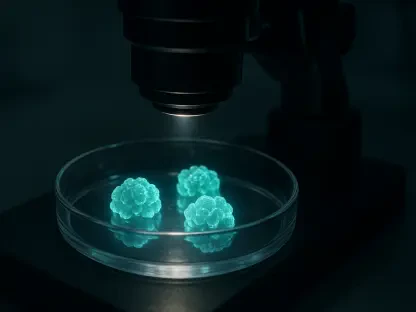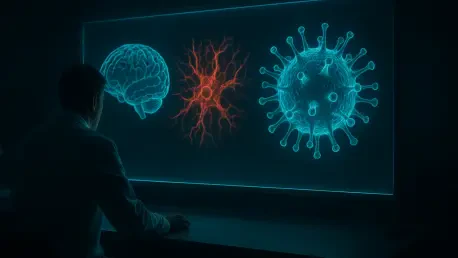

The recent establishment of a nineteen-million-dollar national hub for connectomics marks a decisive shift in how modern science navigates the intricate, sub-cellular wiring of the biological world. This massive investment by the National Science Foundation reflects a growing recognition that the next great frontier in the life sciences is not just identifying individual biological parts, but understanding how they are interconnected in a three-dimensional landscape. By centralizing high-throughput imaging and computational power, the initiative aims to bridge the gap between microscopic observation and massive data science. The project, centered at the University of Vermont, creates a shared resource that allows researchers to explore the internal universe of cells with the same precision that astronomers use to map the stars.
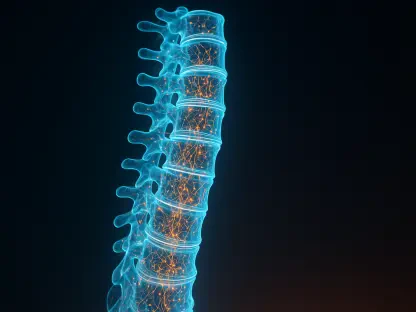
This transition from traditional, small-scale microscopy to large-scale connectomics is driven by a need for systemic transparency in biological systems. Historically, imaging was often limited to thin, two-dimensional slices that provided only a partial view of cellular architecture. Modern science now demands a more comprehensive approach where entire tissue volumes are reconstructed with nanometer-level resolution. This high-resolution 3D biological mapping is essential for understanding the fundamental mechanics of the brain, the specialized structures of sensory organs, and the physical barriers that protect or fail our most vital systems. By focusing on ultrastructure, researchers can finally see the fine-grained details that govern life at its most basic level.
Mapping the Biological Frontier Through Advanced Connectivity and Ultrastructure
The current scientific landscape is witnessing a profound shift from traditional light microscopy toward large-scale connectomics, a field dedicated to mapping the complex web of connections within biological systems. This evolution is necessitated by the inherent complexity of life, which cannot be fully understood through isolated snapshots. Instead, researchers are utilizing high-throughput volume electron microscopy to capture thousands of serial sections, which are then digitally aligned to form a coherent 3D model. This methodology allows for the visualization of every synapse and organelle, providing a structural roadmap that was previously invisible to the scientific community.
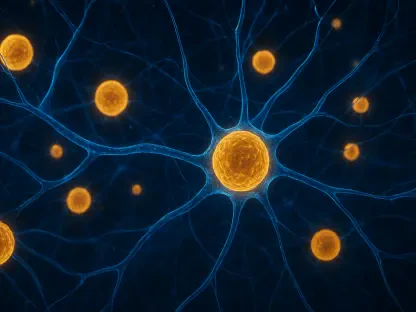
The significance of this high-resolution mapping in modern science cannot be overstated, as it provides the physical context for functional biological data. For instance, knowing that a certain protein is present in a cell is far less useful than knowing exactly where it is positioned in relation to a synaptic connection or a mitochondrial membrane. By defining the scope of biological research through connectivity, scientists can move toward a more holistic understanding of how structure dictates function. This architectural insight is particularly crucial for neurobiology, where the specific wiring of neurons determines how information is processed, stored, and retrieved.
Collaborative leadership is the cornerstone of this initiative, bringing together the unique strengths of the University of Vermont, the University of California San Diego, and the San Diego Supercomputer Center. UVM serves as the national coordinating hub, managing the sophisticated imaging pipeline and logistical framework. UCSD contributes its decades of expertise in complex sample preparation and high-resolution imaging, while the San Diego Supercomputer Center provides the petabyte-scale storage and processing power required to manage the resulting datasets. This synergy ensures that the observatory is more than just a laboratory; it is a national research ecosystem designed to support a wide range of scientific inquiries.
Emerging Trends and Market Projections in High-Throughput Imaging
Technological Drivers and Evolving Scientific Behaviors
The rise of connectomics is currently characterized by a move beyond simple invertebrate brains, such as the fruit fly, toward the much more complex neural systems found in mammals. While the successful mapping of the fruit fly brain in 2024 was a landmark achievement, the current focus in 2026 is on scaling these technologies to address the immense density and variety of mouse and human neural tissues. This shift requires a significant leap in both imaging speed and data management capabilities. As scientific behaviors evolve, there is an increasing emphasis on interdisciplinary cooperation, where biologists work alongside computer scientists and engineers to solve the challenges of large-scale observation.
Artificial intelligence integration has become the primary technological driver in this field, as the sheer volume of data generated by electron microscopy is far too vast for manual analysis. Machine learning algorithms are now utilized for automated cell segmentation and neural tracing, allowing researchers to identify and follow the paths of thousands of neurons simultaneously. This automated approach not only increases the speed of research but also enhances the consistency and accuracy of biological interpretations. By offloading the most labor-intensive tasks to AI, scientists are free to focus on the higher-level questions of how these structures influence behavior and disease.
The transition toward collaborative open science is perhaps the most transformative trend in the current research environment. The establishment of shared national research observatories represents a move away from the “siloed” model of science, where data is kept within individual laboratories. Instead, the focus is now on the democratization of data, ensuring that researchers from small institutions and diverse communities have access to the same high-level tools as those at elite universities. This inclusivity fosters a more vibrant and competitive scientific landscape, where breakthroughs can emerge from a wider variety of perspectives and research backgrounds.
Data Growth and Performance Metrics for the Next Decade
Scaling data capacity is a monumental task, as modern connectomics projects generate datasets that are measured in petabytes. Managing this surge requires a sophisticated infrastructure capable of not only storing the raw images but also providing the computational power for 3D reconstruction and analysis. From 2026 to 2030, the demand for high-performance computing in the life sciences is projected to grow exponentially. This necessitates a proactive approach to data curation, ensuring that these massive biological volumes remain searchable, accessible, and preserved for long-term use across the global scientific community.
Analysis of federal funding trajectories indicates a strong commitment to large-scale bio-infrastructure as a means of maintaining national competitiveness in the sciences. The nineteen-million-dollar grant from the NSF is just one example of how strategic investment is being used to build the foundations for future discovery. These funds are increasingly directed toward centralized facilities that can provide high-end services to a broad range of users. Performance benchmarks in this decade will likely be defined by throughput speeds in electron microscopy and the efficiency of AI-driven reconstruction, with the ultimate goal of mapping larger and more complex cellular systems in shorter timeframes.
Future forecasts for the field include significant milestones in mapping human neural pathways and entire cellular systems. As imaging technologies continue to improve, the possibility of creating a comprehensive atlas of the human brain becomes more tangible. These projections are not just about academic curiosity; they are closely tied to the development of new treatments for neurodegenerative diseases and the advancement of neuromorphic computing. By 2031, the standards for biological transparency will have been entirely redefined by the datasets currently being produced at the national hub, setting the stage for a new era of medical and technological innovation.
Technical and Logistical Hurdles in High-Volume Data Management
Computational bottlenecks represent one of the most persistent challenges in managing the high volume of data generated by 3D biological mapping. The process of moving petabytes of image data from microscopes to supercomputers requires specialized high-speed networks and robust data management protocols. Once the data arrives, the task of processing and aligning millions of individual images into a single, seamless volume is a feat of engineering that requires massive parallel processing capabilities. Strategically, implementing centralized data platforms and high-performance computing centers is the only way to address these storage and processing needs at scale.
Sample preservation and preparation also present significant physical limitations that must be overcome to ensure data quality. Biological tissues are incredibly delicate, and the process of preserving them in resin and slicing them into sections as thin as thirty nanometers is fraught with risk. Any physical distortion or loss of tissue during this phase can lead to gaps in the final 3D reconstruction, rendering the data less useful for scientific analysis. To address this, researchers are developing new automated slicing techniques and more stable preservation methods that minimize artifacts and maintain the structural integrity of the tissue across thousands of individual sections.
Algorithmic accuracy is another critical hurdle, as AI-driven interpretations must be high-fidelity to be scientifically valid. While machine learning has revolutionized the speed of neural tracing, these systems can still make errors, particularly in areas where the biological structures are highly complex or ambiguous. Ensuring that AI correctly distinguishes between different cellular organelles and follows the correct path of a neuron requires constant validation and refinement of the underlying models. The implementation of rigorous benchmarking and human-in-the-loop verification processes is essential for maintaining the high standards of accuracy required in biological research.
Regulatory Frameworks and Data Ethics in Large-Scale Biological Observation
Data governance and sovereignty are essential components of the national hub, as they establish the standards for how biological information is shared and curated. Via the National Data Platform, researchers are required to follow specific protocols for data entry, metadata labeling, and long-term storage. This structured approach ensures that the data is not only accessible but also usable by other scientists who may wish to analyze it for different purposes. These governance frameworks are designed to balance the need for open access with the necessity of maintaining the integrity and security of the scientific record.
Compliance in research is a mandatory requirement, particularly concerning the National Science Foundation mandates for open access. These regulations are designed to ensure that the results of taxpayer-funded research are made available to the public and the broader scientific community as quickly as possible. This policy promotes transparency and accelerates the pace of discovery by allowing multiple teams to work on the same datasets. However, navigating these mandates requires a careful understanding of intellectual property rights and the specific requirements for data sharing at different stages of the research process.
Security measures are increasingly important as biological data becomes more detailed and potentially sensitive. Protecting proprietary research methodologies and the integrity of massive datasets from cyber threats is a priority for the observatory. This involves implementing robust encryption, secure access controls, and regular audits of the data infrastructure. Furthermore, ethical considerations regarding detailed neural mapping are becoming more prominent. As we gain the ability to map the physical manifestations of memory and behavior, the scientific community must engage in a dialogue about the implications of this knowledge for privacy, individual identity, and bioethics.
The Horizon of Biological Discovery and Future Market Disruptors
Next-generation artificial intelligence is expected to be one of the most significant disruptors in the field, with biological wiring maps directly informing the design of neuromorphic computing. By understanding the hyper-efficient connectivity of natural neural systems, engineers can create hardware that mimics the brain’s ability to process information with minimal energy consumption. This cross-pollination between biology and computer science is likely to lead to a new class of processors that are more powerful and efficient than current silicon-based designs. The maps generated by the hub will serve as the blueprints for these future technological advancements.
Immersive analytics using virtual reality is also changing how researchers interact with complex cellular architecture. Traditional 2D monitors are often inadequate for visualizing the intricate, overlapping structures found in a 3D volume of brain tissue. VR allows scientists to physically “walk through” a dataset, providing a more intuitive understanding of spatial relationships and connectivity. This immersive approach is not just a tool for visualization; it is a new way of conducting analysis, allowing for more precise identification of synaptic connections and cellular anomalies that might be missed in a standard viewing environment.
Global competition and collaboration are shaping the international landscape of connectomics, as multiple nations launch their own large-scale imaging initiatives. Assessing these efforts is crucial for maintaining a leading role in biological discovery and ensuring that American researchers have access to the best possible tools and data. While competition drives innovation, collaboration remains necessary to tackle the most ambitious projects, such as a full map of the human brain. Clinical applications of this work are also on the horizon, with breakthroughs in neurodegenerative disease treatment and targeted drug delivery expected as a direct result of our improved understanding of the brain’s physical structure.
Summarizing the Transformative Potential of the NCUVO Initiative
The convergence of high-throughput microscopy, supercomputing, and educational outreach through the National Connectomics and Ultrastructure Volume Observatory represents a holistic approach to scientific advancement. This initiative is not merely about generating more images; it is about creating a comprehensive framework for understanding life at the nanoscale. By integrating research with education, the project ensures that the next generation of scientists is equipped with the tools and knowledge needed to navigate this data-rich future. The observatory stands as a testament to what can be achieved when different scientific disciplines align toward a common goal of transparency and discovery.
Strategic recommendations for the future of the field focus on continued investment in interdisciplinary research and the development of more robust data management tools. As the volume of information continues to grow, the scientific community must prioritize the creation of more efficient algorithms for data compression and automated analysis. Furthermore, expanding the accessibility of the national hub to a wider range of researchers will be essential for maximizing the return on the initial nineteen-million-dollar investment. Sustained support for this infrastructure is the key to unlocking the full potential of connectomics and ensuring that its benefits are felt across the entire spectrum of medicine and technology.
The establishment of the National Connectomics and Ultrastructure Volume Observatory acted as a catalyst for a new era of biological research by centralizing the most advanced imaging and computational resources available. The project demonstrated that the integration of high-throughput electron microscopy and supercomputing was the most effective path toward decoding the architectural complexity of life. Moving forward, the focus shifted toward expanding the accessibility of these high-level tools to a broader research community and ensuring that the massive datasets generated would serve as a permanent foundation for global health and technological innovation. The successful implementation of this initiative provided a clear roadmap for how national research infrastructure should be built to meet the challenges of a data-driven scientific future. This investment fundamentally altered the trajectory of the life sciences, making the once-hidden details of the cellular world visible and accessible to researchers across the globe. By fostering a culture of open science and technological integration, the hub ensured that the benefits of ultrastructural mapping would extend far beyond the laboratory, influencing everything from the treatment of brain disorders to the design of the next generation of artificial intelligence systems.