
Latent Profile Analysis has identified a specific demographic of cancer survivors who log over thirteen hours of stillness, posing a major challenge for long-term health. The transition from active cancer treatment to recovery is a pivotal moment in a patient’s life, often referred to by clinicians as a teachable moment. During this phase, survivors establish the lifestyle habits that will dictate their long-term health outcomes for decades to come. A significant study recently published in the Journal of Cancer Survivorship has shed light on the 24-hour activity patterns of individuals recovering from localized renal cell carcinoma and colorectal cancer. By moving beyond self-reported data, which often significantly overestimates physical movement, researchers have uncovered a concerning trend: many survivors spend the vast majority of their waking hours in complete stillness.
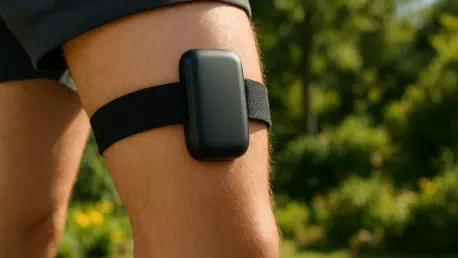
To achieve a high degree of accuracy, the study utilized thigh-worn accelerometers rather than standard wrist-worn devices. These specialized monitors can distinguish between sitting, reclining, and standing by detecting the specific orientation of the leg. This precision allowed researchers to map the full 24-hour cycle of hundreds of patients from two major Dutch cohorts. By capturing every minute of the day, the research team could accurately measure sedentary behavior—defined as waking activities that expend very little energy while in a seated or lying position—providing a much clearer picture of post-treatment life than traditional questionnaires would allow. This methodology highlighted that the issue is not merely a lack of exercise, but an overwhelming abundance of sedentary time that persists even when patients believe they are being relatively active throughout their day.
Identifying Behavioral Patterns: The Use of Latent Profile Analysis
Subgroups of Activity and Stillness
The researchers employed a sophisticated statistical method called Latent Profile Analysis to identify three distinct subgroups of survivors based on their 24-hour movement patterns. This approach was far more nuanced than simply looking at average activity levels, as it allowed for the identification of hidden clusters within the population that shared similar behavioral traits. The Most Sedentary group was particularly concerning, characterized by extreme periods of stillness. In the colorectal cancer group, these individuals sat for over 13 hours a day, often in long, unbroken stretches that offered no physiological relief to the body. For kidney cancer patients in this same profile, the average was nearly 12 hours of sitting, illustrating that this is a widespread issue across different oncology demographics.
The Average group represented the middle ground, reflecting the standard behavior seen across the broader survivor population, with a more balanced mix of movement and rest. Finally, the Highly Active group managed to incorporate significant periods of standing and moderate-to-vigorous physical activity into their daily routines. These profiles were remarkably consistent across both kidney and colorectal cancer populations, suggesting that there is a predictable structure to post-treatment behavior that clinicians can use to identify high-risk patients early in their recovery. This data underscores the importance of objective measurement in oncology research, as it provides a realistic view of the daily challenges survivors face. By recognizing these profiles, healthcare providers can better tailor their advice to the specific needs of each patient cluster rather than offering generic recommendations.
The Phenomenon: Defining the Active Couch Potato
Perhaps the most striking finding of the research was the emergence of what experts call the active couch potato phenomenon. This occurs when a patient meets high standards for physical exercise but remains remarkably sedentary for the remainder of the day. A large majority of kidney cancer survivors in the study successfully met the recommended clinical guideline of 150 minutes of weekly moderate-to-vigorous exercise. However, many of these same individuals remained motionless for the vast majority of their waking hours. This discovery highlights a major blind spot in current survivorship care programs, which often focus exclusively on encouraging scheduled exercise rather than discouraging prolonged sitting.
A patient might start their day with a vigorous thirty-minute walk, achieving their clinical target for the day, yet spend the next twelve hours at a desk or on a sofa. This pattern of behavior still poses significant health risks, including increased cardiovascular strain and potentially higher risks of cancer recurrence. The physiological benefits gained during a short window of exercise can be partially or even entirely negated by hours of metabolic inactivity. Moving forward, the conversation around survivorship must evolve to address the entire sixteen-hour waking day rather than focusing solely on the short duration of a workout. This requires a shift in how both patients and providers perceive the concept of being active, moving toward a philosophy of consistent, low-intensity movement throughout the day to ensure that the gains from structured exercise are not lost.
Identifying Risk Factors: Who Is Most Sedentary?
Demographic and Clinical Influences
The study identified several key factors that influence whether a survivor falls into a sedentary or active profile. Gender played a significant role, with men being more likely to occupy the most sedentary categories in certain groups. Additionally, there was a clear inverse relationship between Body Mass Index (BMI) and activity; as BMI increased, the likelihood of being highly active decreased significantly. For every one-point increase in BMI, the odds of a patient being in the highly active group dropped by approximately 8% to 9% across both cancer types. Surprisingly, higher education was linked to more sitting, likely due to the sedentary nature of office-based professions that require long hours at a computer.
Furthermore, the research addressed the fatigue paradox often seen in oncology. One of the more surprising findings was that higher fatigue scores were actually associated with a lower likelihood of being in the most sedentary group. While the effect size was small, it challenges the intuitive assumption that exhausted patients will naturally sit more. This may be explained by the bidirectional relationship between activity and fatigue; while fatigue is a barrier to starting activity, movement is often the most effective way to reduce cancer-related exhaustion. Physical functioning also played a role; those with higher levels of physical capability were more likely to break up their sitting time. These findings suggest that screening for BMI and occupational habits could help doctors identify which survivors need the most support in redesigning their daily routines to include more standing and walking.
Comparative Trends: Kidney vs. Colorectal Cancer
When comparing the two patient groups, colorectal cancer survivors generally exhibited higher sedentary rates and lower total physical activity than those recovering from kidney cancer. On average, those in the colorectal group spent over ten hours a day being sedentary, with only a small fraction of their time dedicated to any form of physical activity. Both cancer survivor groups, however, were significantly more sedentary than the general population. This suggests that the experience of cancer and its subsequent treatment may fundamentally alter a person’s relationship with movement, potentially due to the physical toll of surgery or the psychological impact of the diagnosis.
Interestingly, factors like age and tumor stage were less influential than expected, implying that sedentary behavior is a complex habit shaped more by lifestyle and physical capability than the clinical severity of the disease itself. This is an encouraging finding because it suggests that lifestyle interventions can be effective regardless of the cancer’s initial stage. However, the data also showed that colorectal cancer patients had longer bouts of uninterrupted sitting, which is particularly damaging to metabolic health. These comparative trends highlight that while all survivors face challenges, certain cancer types may require more aggressive intervention to break the cycle of stillness. Addressing these disparities requires a nuanced understanding of how different treatments and recovery paths impact a patient’s ability to remain mobile during their daily lives.
The Future of Care: Shifting Clinical Focus
Addressing the Limitations of Modern Research
While the study provides groundbreaking data, the researchers acknowledged certain limitations that must be considered when applying these findings. The participation rate was approximately 44% to 45%, and it is possible that the individuals who chose to join the study were more health-conscious than the average survivor. This means the actual rates of sedentary behavior in the broader survivor population could be even higher than what was recorded. Additionally, because the study was cross-sectional, capturing data at a single point in time shortly after treatment, it could not definitively prove that certain factors cause sitting behavior, only that they are strongly associated with it.
These limitations provide a vital roadmap for future longitudinal studies that can track how activity patterns evolve over several years. Such research will be necessary to determine if the sedentary habits formed during the teachable moment of early recovery persist as survivors move further away from their diagnosis. There is also a need to validate these findings in more diverse populations, including those with different socioeconomic backgrounds and varied access to fitness resources. By refining the data and addressing these gaps, the medical community can develop more robust evidence-based guidelines that account for the real-world barriers survivors face when trying to change their long-term behavioral patterns. Despite these hurdles, the use of objective thigh-worn accelerometry has set a new gold standard for how activity should be measured in clinical oncology settings.
Transitioning from Exercise to Daily Movement
The practical implications for oncology are significant, signaling a need to shift the clinical focus from traditional exercise prescriptions to a broader emphasis on posture and daily movement. If health providers only ask about gym time or walking routines, they miss the twelve hours a day a patient might spend in a chair. Interventions must be redesigned to encourage patients to break up long periods of sitting with light movement, such as standing during phone calls or taking short walks every hour. This approach is often more achievable for patients who may feel overwhelmed by the prospect of a high-intensity workout but can manage small changes to their sitting habits.
By targeting at-risk groups—such as men, individuals with a high BMI, and those in desk-bound jobs—clinicians can offer more personalized support that addresses the entire 24-hour day. This could involve the use of standing desks, wearable devices that vibrate to remind the user to move, or simple behavioral counseling that focuses on reducing sitting time. The goal is to make movement a natural and frequent part of the survivor’s environment rather than a separate task to be completed. As technology continues to evolve, the integration of real-time activity tracking into clinical care will allow for more dynamic and responsive support systems. This shift in perspective recognizes that every minute spent standing or moving contributes to a survivor’s overall health and resilience.
Strategies for Vitality: Reclaiming Long-Term Health
The researchers emphasized that for many cancer survivors, the primary health challenge was an abundance of stillness rather than a total lack of exercise. Optimizing recovery required the medical community to look beyond the 30-minute exercise window and focus on the hours spent in the chair. By integrating movement throughout the day and reducing prolonged sedentary bouts, healthcare providers sought to help survivors reduce the risk of recurrence and cardiovascular issues. These experts advocated for a paradigm shift that treated standing as a vital sign of health, just as important as heart rate or blood pressure during post-treatment follow-up appointments.
The next steps identified in the study involved the implementation of workplace wellness programs and the adoption of wearable technology that provided real-time prompts to stand. Ultimately, the transition to a more active lifestyle was seen as a multi-faceted process that integrated environmental changes with personalized behavioral counseling. By focusing on the 24-hour movement profile, the medical community established a more holistic path toward vitality for those who had overcome cancer. These strategies were designed to ensure that survivors did not just live longer, but lived with a higher quality of life characterized by physical independence and metabolic health. The findings served as a call to action for both patients and clinicians to rethink the daily routine as a fundamental component of the recovery process.